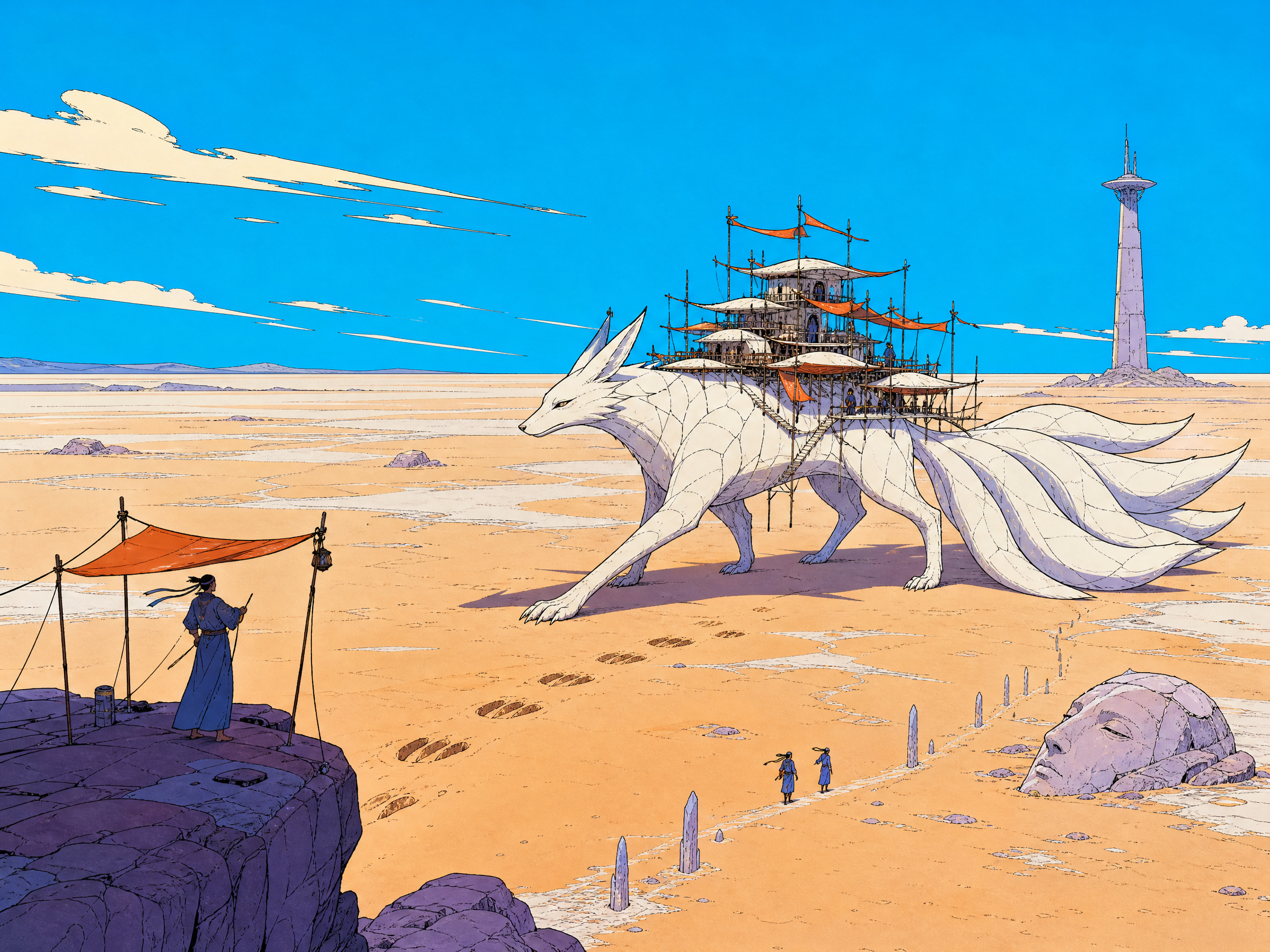
Retro Surreal Illustration
Retro Surreal Illustration
Showcase
Description
Use fine, deep clean lines, rich blocks of local color, tiny figures, and an elegant relationship that defies reality to turn the theme into an alien journey—sparse yet vivid, like a geographic atlas from a dream.
Recommended by
Shuting@YouMind
Why we love this skill
Vast color-filled negative space, fine dark lines, and tiny figures create a quiet alien geography that defies reality. Its signature is the “one main anomaly” principle, blending French sci-fi comic structure with dreamlike philosophy.
Best for
Best for original concept illustrations and worldbuilding visuals that feel quiet, vivid, poetic, and exploratory.
How to use this Skill
Provide your input
Provide the theme you want to express, plus any optional use case, text, or reference images from this conversation.
Run the Skill
Turn the theme into a spacious alien surreal scene using crisp dark ink lines, rich flat colors, and tiny figures.
Review your result
Get an original retro-surreal concept illustration highlighting vast terrain, a clear main form, and one easy-to-understand unreal relationship.
Related Skills
View all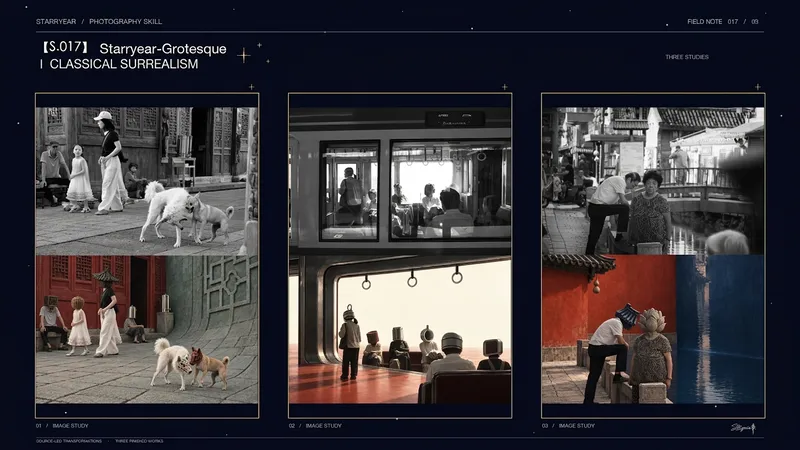 Image
【S.017】Surreal Photo·Starryear
Transform travel, street, cultural event, or portrait photos into vertical classical surrealist diptychs with a documentary feel. The top half preserves the original photo as evidence of reality, while the bottom half reconstructs a visual scene through cinematic spaces, saturated structural colors, monumental scale, bold negative space, and impossible relationships—creating a world that feels both familiar and strange. This Skill is especially suited to creators who want to preserve the context of the original image while exploring conceptual photography and surrealist storytelling. Figures in the image will not show identifiable faces. Instead, based on clothing, gestures, props, and cultural clues from the setting, their heads are replaced with animals, plants, objects, architecture, celestial bodies, or other imagery. The concealment becomes part of the composition and story rather than a standard filter or decorative headpiece. Simply provide a suitable photo to receive a complete diptych that combines the original image with a reconstructed scene. It is suitable for personal photography experiments, travel visual records, street-image re-creations, and noncommercial art research. For personal learning, nonprofit research, and noncommercial creative use only.
 Image
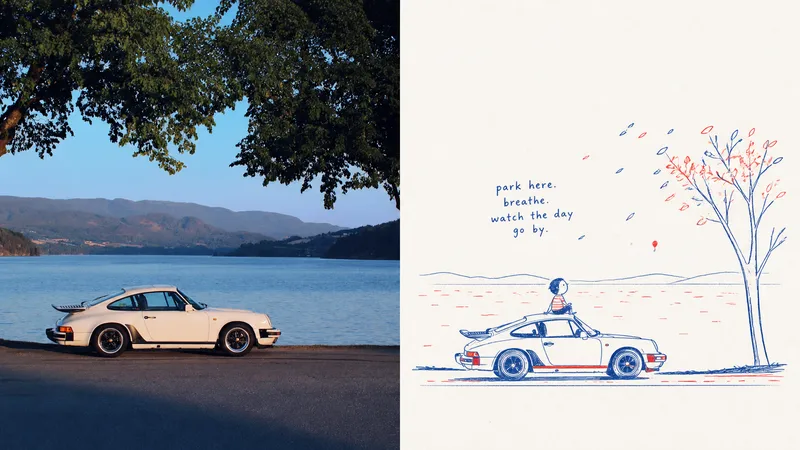
Xiaoxiaodong x Childlike P067
The P067 prompt set nails the lively spirit of a sketch on scrap paper: ⚬ Pure red-and-blue ink: The entire image abandons all other colors, using only a vintage blue and tomato red with the texture of ballpoint pen or crayon. The lines are fine, with slight signs of hand tremors and repeated drawing. The two colors are not evenly distributed, appearing naturally only along key outlines and in small local color blocks. ⚬ A single visual focal point: Never copy the original background. Extract only the core action and expression, allowing for a touch of innocent exaggeration in the proportions. The result should immediately evoke the original image while adding plenty of humor. ⚬ A clean, near-white paper background: Broad areas of pure white space, with no dirty or yellowed filter. Only a very subtle paper-fiber texture remains, making the image feel airy and freshly drawn. ⚬ A handwritten short phrase with baseline shifts: The text is no longer a rigid poster headline, but a spontaneous childlike remark, sound effect, or conversational phrase. Uneven strokes hover in the empty space, naturally echoing red-and-blue arrows or small symbols. The upper half presents serious real-world light and shadow; the lower half becomes a private observation journal full of breathing room.
 Image
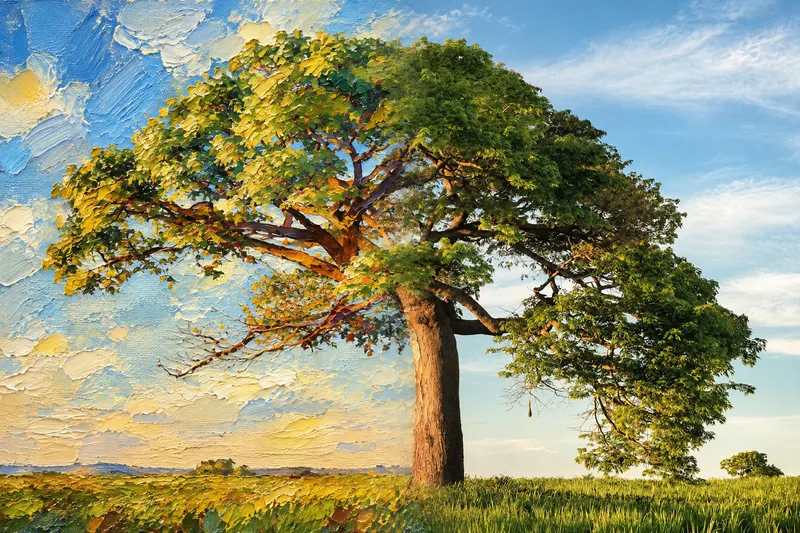
Seamless Photo–Illustration
Transform photos of people, animals, pets, cars, buildings, products, food, plants, or scenes into dual-visual artwork featuring the same subject and composition in both realistic and illustrated form. One side preserves photographic texture, natural lighting, and material details, while the illustrated side clearly reflects a hand-drawn, anime, comic, watercolor, oil painting, clay, or vector illustration medium—not a simple filter effect. You can specify whether the visuals are arranged left and right or top and bottom, define where the realistic and illustrated areas appear, choose an illustration style, and set the aspect ratio. The subject’s pose, expression, facial features, structure, clothing, colors, and relationship to the scene remain coherent. People, animals, and objects transition according to their own visual centers, allowing both treatments to occur naturally within the subject rather than mechanically splitting the image. The final image emphasizes seamless integration: photographic texture gradually becomes lines, color blocks, or brushstrokes, while contours and lighting connect naturally. There are no dividing lines, hard edges, collage seams, torn-paper effects, or glowing boundaries. You’ll get a dual-visual image where the difference between the real world and the illustrated world is clear, yet no exact dividing point can be found.
Information
- Version
- v36
- Last updated
- Runtime credits
- Usage-based
- Models
- Auto
- Use cases
- Images & design
- What you get
- Image
- Visual styles
- RetroFlatSurrealist
