Jackning Leo

Journal Fit Advisor
Rejected? It's not necessarily bad writing—it's not writing like this journal. 「Journal Fit Advisor」doesn't boast about the journal's ranking. It does one thing: break down real samples from your target journal, show you exactly what it prefers, and help you revise your paper paragraph by paragraph to fit better. 🎯 How it helps Submit a target journal → Extracts real preferences across six dimensions: topic, structure, theory, methodology, language, argumentation → Diagnoses where your paper falls short → Provides actionable rewrites (2-3 versions each for title, abstract, introduction, conclusion). ✨ Why trust it • Each preference is labeled with evidence level: official statement (A), sample inference (B), cautious guess (C). If it's a guess, it says so. • Cross-checked for uniqueness: every feature asks 'Do other similar journals do this too?' Only retains true differentiators. • No fabrication: no fake impact factors, no fake acceptance rates, no promises of acceptance. Lowers confidence if material is insufficient. • Plus a 'Journal Style Prompt Card' – copy and paste into any LLM to instantly write in that journal's style. 💬 How to use it ·“Analyze the topics and writing style of Journal XX over the last three years” ·“I want to submit to Journal XX – run a submission fit diagnosis for me” ·“Rewrite my abstract to sound more like Journal XX” ·“How long are titles in Journal XX typically?” (quick answer for short questions) 👥 Who it's for: graduate students, early-career researchers, authors wanting to self-check before submission. ⚠️ Boundaries: It provides observable style analysis, not the editor's true thoughts, nor a guarantee of acceptance. Cross-journal topic selection, pure title polishing, and chapter ghostwriting will be redirected to more appropriate tools.
Skill Designer + Listing Packager
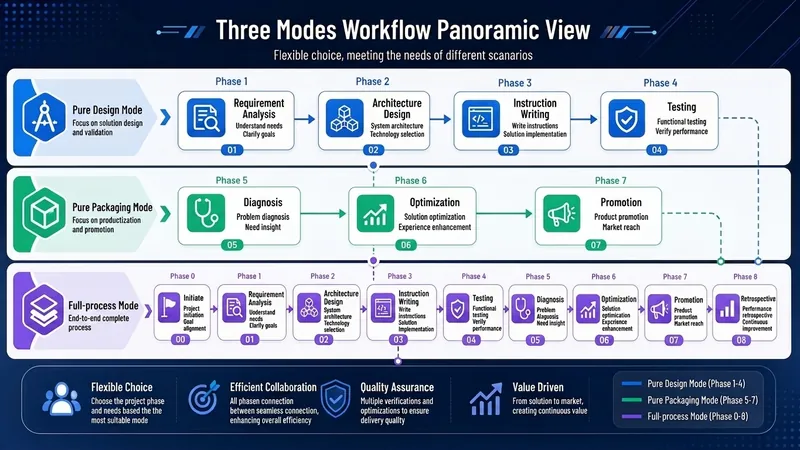
Is your Skill getting no attention after listing? Often the problem is not the quality of the instructions, but unprofessional design and unattractive packaging. This bundle integrates the 'Skill Designer' and 'Listing Packager', buy one get one free, original price 798, now only 399 (early bird 299). ✅ Design Process (Phase 1-4): Requirement analysis → Architecture design → Instruction writing + Strict blocking mechanism → Testing and optimization ✅ Packaging Process (Phase 5-7): 7-dimension in-depth diagnosis → Metadata optimization + Feature backlink verification → Visual assets + Promotion copy. Core mechanisms: Strict blocking faction (ensuring quality) × Feature backlink (ensuring authenticity). Three modes: Design only / Packaging only / Full process, one-stop from 0 to 1. Suitable for Skill creators who seek professionalism and conversion rate.
SkillDesigner:StrictBlockerUX
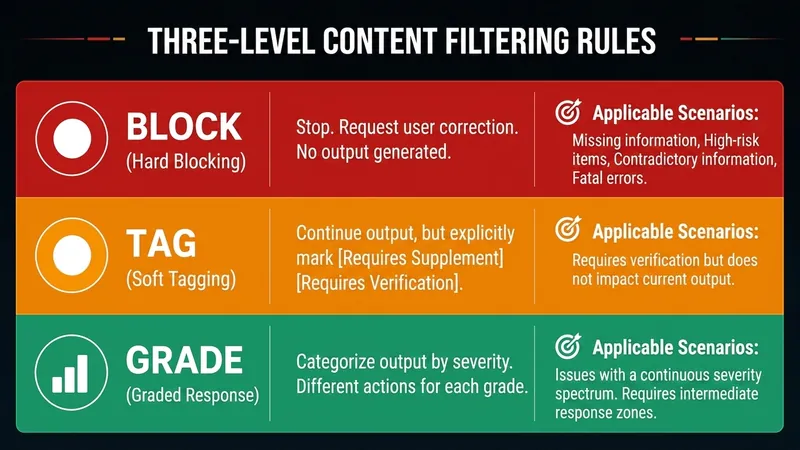
Have you ever encountered these problems? ❌ Your own Skill seems fine, but users encounter errors as soon as they try it. ❌ The Skill works with standard input, but crashes on edge cases. ❌ You want sub-type routing (e.g., quantitative vs qualitative papers), but don't know how to design blocking rules. ❌ The Skill either asks at every step (user fatigue) or runs fully automatic (no confirmation for high-risk actions). This Skill helps you solve: ✅ Failure mode first: Model how the Skill might fail before writing the execution flow. ✅ Strict blocking: Truly stop when information is missing or risk is high, requiring supplements—no soft markers. ✅ 7-phase dialogue: Type identification → 7D matrix → Failure mode modeling → Blocking rule design → Self-check → Creation. ✅ UX enhancement: Structured tabs to reduce cognitive load + progress anchors + positive blocking language. ✅ Interaction density matches risk: High-risk tasks have confirmation points; batch tasks don't interrupt at every step. Output includes: - AFP type identification (Academic/Speech/Safety Communication/Text Review/Skill Review/Custom) - Sub-type routing matrix (optional, for heterogeneous inputs) - Blocking rules (BLOCK/TAG/GRADE three levels + judgment cards) - Manual_Fallback degradation path - Test scenarios (scaled by complexity: Standard/Border/Blocking/Interaction/Sub-type) - Self-check list (Honesty first/Type consistency/Neutral naming/Anti-hardcoding) In a word: It is not a 'casual generation' Skill generator, but a strict design consultant that helps you design Skills that are executable, have blocking rules, have degradation paths, and are interaction-friendly. For you, if you are: 🛠️ A creator who wants to turn highly repetitive tasks into reusable Skills 🎯 An advanced user needing to design complex Skills (with sub-type routing, judgment cards) ✅ A user with strict quality requirements, not accepting 'it runs but is unstable' 📚 A YouMind user who wants to learn Skill design methodology
Skill Packager|Strict&Verified
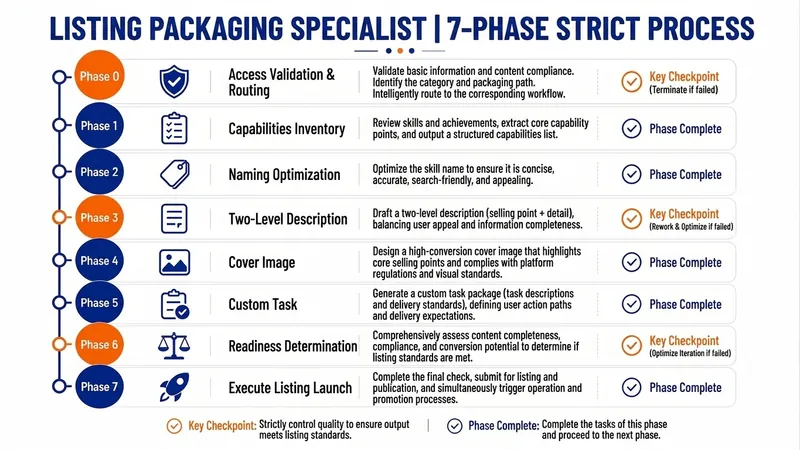
Are your marketing descriptions exaggerated or claims false when listing? This Skill generates a listing asset pack for tested Skills (naming, two-layer description, cover, pricing, copy, checklist). Each described capability must link to a real instruction, ensuring no false claims. Execution branches based on release goal (free, paid, personal use). Strict mode: halts if unverified or claims are unsupported.
Management Paper Strict Review
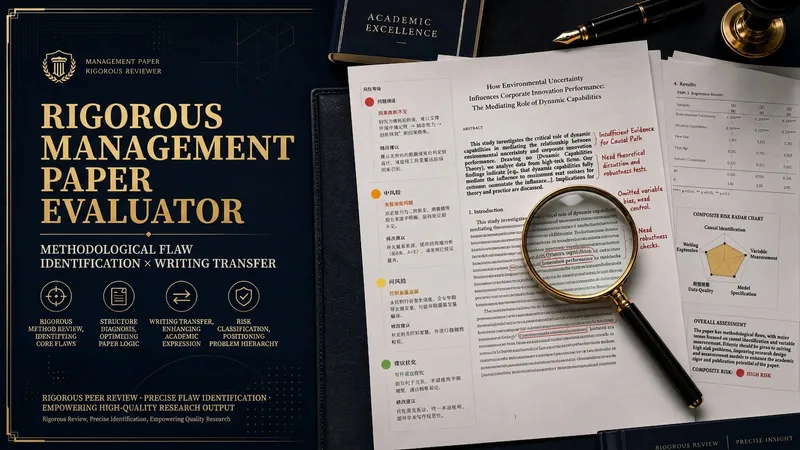
Have you encountered these problems? ❌ You cited a seemingly authoritative paper, only to have reviewers question, 'This study has severe endogeneity issues.' ❌ When writing a literature review, you're unsure whether a paper's conclusions are trustworthy. ❌ After reading dozens of papers, you still don't know how to apply others' writing techniques to your own paper. ❌ Before submission, you want to check for methodological risks but don't know which hard flaws top journal reviewers focus on. This Skill helps you: ✅ Quick mode (15–25 min): Determine whether a paper is worth reading in depth and can be cited confidently. ✅ Deep mode (45–60 min): Check methodological flaws item by item like an AMJ/ASQ/SMJ reviewer. ✅ Quantitative credibility rating: 🔴 Not citable / 🟠 Use with caution / 🟡 Reference only / 🟢 Safe to cite – at a glance. ✅ Writing transfer task card: Turn techniques from others' papers into executable tasks for your own Introduction/Methods/Results/Discussion sections. Covers seven methodology types: Quantitative regression, experimental studies, quasi-experimental causal identification, fsQCA, case studies, grounded theory, mixed methods. Output includes: - Six-area deep reading (theoretical dialogue, mechanism pathways, construct operationalization, method-data fit, contribution critique, writing techniques) - P1/P2/P3 risk levels (fatal/important/arguable) - Counterfactual testing (can the model explain reverse scenarios?) - Boundary condition check (5 dimensions: market/regulation/capital/technology/competition) - Writing transfer task card (specific techniques directly applicable to your own paper) In a nutshell: It is not a gentle paper summarizer. It's a strict academic writing assistant that helps you discover, 'Where can't this paper be trusted? What is worth learning from it? How can I apply it to my paper?' Suitable for you if you are: 📚 PhD/master's students writing literature reviews 📝 Management researchers preparing submissions to top journals 🔍 Reviewers needing quick paper quality assessments 📖 Paper writers wanting to learn top journal writing techniques

MOE Counselor Review v2.4.0
This Skill does not write your application for you; instead, it pre-screens the questions the review panel would ask: whether your identity is compliant, whether the project limit is violated, whether the research question withstands a one-sentence challenge, whether the research approach collapses by the second paragraph — each item turned into an actionable revision checklist. It incorporates the original text of the 2026 edition of 90 key research directions and 7 clusters of implicit weight tables, and is grounded in the risk map of previous years' special project reviews. Annual hard constraints such as document number, funding amount, research period, submission limit, etc., are verified by default against the current year's official notice — no hardcoding. ## What it does - Formal compliance hard check: identity as full-time counselor, submission limit, funding amount, research period, and other knockout gates (annual parameters based on the current year's official notice) - Sequential referencing diagnosis: for the 「(Reliant Direction N)」 at the end of the title, perform item-level compliance check — sequence validity + three-tier direction-title alignment (strong / moderate / weak) + cluster-level risk warning - Research question stress test: use 「So what?」 and 「What exactly is the difference from existing research?」 as two knives to pre-screen for the review panel - Research approach reverse deconstruction: mark paragraph by paragraph 「how this will be questioned」 rather than 「this is well written」 - Innovation authenticity diagnosis: which of 「first / systematic / breakthrough / fill a gap」 would be debunked by a literature search - Actionable revision checklist: prioritised next steps ## What it does not do - It does not choose your topic for you - It does not generate the application body - It does not 'polish' language - It does not tell you 'this topic is valuable' — no one on the review panel will compliment you like that ## How it differs from similar tools Other project review Skills on the platform assume you are applying for the National Social Science Fund or MOE general projects — the funding amounts, project limits, and identity requirements are all wrong. If you use them, your application will be revised against the wrong standards. This Skill is currently the only reverse review engine on the marketplace specifically for the 'MOE College Counselor Research Special Project', and it incorporates the original 2026 edition of 90 guidelines + 7 clusters of implicit weight tables; the 2025 edition is retained as a historical version, and cross-year applications can use 'sequential referencing diagnosis' for alignment. ## Who it is for - Full-time college counselors preparing to apply for the 2026/2027 MOE Counselor Research Special Project - Heads of student affairs departments (compliance gate before school-level preliminary review) - Applicants who have finished a draft and want the most critical eye to review it again ## Who it is not for - Those who want to generate an application with one click - Those applying for the National Social Science Fund or MOE general humanities and social science projects (please use the corresponding general Skill) - Those who haven't started writing yet — reverse review requires an object to review Version: v2.4.0 | Incorporated 2026 edition of 90 guidelines original text + 7 clusters classification + sequential referencing diagnosis | Annual hard constraint parameters subject to official notice ([Document Number Pending]) | Review engine has undergone multiple rounds of stress testing and retrospective upgrades

E-Commerce Thesis Check Guide
Stuck on your e-commerce undergraduate thesis? Does your current status section read like a company intro? Is your strategy section just the classic "strengthen promotion, improve service" four-piece set? Did you only realize two weeks before your defense that your title doesn't match your content? This skill is a revision workbench designed for e-commerce undergraduates. Its 13 commands help you check: whether the title is correct, whether the framework holds up, whether the paragraph arguments have loopholes, whether sentences are smooth, whether the same indicator has inconsistent definitions across chapters, why the defense teacher asks a certain question, and where follow-up questions might come from. In a word: AI won't write your thesis for you, but it helps you see where the problems are, how to fix them, and what to do next. What it cares about most: It will not fabricate data for you, will not write company facts for you, and will not write entire paragraphs of text for you. All revision suggestions leave a placeholder like 【Please replace with your real data】 so that you fill in with the authentic materials you collected yourself—so the thesis you submit is yours, not AI's. When checking sentence by sentence, each sentence's issues are categorized into two types: 【Structural issues】 that need content addition or rewriting, and 【Language issues】 that are suitable for polishing—so you won't use smooth wording to mask empty content, and you can clearly see which sentences are truly revised after editing. Coverage: mainstream e-commerce directions such as online marketing, store operations, short videos, live streaming sales, cross-border, private domains, agricultural product e-commerce, and more. From first draft self-check, chapter-by-chapter proofreading, version comparison to defense preparation, multiple rounds of follow-up. 【For advisors】 Teachers supervising e-commerce undergraduate theses can also use it this way: have students first run /check to diagnose the four layers of issues—framework, evidence, paragraphs, sentences—and then come for a meeting with the diagnostic report. This way, your grading time can focus more on judgment and direction rather than reading through everything to find problems. The /compare command can also directly compare the student's first draft and second draft to see if the revisions are adequate. Not suitable for: master's/doctoral theses, journal submissions, or non-e-commerce undergraduate theses. v2.2.1 early version. Feedback from students and advisors is welcome to help us make this revision workbench even smoother.
 Research
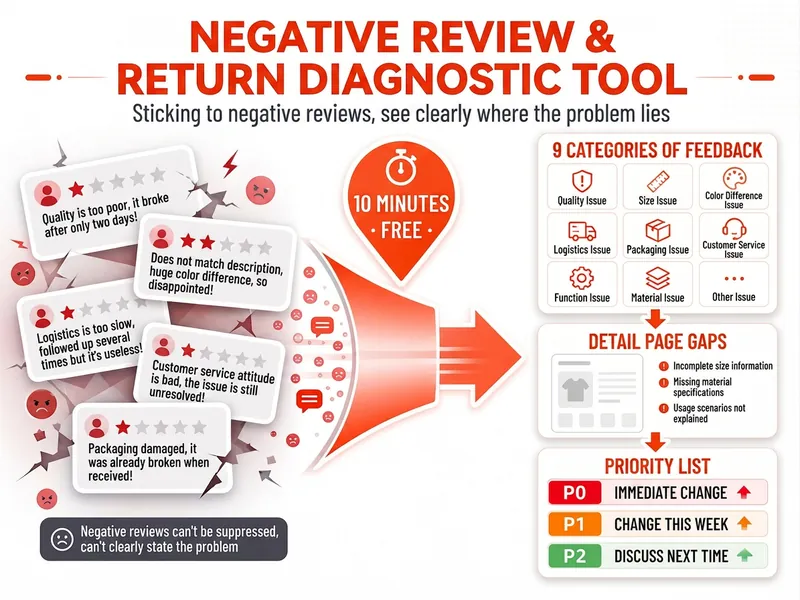
Negative Review & Return Diag
Negative reviews are piling up and returns won't come down, but you can't tell if the issue is in specifications, ingredients, or after-sales service? Paste your negative reviews and 'Ask Everyone' comments here, and in 10 minutes get a problem map: 9 categories of feedback → detail page gaps → P0/P1/P2 modification priorities. It does one thing—helps you see the problem clearly, without fabrication or hard selling. Want to know exactly how to fix it and what it will look like? After the diagnosis, directly connect to the flagship 'E-commerce Detail Page & Customer Script Optimization Tool' for fully consistent tone—no need to repaste materials.
 Research
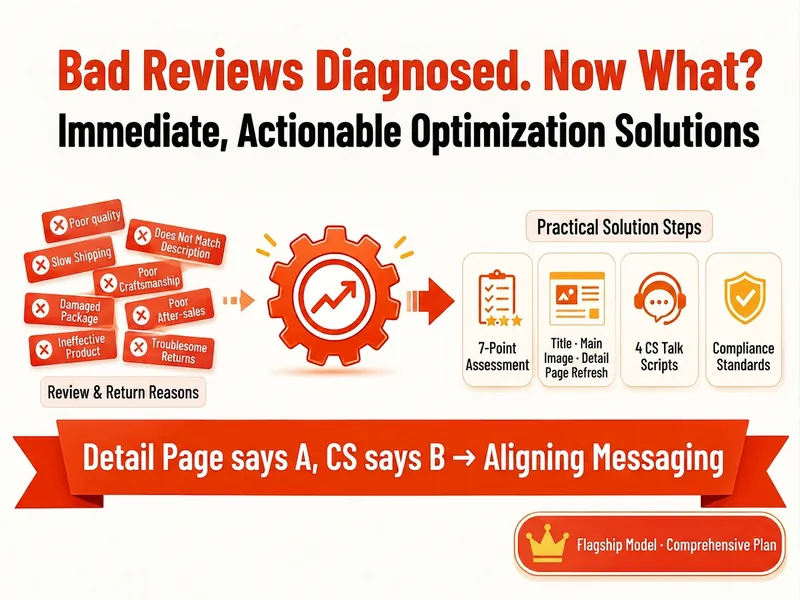
Tao/Tmall Detail & CS Script Op
Diagnosed negative reviews and found the problems, then what? This Skill directly converts buyer negative reviews/return reasons into actionable solutions: 7-dimension page rating, title/main image/detail page FAQ restructuring, four types of CS scripts (pre-sale, objection handling, expectation management, post-sale), high-risk expression compliance replacement. The gap where the detail page says A but customer service says B is the root cause of negative reviews and returns — this locks both sides consistent. Honesty first: only make conservative judgments when materials are insufficient, never fabricate.

SSF Application Dual Review
This is a review and refinement system for social science fund applications. It scrutinizes your application as strictly as the strictest reviewer and helps you polish it as expertly as the most knowledgeable mentor.

Apex-Scholar Reviewer v5.1
The success rate of academic paper submissions is directly related to the logical rigor, linguistic authenticity, and format compliance of the manuscript. However, researchers often focus on scientific content itself and find it difficult to simultaneously balance critical review from a reviewer's perspective and Native Speaker-level language polishing. Additionally, different journals (e.g., IEEE's engineering style vs. Nature's narrative style) have vastly different requirements for writing style, further increasing the complexity of submissions. This system acts as a senior reviewer & academic writing mentor for Nature/Science-level journals, using a dual-core adversarial engine (Critic core responsible for logical attack, Mentor core responsible for language reconstruction) to perform comprehensive stress testing and refinement of the paper, ensuring the output can withstand the scrutiny of the most rigorous reviewers.

Mgmt Read & Mech Dissect v2
This is an advanced analysis Skill for management empirical research, applicable to Chinese core journals, CSSCI, SSCI/SCI management papers, focusing on quantitative research in fields such as organizational behavior, human resource management, strategic management, marketing management, innovation and entrepreneurship, digital governance, and education management.

Management Deep Dissector
This is a deep reading and deconstruction Skill for management academic research. It is suitable for Chinese core, CSSCI, SSCI/SCI management papers, especially empirical research in areas such as organizational behavior, human resources, strategic management, marketing, innovation and entrepreneurship, digital platform governance, and education management. The goal of this Skill is not simply to summarize the paper, but to break it down into reusable research components: research question, theoretical foundation, logic chain, hypothesis structure, variable design, measurement method, sample and methodology, result interpretation, theoretical contribution, practical implications, limitations, and future research. It further refines these into transferable "writing templates" and "topic selection templates" for users.