J-TEST Test Point Analyzer
Description
Why we love this skill
Your dedicated J-TEST teaching research expert! It systematically analyzes past exam questions, breaks down test points, summarizes question patterns, and customizes a review plan to make your preparation more efficient.
An expert J-TEST teaching and research system that breaks down test points, analyzes question patterns, and plans study paths based on past exam papers. On first use, it automatically creates a core resource copy (including test point maps for F-G rounds 152-183, high-frequency test point lists, review priorities, etc.). Subsequent use allows continuous accumulation of personal analysis data. Suitable for J-TEST exam candidates and Japanese language teachers.
Related Skills
View all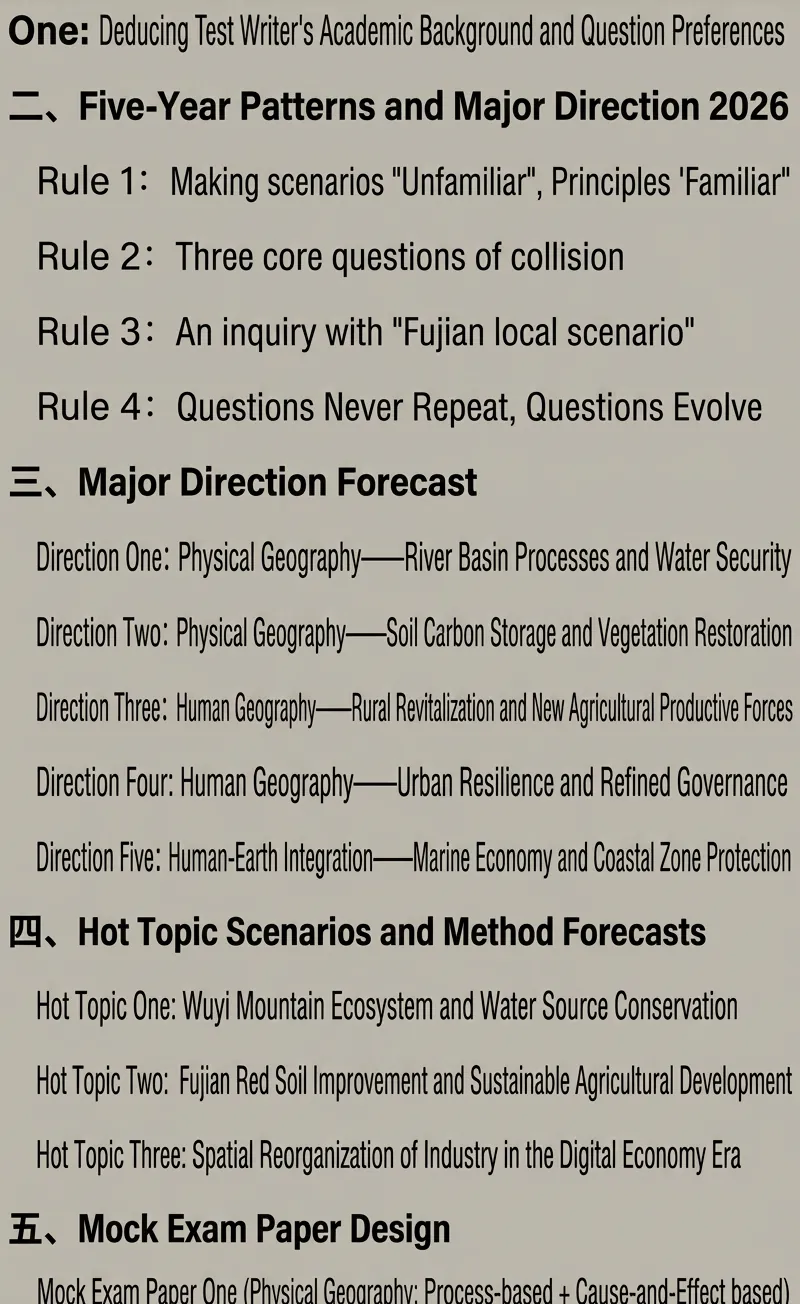 Research
Gaokao Pattern Analysis (All)
Cross-disciplinary Gaokao exam pattern analysis tool. Supports subjects including geography, history, politics, Chinese, mathematics, physics, chemistry, biology, and more. Based on the user's selected subject, it automatically calls the corresponding curriculum standards, extracts exam patterns from past tests, infers the examiner's academic background and question preferences, cross-references policy hotspots, generates a report analyzing the direction of exam questions, and provides original practice exams. Suitable for teachers of various subjects for teaching research, lesson preparation, and creating practice tests.
Exam Cube
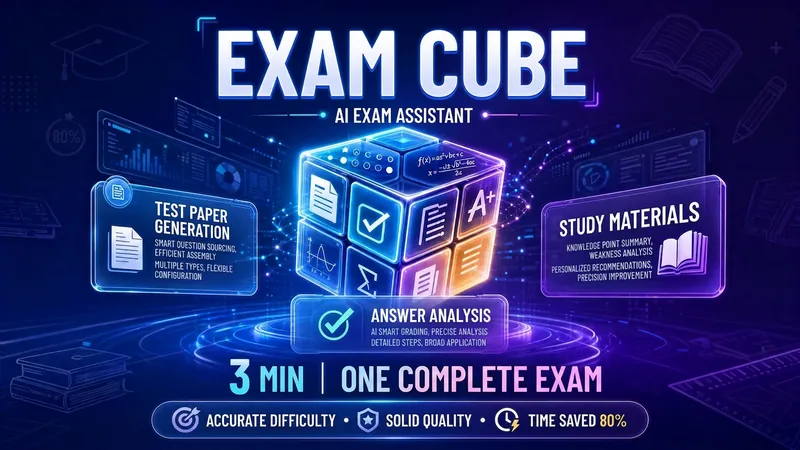
Exam Cube is an intelligent exam generation system designed specifically for college teachers. Simply provide your syllabus, past exam papers, and other necessary materials, and it will automatically generate: ✅ Professional Exams - Rich question types, graded difficulty, full coverage of key points, reflecting higher-order, innovative, and challenging standards ✅ Detailed Answers - Multiple solution methods, scoring criteria, estimated score rate, difficulty grading ✅ Review Materials - Key points summary, formula sheets, practice problems, complementary to the exam without repetition 🔍 Built-in Quality Audit to Ensure Professional Standards · Coverage Check: Ensures 100% coverage of core syllabus knowledge points · Difficulty Distribution Verification: Automatically calibrates to 30% easy / 50% medium / 20% difficult · Three-Document Cross-Checking: Consistent terminology and logical rigor across exam, answers, and review materials · Duplicate Detection: Avoids similarity with past exams, ensures A/B papers have ≥70% difference 🎓 Adaptable to All Disciplines, Meeting College Standards · STEM Fields: Emphasizes formula derivation, unit conventions, engineering applications · Humanities: Focuses on argument structure, source citation, critical thinking · Medicine/Law: Case analysis conforms to professional standards and ethics · Arts/Design: Practical assignments with descriptive scoring criteria 🎯 Precise Difficulty Control, Reflecting Higher-Order, Innovative, and Challenging Standards · Average score precisely controlled between 75-85 points, reflecting student performance levels · Difficult questions demonstrate higher-order thinking (cross-chapter synthesis), innovation (new context application), and challenge (deep understanding) · Adapts question strategy based on school characteristics and student background 🔄 Flexible Iteration and Optimization, Eliminate Repetitive Work · Local adjustments: Single question replacement, chapter question count adjustments, overall difficulty fine-tuning · A/B paper generation: Consistent difficulty, aligned key points, content difference ≥70% · Tolerance for incomplete materials: Generate questions from available materials, then teachers can filter Say goodbye to late-night exam creation! Let teaching return to teaching itself! Complete in 3 minutes what traditionally takes 6-8 hours, improving efficiency by 95%+ A tailored intelligent exam generation system for college teachers, designed to solve the pain points of traditional exam preparation: time-consuming, difficult to balance professional standards and personalized needs. This system intelligently analyzes key point distribution, identifies subject characteristics, and quickly generates a professional, standardized exam paper, detailed answers, and complementary review materials based on your provided syllabus, textbooks, past exams, and other materials. You only need to input course information and teaching materials, and the system will automatically extract core knowledge points, accurately construct the exam according to preset or customized parameters such as question type, difficulty, and score distribution. It ensures comprehensive coverage of key points, reasonable difficulty distribution, effectively avoids question repetition, and supports generating questions with higher-order, innovative, and challenging standards, truly reflecting the depth and breadth of college teaching. The system features a powerful quality audit mechanism that performs multi-dimensional checks on generated exams, including key point coverage, difficulty distribution, question repetition, and language standardization, ensuring rigorous and error-free content. It also conducts cross-checking among the three documents (exam, answers, review materials), ensuring consistent terminology and complementary content, forming a logically tight and professionally reliable set of assessment materials. Furthermore, the system supports flexible iterative optimization. You can adjust exam details at any time, such as replacing specific questions, adding or reducing chapter question counts, or fine-tuning overall difficulty. Moreover, it can generate A/B papers with consistent difficulty and key point structure based on the current exam, meeting diverse examination needs, freeing college teachers from tedious exam preparation work and allowing them to focus on improving teaching quality.

Soft Exam Deconstruction Coach
A personal coach that breaks down advanced Soft Exam textbooks until you understand, questions you thoroughly, and connects the dots seamlessly. This is not just another 'knowledge summary tool'. It drives the entire learning process with four proven methodologies: Zettelkasten atomic cards make each concept traceable and linkable; Concept Maps let you see the knowledge landscape instead of memorizing a table of contents; Bloom's cognitive taxonomy determines how deeply each concept should be learned; Minto's pyramid method transforms what you've learned directly into an essay outline. It is a guide, not a ticket seller. After a cold start with just three sentences to set your position, it proactively provides a recommended learning path: 'Warm-up → Core → Review → Case studies,' complete with a path diagram, explaining why each segment is taken. After each chapter, it proactively tells you what's next, and remembers your progress, sticking points, and weak areas across sessions. Teach first, then practice, with dual modes. For beginners, use teaching mode: Feynman-style explanations, starting with analogies then terminology; if not understood, switch angles up to three times. For learned material, use practice mode: Socratic four-level questioning (Explain clearly → Why → What is it related to → How to write in the exam), providing only scaffolding, not answers; if unable to answer, mark the sticking point and try a different angle next time. What you learn directly translates into scores. Each chapter outputs a topic prediction table, a pyramid structure for essays, ready-to-use essay material cards, and mock exam diagnostics. Essay paragraphs are scored on a 10-point scale, with consistent criteria across sessions; you can see your score curve rising. Applies to advanced Soft Exam subjects such as System Analyst, System Architect, Network Planner, and others. From opening the first page of the textbook to walking into the exam hall, one coach accompanies you all the way.
J-TEST Test Point Analyzer
Description
Why we love this skill
Your dedicated J-TEST teaching research expert! It systematically analyzes past exam questions, breaks down test points, summarizes question patterns, and customizes a review plan to make your preparation more efficient.
An expert J-TEST teaching and research system that breaks down test points, analyzes question patterns, and plans study paths based on past exam papers. On first use, it automatically creates a core resource copy (including test point maps for F-G rounds 152-183, high-frequency test point lists, review priorities, etc.). Subsequent use allows continuous accumulation of personal analysis data. Suitable for J-TEST exam candidates and Japanese language teachers.
Related Skills
View allResearchGaokao Pattern Analysis (All)
Cross-disciplinary Gaokao exam pattern analysis tool. Supports subjects including geography, history, politics, Chinese, mathematics, physics, chemistry, biology, and more. Based on the user's selected subject, it automatically calls the corresponding curriculum standards, extracts exam patterns from past tests, infers the examiner's academic background and question preferences, cross-references policy hotspots, generates a report analyzing the direction of exam questions, and provides original practice exams. Suitable for teachers of various subjects for teaching research, lesson preparation, and creating practice tests.
Exam Cube
Exam Cube is an intelligent exam generation system designed specifically for college teachers. Simply provide your syllabus, past exam papers, and other necessary materials, and it will automatically generate: ✅ Professional Exams - Rich question types, graded difficulty, full coverage of key points, reflecting higher-order, innovative, and challenging standards ✅ Detailed Answers - Multiple solution methods, scoring criteria, estimated score rate, difficulty grading ✅ Review Materials - Key points summary, formula sheets, practice problems, complementary to the exam without repetition 🔍 Built-in Quality Audit to Ensure Professional Standards · Coverage Check: Ensures 100% coverage of core syllabus knowledge points · Difficulty Distribution Verification: Automatically calibrates to 30% easy / 50% medium / 20% difficult · Three-Document Cross-Checking: Consistent terminology and logical rigor across exam, answers, and review materials · Duplicate Detection: Avoids similarity with past exams, ensures A/B papers have ≥70% difference 🎓 Adaptable to All Disciplines, Meeting College Standards · STEM Fields: Emphasizes formula derivation, unit conventions, engineering applications · Humanities: Focuses on argument structure, source citation, critical thinking · Medicine/Law: Case analysis conforms to professional standards and ethics · Arts/Design: Practical assignments with descriptive scoring criteria 🎯 Precise Difficulty Control, Reflecting Higher-Order, Innovative, and Challenging Standards · Average score precisely controlled between 75-85 points, reflecting student performance levels · Difficult questions demonstrate higher-order thinking (cross-chapter synthesis), innovation (new context application), and challenge (deep understanding) · Adapts question strategy based on school characteristics and student background 🔄 Flexible Iteration and Optimization, Eliminate Repetitive Work · Local adjustments: Single question replacement, chapter question count adjustments, overall difficulty fine-tuning · A/B paper generation: Consistent difficulty, aligned key points, content difference ≥70% · Tolerance for incomplete materials: Generate questions from available materials, then teachers can filter Say goodbye to late-night exam creation! Let teaching return to teaching itself! Complete in 3 minutes what traditionally takes 6-8 hours, improving efficiency by 95%+ A tailored intelligent exam generation system for college teachers, designed to solve the pain points of traditional exam preparation: time-consuming, difficult to balance professional standards and personalized needs. This system intelligently analyzes key point distribution, identifies subject characteristics, and quickly generates a professional, standardized exam paper, detailed answers, and complementary review materials based on your provided syllabus, textbooks, past exams, and other materials. You only need to input course information and teaching materials, and the system will automatically extract core knowledge points, accurately construct the exam according to preset or customized parameters such as question type, difficulty, and score distribution. It ensures comprehensive coverage of key points, reasonable difficulty distribution, effectively avoids question repetition, and supports generating questions with higher-order, innovative, and challenging standards, truly reflecting the depth and breadth of college teaching. The system features a powerful quality audit mechanism that performs multi-dimensional checks on generated exams, including key point coverage, difficulty distribution, question repetition, and language standardization, ensuring rigorous and error-free content. It also conducts cross-checking among the three documents (exam, answers, review materials), ensuring consistent terminology and complementary content, forming a logically tight and professionally reliable set of assessment materials. Furthermore, the system supports flexible iterative optimization. You can adjust exam details at any time, such as replacing specific questions, adding or reducing chapter question counts, or fine-tuning overall difficulty. Moreover, it can generate A/B papers with consistent difficulty and key point structure based on the current exam, meeting diverse examination needs, freeing college teachers from tedious exam preparation work and allowing them to focus on improving teaching quality.
Soft Exam Deconstruction Coach
A personal coach that breaks down advanced Soft Exam textbooks until you understand, questions you thoroughly, and connects the dots seamlessly. This is not just another 'knowledge summary tool'. It drives the entire learning process with four proven methodologies: Zettelkasten atomic cards make each concept traceable and linkable; Concept Maps let you see the knowledge landscape instead of memorizing a table of contents; Bloom's cognitive taxonomy determines how deeply each concept should be learned; Minto's pyramid method transforms what you've learned directly into an essay outline. It is a guide, not a ticket seller. After a cold start with just three sentences to set your position, it proactively provides a recommended learning path: 'Warm-up → Core → Review → Case studies,' complete with a path diagram, explaining why each segment is taken. After each chapter, it proactively tells you what's next, and remembers your progress, sticking points, and weak areas across sessions. Teach first, then practice, with dual modes. For beginners, use teaching mode: Feynman-style explanations, starting with analogies then terminology; if not understood, switch angles up to three times. For learned material, use practice mode: Socratic four-level questioning (Explain clearly → Why → What is it related to → How to write in the exam), providing only scaffolding, not answers; if unable to answer, mark the sticking point and try a different angle next time. What you learn directly translates into scores. Each chapter outputs a topic prediction table, a pyramid structure for essays, ready-to-use essay material cards, and mock exam diagnostics. Essay paragraphs are scored on a 10-point scale, with consistent criteria across sessions; you can see your score curve rising. Applies to advanced Soft Exam subjects such as System Analyst, System Architect, Network Planner, and others. From opening the first page of the textbook to walking into the exam hall, one coach accompanies you all the way.
Find your next favorite skill
Explore more curated AI skills for research, creation, and everyday work.