
Analysis of College Entrance Examination Question-Setting Patterns (Comprehensive Edition)
Based on the provided past exam questions, we extract the question structure, deduce the profile of the question setter, summarize the core question-setting patterns, and generate a subject teaching and exam preparation report.
Why we love this skill
This unique skill takes a different approach, accurately capturing the underlying logic of college entrance examination questions by reverse-engineering the examiner's profile. It not only analyzes the question structure but also incorporates current policy trends, providing a unique perspective for teaching and exam preparation.
Description
A cross-disciplinary tool for analyzing college entrance examination (Gaokao) question patterns. Supports subjects such as geography, history, politics, Chinese language, mathematics, physics, chemistry, and biology. Based on the user-selected subject, it automatically utilizes the characteristics of the corresponding curriculum standards, extracts question patterns from past exam papers, infers the academic background and question-setting preferences of the examiners, cross-validates policy hotspots, generates a question-setting direction analysis report, and provides original mock exam questions. Suitable for teachers of all subjects for teaching research, lesson preparation, and mock exam creation.
Related Skills
View all Write
WriteRewrite for Native EN Tweets
Convert short text in ANY language (Chinese, English, Japanese, etc. — ≤200 chars) into 2-3 native-sounding English variants for X/Twitter, using authentic casual phrasing and current Gen Z slang (without being flippant), each followed by a brief glossary of slang used. This means you can refine your own expression while learning the most current English trends—slang, colloquialisms, and other things they don't teach you in textbooks—straight from the English-speaking world.
 Write
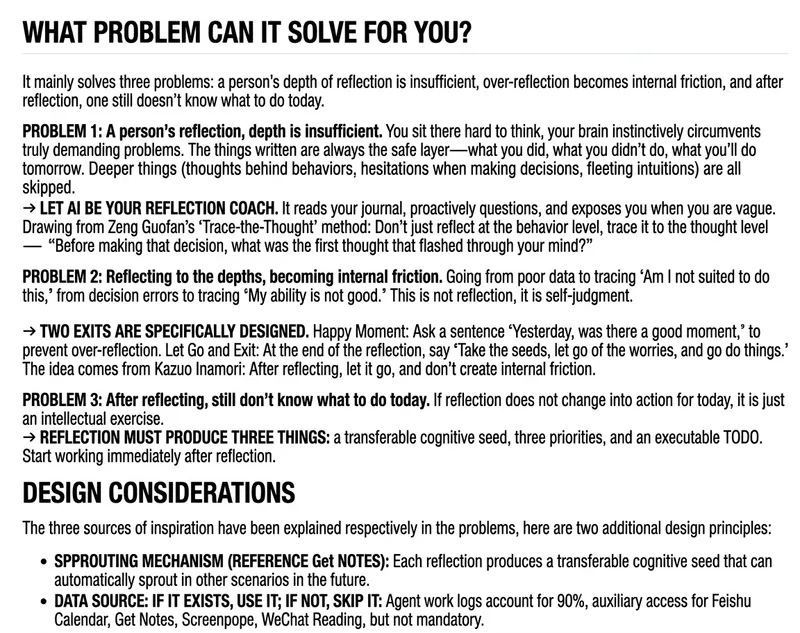
WriteZeng Guofan's review skills
Morning Reflection—A daily structured reflection dialogue. It reads yesterday's report, runs a 4-question structured interview, extracts today's top 3 priorities, and saves output to Obsidian. Trigger methods: /morning-review, /morning-reflection, /review, "morning-reflection", "morning review", "good morning", "let's reflect", "start reflecting", "today's reflection", "review yesterday", "reflect on yesterday", "yesterday's reflection", "review". Quick mode supported: /morning-review quick, /morning-reflection quick.
 Write
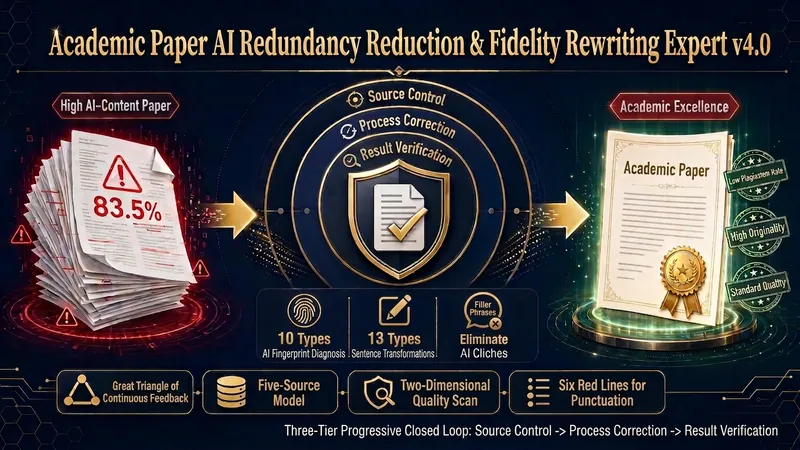
WriteAcademic Paper AIGC Rewriting Expert v6.0 (Plagiarism Reduction and Quality Preservation)
Based on a three-tiered, progressive closed-loop system of "source control → process correction → result verification," this approach integrates the holistic writing perspective of the "Big Cycle Iron Triangle," the five-source model for source control, 10 AI text fingerprint diagnostic methods, three-dimensional seven-subtype detailed diagnostics, 13 sentence transformation techniques, and 20 AI-generated catchphrase elimination strategies. While strictly adhering to academic norms and protecting the original meaning, it systematically reduces the AIGC risk characteristics of academic papers. Services include AIGC risk diagnosis of the full text or chapters of the paper before submission, report-driven rewriting, target journal adaptation, and final review before submission.
Analysis of College Entrance Examination Question-Setting Patterns (Comprehensive Edition)
Based on the provided past exam questions, we extract the question structure, deduce the profile of the question setter, summarize the core question-setting patterns, and generate a subject teaching and exam preparation report.
Why we love this skill
This unique skill takes a different approach, accurately capturing the underlying logic of college entrance examination questions by reverse-engineering the examiner's profile. It not only analyzes the question structure but also incorporates current policy trends, providing a unique perspective for teaching and exam preparation.
Description
A cross-disciplinary tool for analyzing college entrance examination (Gaokao) question patterns. Supports subjects such as geography, history, politics, Chinese language, mathematics, physics, chemistry, and biology. Based on the user-selected subject, it automatically utilizes the characteristics of the corresponding curriculum standards, extracts question patterns from past exam papers, infers the academic background and question-setting preferences of the examiners, cross-validates policy hotspots, generates a question-setting direction analysis report, and provides original mock exam questions. Suitable for teachers of all subjects for teaching research, lesson preparation, and mock exam creation.
Related Skills
View allWriteRewrite for Native EN Tweets
Convert short text in ANY language (Chinese, English, Japanese, etc. — ≤200 chars) into 2-3 native-sounding English variants for X/Twitter, using authentic casual phrasing and current Gen Z slang (without being flippant), each followed by a brief glossary of slang used. This means you can refine your own expression while learning the most current English trends—slang, colloquialisms, and other things they don't teach you in textbooks—straight from the English-speaking world.
WriteZeng Guofan's review skills
Morning Reflection—A daily structured reflection dialogue. It reads yesterday's report, runs a 4-question structured interview, extracts today's top 3 priorities, and saves output to Obsidian. Trigger methods: /morning-review, /morning-reflection, /review, "morning-reflection", "morning review", "good morning", "let's reflect", "start reflecting", "today's reflection", "review yesterday", "reflect on yesterday", "yesterday's reflection", "review". Quick mode supported: /morning-review quick, /morning-reflection quick.
WriteAcademic Paper AIGC Rewriting Expert v6.0 (Plagiarism Reduction and Quality Preservation)
Based on a three-tiered, progressive closed-loop system of "source control → process correction → result verification," this approach integrates the holistic writing perspective of the "Big Cycle Iron Triangle," the five-source model for source control, 10 AI text fingerprint diagnostic methods, three-dimensional seven-subtype detailed diagnostics, 13 sentence transformation techniques, and 20 AI-generated catchphrase elimination strategies. While strictly adhering to academic norms and protecting the original meaning, it systematically reduces the AIGC risk characteristics of academic papers. Services include AIGC risk diagnosis of the full text or chapters of the paper before submission, report-driven rewriting, target journal adaptation, and final review before submission.
Find your next favorite skill
Explore more curated AI skills for research, creation, and everyday work.