Ebbinghaus Memory Assistant
Description
Recommended by
Nico@YouMind
Why we love this skill
This skill is based on the Ebbinghaus forgetting curve, providing intelligent spaced review to ensure efficient memorization of knowledge points. Its uniqueness lies in supporting multi-scenario applications, from knowledge input to email reminders, comprehensively aiding learning.
Make knowledge truly stick in your mind Based on the scientific principle of the forgetting curve, automatically schedule 8 rounds of spaced review (same day, 1 day, 2 days, 4 days, 7 days, 15 days, 30 days, 60 days) to convert short-term memory into long-term memory. Supports inputting any content: foreign language words, exam focus points, reading notes, professional concepts, work knowledge, unlimited types, freely categorizable. Three review methods: dialogue Q&A, email reminders, visual calendar. Data is persistently saved, so learned content is never lost. Just tell it what you want to remember, and let the system handle the rest.
Related Skills
View all Research
Fun Word Memorization with AI
Transform the drudgery of word memorization into an artistic visual journey. This skill blends cognitive psychology with aesthetic intuition to create a customized "memory card" for every English word you enter. It not only parses phonetics, definitions, and word difficulty—its real value lies in its unique "story-based memory encoding": through word decomposition, root and affix exploration, visual shape associations, or natural homophones, it weaves multiple memory dimensions into a vivid short story, establishing a profound visual mapping in your mind. The output is a highly textured single-page HTML file with a warm, retro, artistic aesthetic. Each card uses a muted Morandi palette, elegant serif fonts, and is accented with perforated stamp edges, ticket-style lines, or hand-drawn SVG line art. This self-contained format supports offline browsing, so you can review words anytime as if flipping through a journal. Whether you're preparing for academic vocabulary or accumulating refined expressions daily, it makes the process of memorizing words as delightful as collecting art.
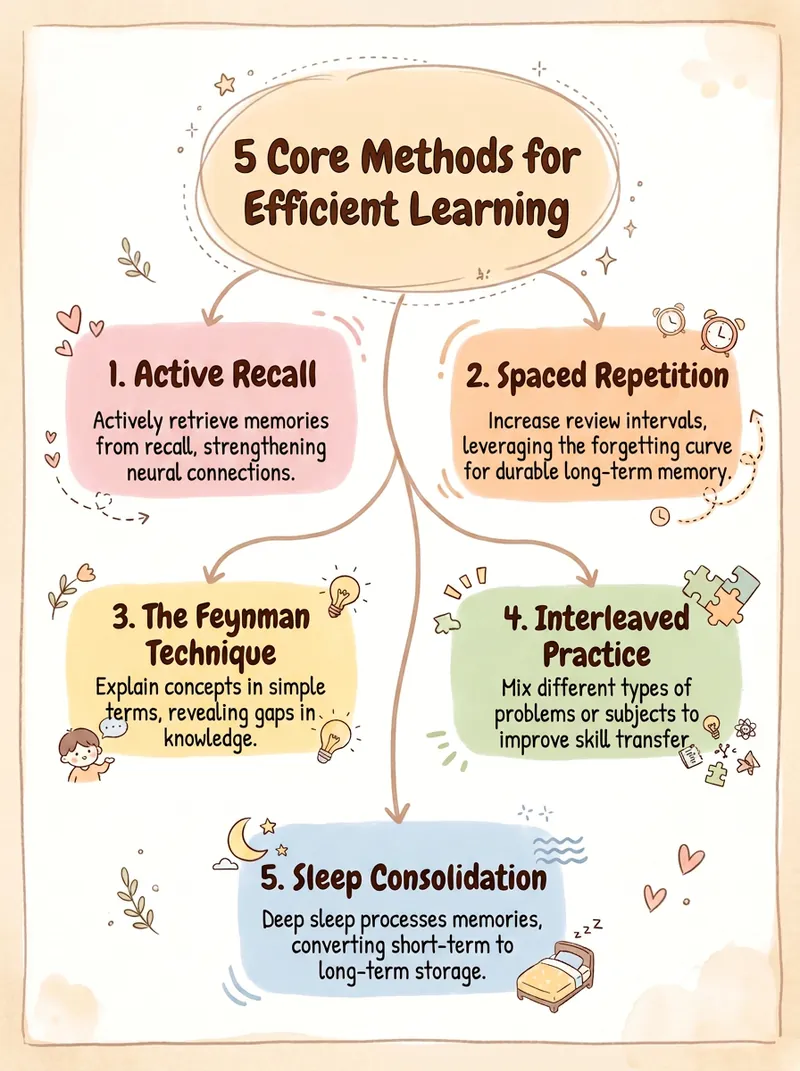
Concept & Mind Map Generator
Studying but not retaining, flipping through notes as if you never saw them? Trying to create a mind map for Xiaohongshu, but the software takes forever, the color scheme ends up looking cheap, and exports are full of AI-generated giveaways. Paste a piece of content or a topic, and instantly generate a publishable knowledge graph—beautiful, clear, and logically sound. ✨ Core Capabilities 1. 4 diagram types: Mind Map (review), Concept Relationship Diagram (who influences who), Knowledge Framework (systematization), Process Flow Diagram (development timeline) 2. First shows a text structure for your approval, then generates the diagram—no mistakes, no rework 3. 5 styles: Creamy Journal, Business Minimal, Tech Blue, Morandi, Black & White Wireframe—one-click switching 4. 4 aspect ratios: Xiaohongshu 3:4, Square 1:1, Presentation 16:9, Portrait 9:16 5. Anti-AI-vibe guardrails: no purple-white gradients, no 3D plastic look, no rigid symmetry; clean lines with no tangles 📱 Use Cases Students reviewing key points, knowledge creators making infographics, teachers preparing presentation images, reading notes, illustrations for WeChat Official Accounts or Zhihu articles—ready to post on Xiaohongshu to collect saves. One piece of content, one image says it all—turning 'can't remember' into 'remember at a glance'.
Learning Plan Skill
Turn “I want to learn” into a systematic learning plan you can start today, with clear daily actions. Just provide your learning goal, current level, timeline, available study time, and learning preferences. The Skill will organize priorities around your real situation, identify strengths and gaps, and break your larger goal into verifiable milestones with clear criteria for measuring progress. The plan covers languages, programming, musical instruments, exams, fitness, and other skill-learning scenarios. It includes a prioritized knowledge framework, a phased roadmap, and daily execution templates tailored to weekday and weekend schedules. Each task specifies the learning content, practice method, time commitment, and completion standard. The plan also emphasizes combining input and output, helping you turn what you have “seen and heard” into skills you can actually use. It also organizes resources such as videos, audio, books, and tools according to your learning preferences, and verifies available links online. For challenges such as procrastination, losing motivation after a few days, perfectionism, lack of feedback, or unexpected interruptions, it provides safeguards to help you stay on track. The final deliverables include a Day 1 action checklist, a milestone review checklist, and a complete execution document. After you confirm the plan, it can also generate an offline-accessible HTML check-in tool for recording daily tasks, phase progress, milestones, and learning resources.
Ebbinghaus Memory Assistant
Description
Recommended by
Nico@YouMind
Why we love this skill
This skill is based on the Ebbinghaus forgetting curve, providing intelligent spaced review to ensure efficient memorization of knowledge points. Its uniqueness lies in supporting multi-scenario applications, from knowledge input to email reminders, comprehensively aiding learning.
Make knowledge truly stick in your mind Based on the scientific principle of the forgetting curve, automatically schedule 8 rounds of spaced review (same day, 1 day, 2 days, 4 days, 7 days, 15 days, 30 days, 60 days) to convert short-term memory into long-term memory. Supports inputting any content: foreign language words, exam focus points, reading notes, professional concepts, work knowledge, unlimited types, freely categorizable. Three review methods: dialogue Q&A, email reminders, visual calendar. Data is persistently saved, so learned content is never lost. Just tell it what you want to remember, and let the system handle the rest.
Related Skills
View allResearchFun Word Memorization with AI
Transform the drudgery of word memorization into an artistic visual journey. This skill blends cognitive psychology with aesthetic intuition to create a customized "memory card" for every English word you enter. It not only parses phonetics, definitions, and word difficulty—its real value lies in its unique "story-based memory encoding": through word decomposition, root and affix exploration, visual shape associations, or natural homophones, it weaves multiple memory dimensions into a vivid short story, establishing a profound visual mapping in your mind. The output is a highly textured single-page HTML file with a warm, retro, artistic aesthetic. Each card uses a muted Morandi palette, elegant serif fonts, and is accented with perforated stamp edges, ticket-style lines, or hand-drawn SVG line art. This self-contained format supports offline browsing, so you can review words anytime as if flipping through a journal. Whether you're preparing for academic vocabulary or accumulating refined expressions daily, it makes the process of memorizing words as delightful as collecting art.
Concept & Mind Map Generator
Studying but not retaining, flipping through notes as if you never saw them? Trying to create a mind map for Xiaohongshu, but the software takes forever, the color scheme ends up looking cheap, and exports are full of AI-generated giveaways. Paste a piece of content or a topic, and instantly generate a publishable knowledge graph—beautiful, clear, and logically sound. ✨ Core Capabilities 1. 4 diagram types: Mind Map (review), Concept Relationship Diagram (who influences who), Knowledge Framework (systematization), Process Flow Diagram (development timeline) 2. First shows a text structure for your approval, then generates the diagram—no mistakes, no rework 3. 5 styles: Creamy Journal, Business Minimal, Tech Blue, Morandi, Black & White Wireframe—one-click switching 4. 4 aspect ratios: Xiaohongshu 3:4, Square 1:1, Presentation 16:9, Portrait 9:16 5. Anti-AI-vibe guardrails: no purple-white gradients, no 3D plastic look, no rigid symmetry; clean lines with no tangles 📱 Use Cases Students reviewing key points, knowledge creators making infographics, teachers preparing presentation images, reading notes, illustrations for WeChat Official Accounts or Zhihu articles—ready to post on Xiaohongshu to collect saves. One piece of content, one image says it all—turning 'can't remember' into 'remember at a glance'.
Learning Plan Skill
Turn “I want to learn” into a systematic learning plan you can start today, with clear daily actions. Just provide your learning goal, current level, timeline, available study time, and learning preferences. The Skill will organize priorities around your real situation, identify strengths and gaps, and break your larger goal into verifiable milestones with clear criteria for measuring progress. The plan covers languages, programming, musical instruments, exams, fitness, and other skill-learning scenarios. It includes a prioritized knowledge framework, a phased roadmap, and daily execution templates tailored to weekday and weekend schedules. Each task specifies the learning content, practice method, time commitment, and completion standard. The plan also emphasizes combining input and output, helping you turn what you have “seen and heard” into skills you can actually use. It also organizes resources such as videos, audio, books, and tools according to your learning preferences, and verifies available links online. For challenges such as procrastination, losing motivation after a few days, perfectionism, lack of feedback, or unexpected interruptions, it provides safeguards to help you stay on track. The final deliverables include a Day 1 action checklist, a milestone review checklist, and a complete execution document. After you confirm the plan, it can also generate an offline-accessible HTML check-in tool for recording daily tasks, phase progress, milestones, and learning resources.
Find your next favorite skill
Explore more curated AI skills for research, creation, and everyday work.