Fun Word Memorization with AI
AI word cards with story mnemonics, offline.
Description
Why we love this skill
Blends cognitive psychology and retro aesthetics, turns words into vivid stories, and generates offline, collectible visual cards that make memorizing vocabulary a delightful ritual.
Transform the drudgery of word memorization into an artistic visual journey. This skill blends cognitive psychology with aesthetic intuition to create a customized "memory card" for every English word you enter. It not only parses phonetics, definitions, and word difficulty—its real value lies in its unique "story-based memory encoding": through word decomposition, root and affix exploration, visual shape associations, or natural homophones, it weaves multiple memory dimensions into a vivid short story, establishing a profound visual mapping in your mind. The output is a highly textured single-page HTML file with a warm, retro, artistic aesthetic. Each card uses a muted Morandi palette, elegant serif fonts, and is accented with perforated stamp edges, ticket-style lines, or hand-drawn SVG line art. This self-contained format supports offline browsing, so you can review words anytime as if flipping through a journal. Whether you're preparing for academic vocabulary or accumulating refined expressions daily, it makes the process of memorizing words as delightful as collecting art.
Related Skills
View all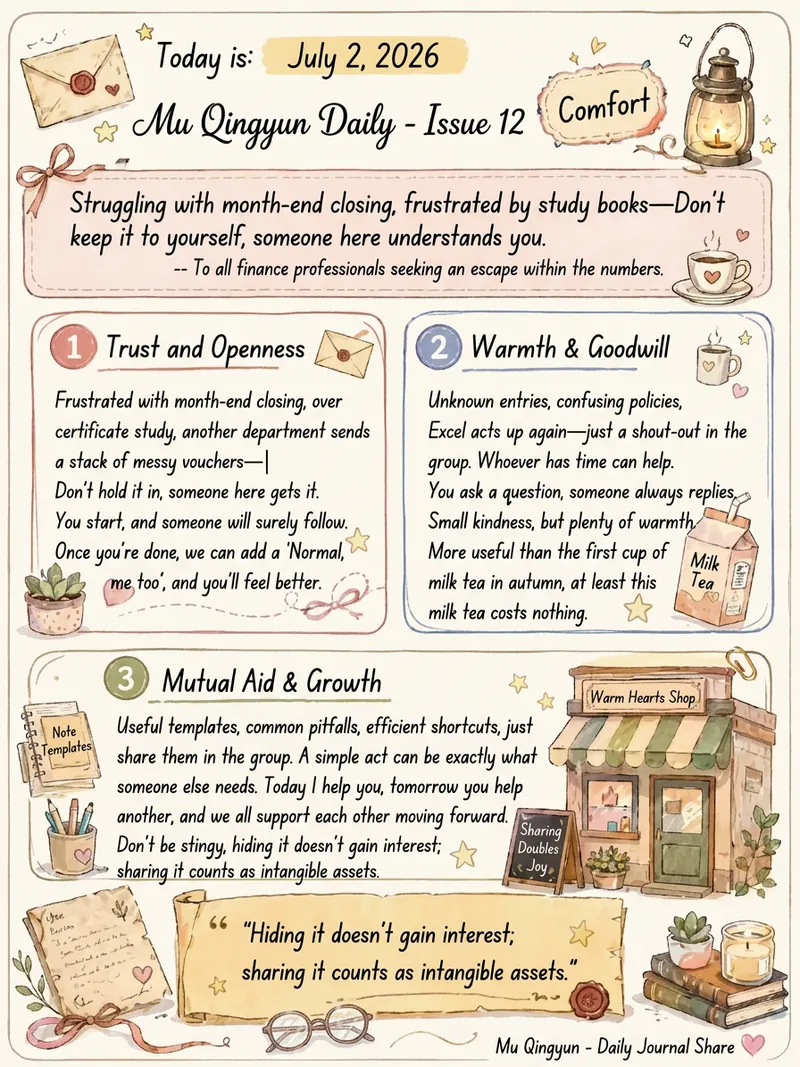
Daily Journal Card Generator
Transform your daily thoughts and reflections into artistic portrait-oriented knowledge cards. This tool captures the essence of your daily journal entries and presents them in a unique warm watercolor hand-drawn style on elegant 3:4 ratio cards. Each time you generate, you’ll receive a card with a one-of-a-kind visual experience. It cleverly combines rounded text boxes, hand-drawn borders, and scroll-like styles to make your content structured and pleasing to the eye. From the calligraphy-like title to the clear readability of the body text, and the highlighted display of key quotes, every layout is layered with thoughtful design, ensuring each record becomes a treasurable work of art. We have carefully designed a "three-layer" decoration mechanism to ensure that each card is both consistent in style and full of surprises. First, thematic decorations intelligently match your keywords—like a quill, hourglass, or tangled thread—directly echoing the core content. Second, based on the overall emotion of your text, we select a unique atmospheric theme, such as "Letter Corner" or "Sitting by the Night Window," placing the card in a specific scene. Finally, the third layer picks 3-5 elements from a rich generic ornament pool—like small stars, hearts, or mini potted plants—scattered across the card to add breathing room and liveliness, while ensuring each combination is unique. These knowledge cards use a warm off-white canvas with soft Morandi watercolor strokes—low saturation yet deeply soothing. Whether your daily journal is a gentle narrative or a collection of sharp insights, we choose the most suitable visual layout to match its character, so your daily thoughts and feelings are recorded and shared in the most beautiful form.
 Research
Knowledge Card Generator
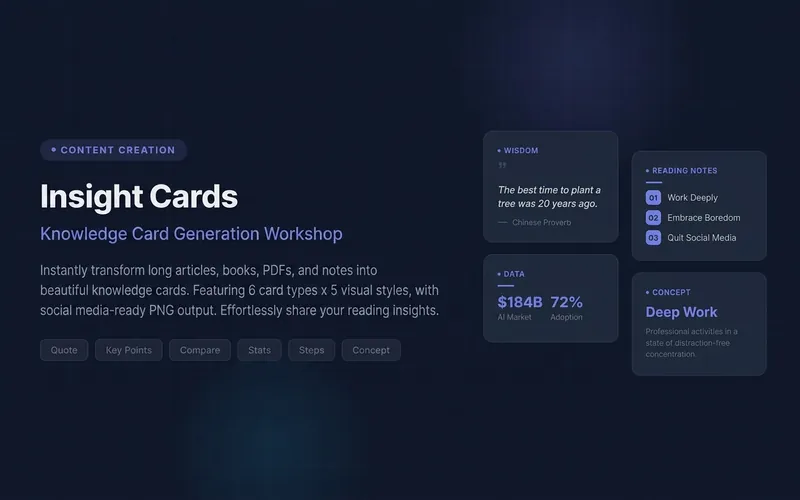
Turn your articles, notes, quotes, or any inspiration into beautiful knowledge cards to easily share your insights. Whether it's reading notes, course highlights, or daily thoughts, this tool intelligently identifies core content, automatically selects the most suitable card type, and presents it in a professional and visually appealing style. You can choose to generate a single eye-catching knowledge card or create multiple linked "card sets" with one click, perfect for publishable swipeable carousel content on social platforms like Xiaohongshu and Instagram. It automatically designs a cover for you, extracts key points for each page, and attaches the source, ensuring your sharing is both deep and shareable. We offer six card types: quotes, key points, comparisons, steps, data, and concepts, paired with five curated visual styles: academic blue, warm literature, dark tech, magazine red, and minimalist black and white, with full support for Chinese content. You can also customize your brand primary color and account signature, giving each card a personal touch, ensuring knowledge output is as high-quality as input. For companion use: For long-text infographics, check out 'Infographic Maker'; for finished drafts to publish on WeChat Official Account, check out '公众号排版器'.
Arts Education Visual Webpages
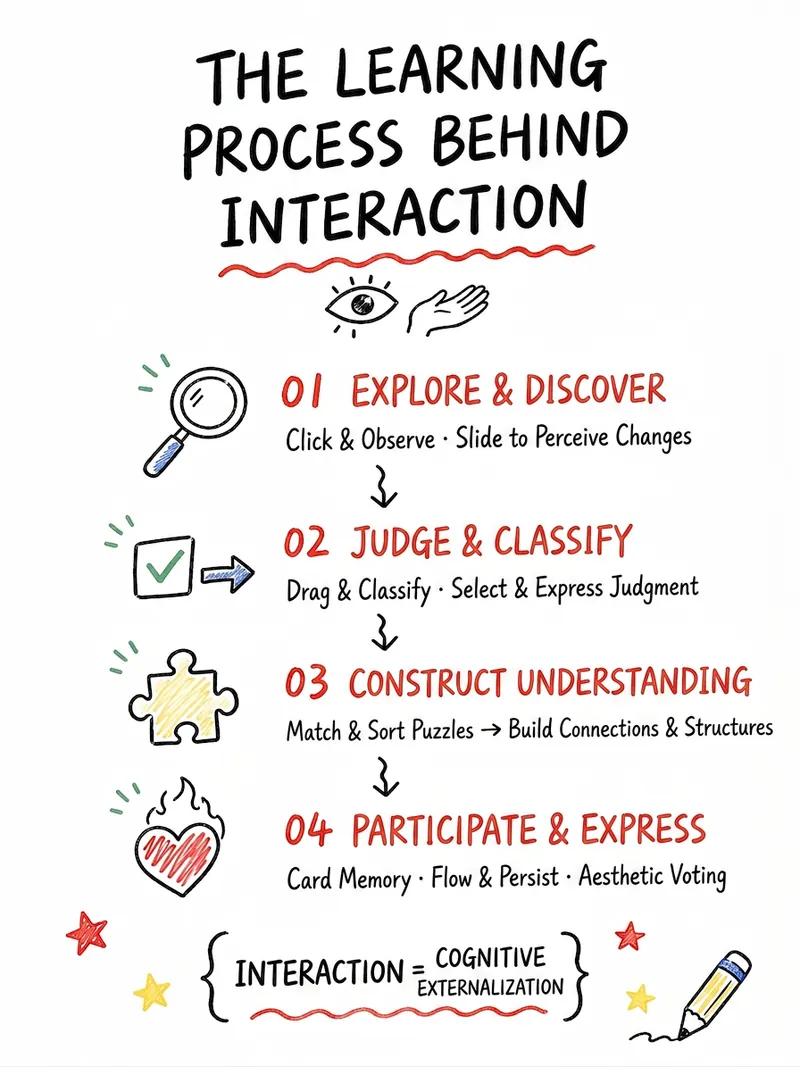
Easily transform K-12 arts education content into lively and engaging interactive web experiences. This skill is designed specifically for arts teachers, helping you present diverse arts courses—including fine arts, music, dance, drama, film, calligraphy, and intangible cultural heritage—to students through visualization and gamification. Whether you want to design click-to-explore, drag-and-drop sorting, color experiments, aesthetic voting, or challenge tasks, this skill can intelligently generate a variety of interactive plans based on your course name, core knowledge points, and teaching objectives. It not only transforms abstract arts concepts into digital content that students can view, manipulate, and create, but also iterates and optimizes based on your feedback, ensuring the plan meets teaching needs while being aesthetically pleasing. In the end, you will receive a detailed interactive webpage content draft, including page structure, student workflow, feedback design, visual style suggestions, and classroom usage guidance. Additionally, this skill can directly generate AI-ready webpage creation prompts, HTML design drafts, and even single-file HTML code, instantly energizing your arts classroom and enhancing student engagement and learning outcomes.
Fun Word Memorization with AI
AI word cards with story mnemonics, offline.
Description
Why we love this skill
Blends cognitive psychology and retro aesthetics, turns words into vivid stories, and generates offline, collectible visual cards that make memorizing vocabulary a delightful ritual.
Transform the drudgery of word memorization into an artistic visual journey. This skill blends cognitive psychology with aesthetic intuition to create a customized "memory card" for every English word you enter. It not only parses phonetics, definitions, and word difficulty—its real value lies in its unique "story-based memory encoding": through word decomposition, root and affix exploration, visual shape associations, or natural homophones, it weaves multiple memory dimensions into a vivid short story, establishing a profound visual mapping in your mind. The output is a highly textured single-page HTML file with a warm, retro, artistic aesthetic. Each card uses a muted Morandi palette, elegant serif fonts, and is accented with perforated stamp edges, ticket-style lines, or hand-drawn SVG line art. This self-contained format supports offline browsing, so you can review words anytime as if flipping through a journal. Whether you're preparing for academic vocabulary or accumulating refined expressions daily, it makes the process of memorizing words as delightful as collecting art.
Related Skills
View allDaily Journal Card Generator
Transform your daily thoughts and reflections into artistic portrait-oriented knowledge cards. This tool captures the essence of your daily journal entries and presents them in a unique warm watercolor hand-drawn style on elegant 3:4 ratio cards. Each time you generate, you’ll receive a card with a one-of-a-kind visual experience. It cleverly combines rounded text boxes, hand-drawn borders, and scroll-like styles to make your content structured and pleasing to the eye. From the calligraphy-like title to the clear readability of the body text, and the highlighted display of key quotes, every layout is layered with thoughtful design, ensuring each record becomes a treasurable work of art. We have carefully designed a "three-layer" decoration mechanism to ensure that each card is both consistent in style and full of surprises. First, thematic decorations intelligently match your keywords—like a quill, hourglass, or tangled thread—directly echoing the core content. Second, based on the overall emotion of your text, we select a unique atmospheric theme, such as "Letter Corner" or "Sitting by the Night Window," placing the card in a specific scene. Finally, the third layer picks 3-5 elements from a rich generic ornament pool—like small stars, hearts, or mini potted plants—scattered across the card to add breathing room and liveliness, while ensuring each combination is unique. These knowledge cards use a warm off-white canvas with soft Morandi watercolor strokes—low saturation yet deeply soothing. Whether your daily journal is a gentle narrative or a collection of sharp insights, we choose the most suitable visual layout to match its character, so your daily thoughts and feelings are recorded and shared in the most beautiful form.
ResearchKnowledge Card Generator
Turn your articles, notes, quotes, or any inspiration into beautiful knowledge cards to easily share your insights. Whether it's reading notes, course highlights, or daily thoughts, this tool intelligently identifies core content, automatically selects the most suitable card type, and presents it in a professional and visually appealing style. You can choose to generate a single eye-catching knowledge card or create multiple linked "card sets" with one click, perfect for publishable swipeable carousel content on social platforms like Xiaohongshu and Instagram. It automatically designs a cover for you, extracts key points for each page, and attaches the source, ensuring your sharing is both deep and shareable. We offer six card types: quotes, key points, comparisons, steps, data, and concepts, paired with five curated visual styles: academic blue, warm literature, dark tech, magazine red, and minimalist black and white, with full support for Chinese content. You can also customize your brand primary color and account signature, giving each card a personal touch, ensuring knowledge output is as high-quality as input. For companion use: For long-text infographics, check out 'Infographic Maker'; for finished drafts to publish on WeChat Official Account, check out '公众号排版器'.
Arts Education Visual Webpages
Easily transform K-12 arts education content into lively and engaging interactive web experiences. This skill is designed specifically for arts teachers, helping you present diverse arts courses—including fine arts, music, dance, drama, film, calligraphy, and intangible cultural heritage—to students through visualization and gamification. Whether you want to design click-to-explore, drag-and-drop sorting, color experiments, aesthetic voting, or challenge tasks, this skill can intelligently generate a variety of interactive plans based on your course name, core knowledge points, and teaching objectives. It not only transforms abstract arts concepts into digital content that students can view, manipulate, and create, but also iterates and optimizes based on your feedback, ensuring the plan meets teaching needs while being aesthetically pleasing. In the end, you will receive a detailed interactive webpage content draft, including page structure, student workflow, feedback design, visual style suggestions, and classroom usage guidance. Additionally, this skill can directly generate AI-ready webpage creation prompts, HTML design drafts, and even single-file HTML code, instantly energizing your arts classroom and enhancing student engagement and learning outcomes.
Find your next favorite skill
Explore more curated AI skills for research, creation, and everyday work.