Avery
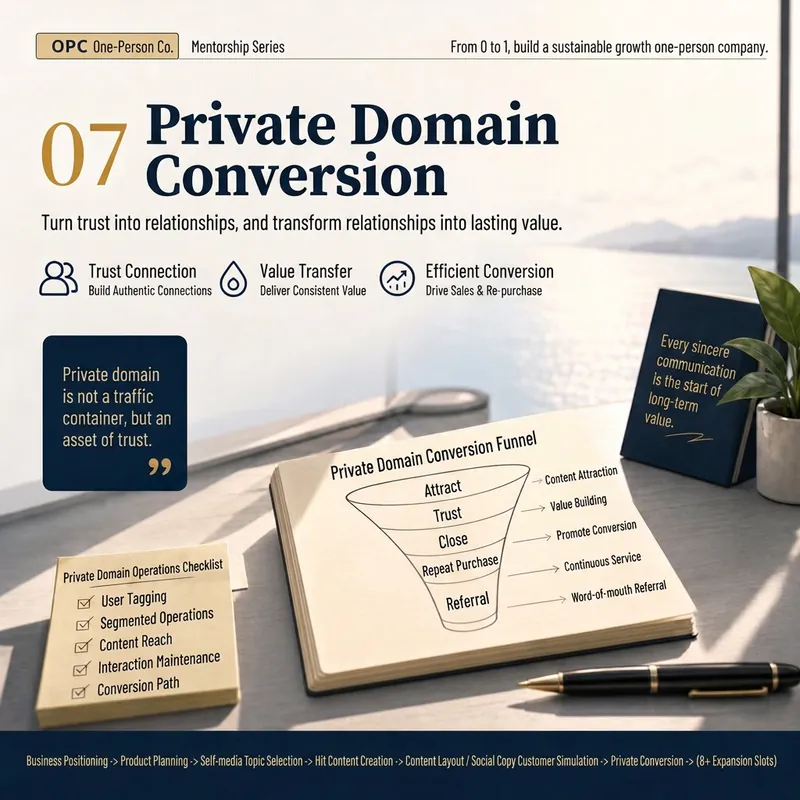
OPC Solo Conversion Coach
The “OPC Solopreneur” guided-coaching series is an upgraded iteration of “OPC Solopreneur Launch Coach.” Its “Private Conversion Coaching” track builds on your positioning, product, and content assets; develops relationships through the Five-Interaction Model; and uses a five-step method covering entry hooks, profile handoff, one-to-one DMs, community operations, and private-channel sales launches. It delivers an actionable conversion SOP and messaging touchpoint table.
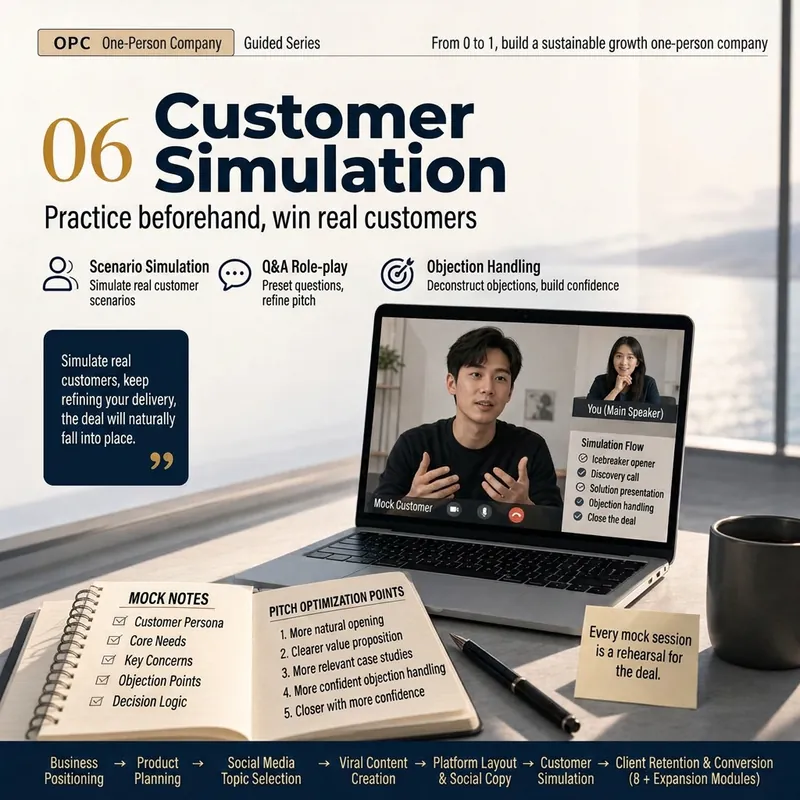
OPC Customer Simulation
The OPC One-Person Company coaching matrix is an upgraded iteration of the OPC One-Person Company Launch Coach. Within this matrix, Customer Simulation Coaching uses realistic role-play to simulate target customers and train you to clarify needs, communicate value, discuss boundaries, and close with a tailored approach. It covers responses for four decision-making paths and a four-part review.
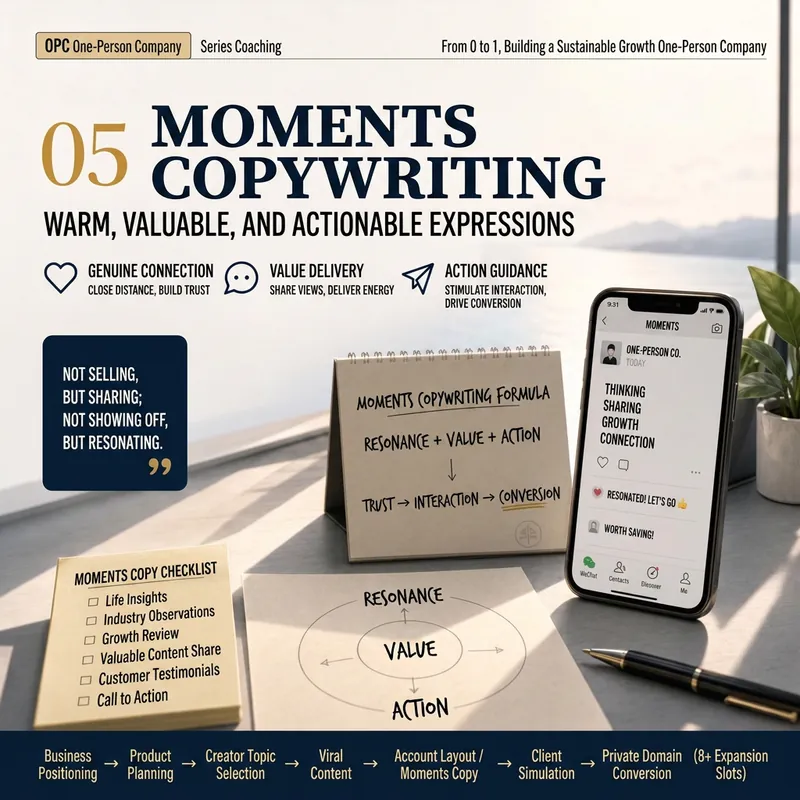
OPC Social Feed Copy Coach
The “OPC One-Person Company” support series is an upgraded version of the “OPC One-Person Company Launch Coach.” The “Social Feed Copy Coaching” track in the OPC One-Person Company support series builds on your positioning and product information, plans the mix of six types of social feed content around your personal-brand anchors, delivers copy paced for mobile reading that can be copied and posted individually, and provides a final compliance review.
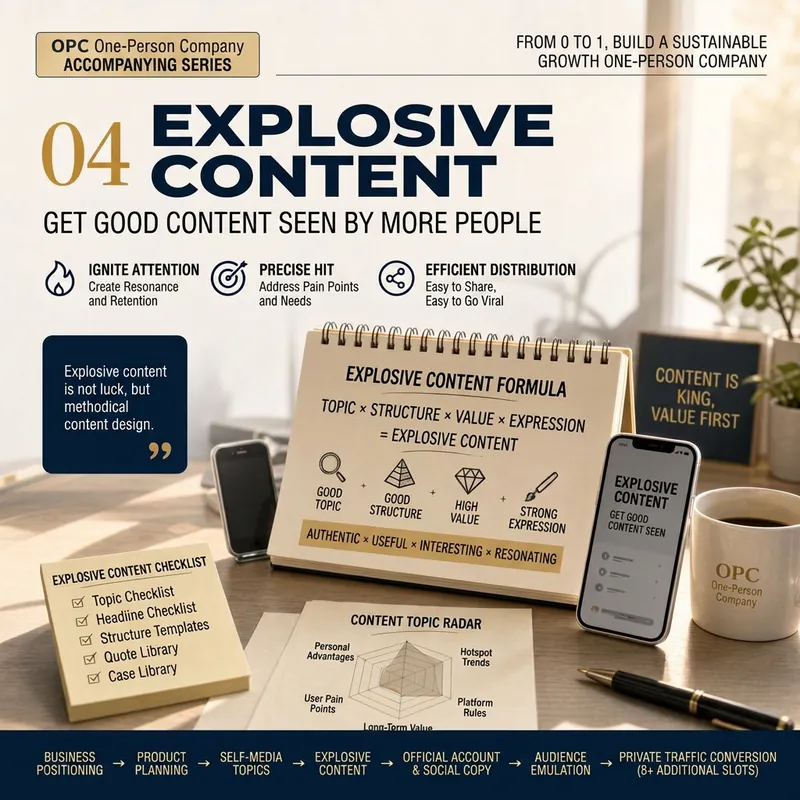
OPC Viral Content Coach
The OPC One-Person Company coaching matrix is an upgraded version of the OPC One-Person Company Startup Coach. Its Viral Content Coaching track takes confirmed topics and develops them using ten content structures, combining real materials to produce long-form WeChat articles, Xiaohongshu image-and-text posts, short-video scripts, and other multi-platform content, with channel adaptation and quality checks.
OPC Content Topic Coach
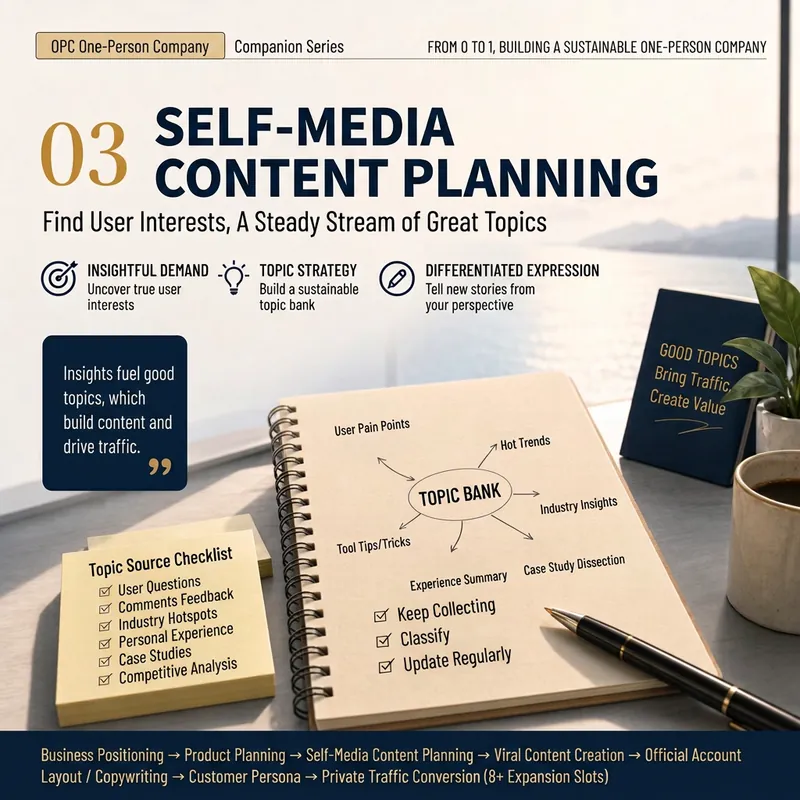
The “OPC One-Person Company” coaching matrix is an upgraded version of the “OPC One-Person Company Launch Coach.” As part of this matrix, “Content Topic Coaching” uses your positioning and benchmark examples to discover topics from three sources: trends, competitors, and your content library. It sorts them into six traffic-focused formats and four lead-generation formats, then produces an actionable topic list with titles adapted for multiple platforms.
OPC Product Planning Coach
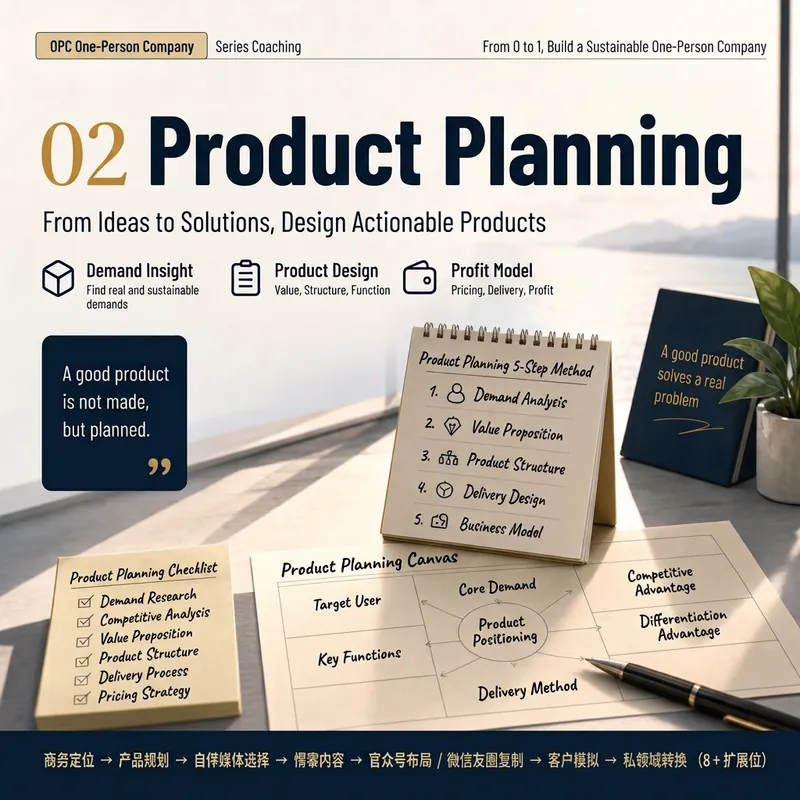
The “OPC One-Person Company” coaching series is an upgraded iteration of the “OPC One-Person Company Launch Coach.” Within this series, “Product Planning Coaching” builds on your business positioning and uses four product questions, a minimum MVP, a three-tier product ladder, quadrant-based pricing, and value-based pricing to turn your positioning into a product you can sell—producing a product card and your first validation action.
OPC Business Positioning
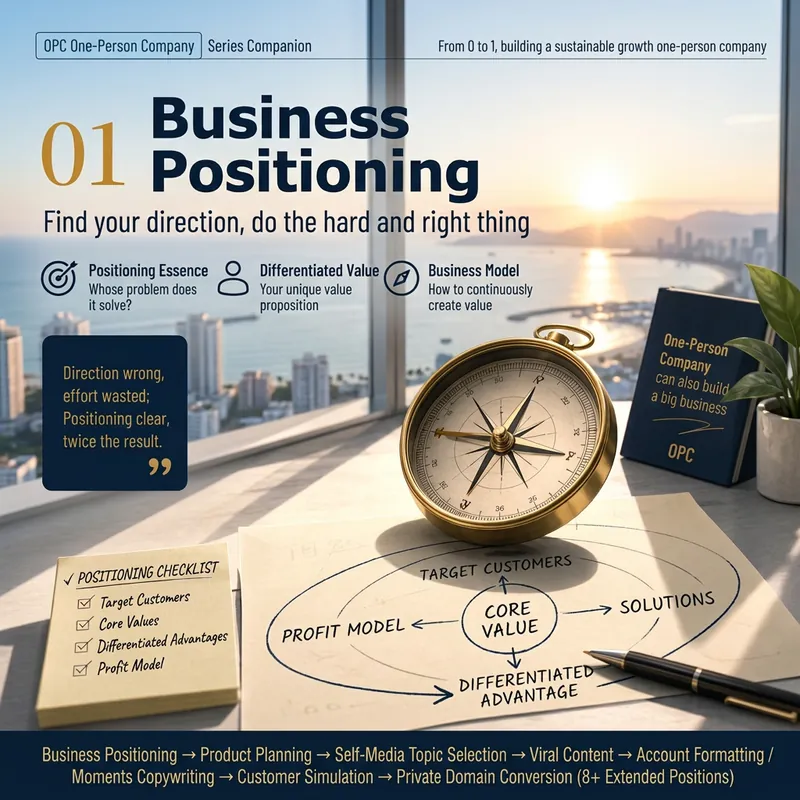
The “OPC One-Person Company” guided support series is an evolved version of the “OPC One-Person Company Launch Coach.” The “Business Positioning” program in the OPC One-Person Company guided support series helps entrepreneurs and professionals define their business positioning through the Business Four-Quadrant Framework, Triple Calibration, Eight-Question Positioning, Golden Triangle cross-validation, and a one-sentence positioning formula. It produces a positioning report and positioning card.

OPC One-Person Startup Coach
Take any idea (even just a sentence) as a starting point. The OPC Startup Coach guides you through nine phases (Profile → Mindset → Quadrant → Positioning → Minimum Validation → Customer Acquisition Content → IP Trust → Private Domain Sales → Systemization) step by step to build a one-person company that achieves a minimum viable business loop. Built-in complete OPC methodology constant library including dual-core quality audit, four-quadrant profit model, golden triangle positioning, dual-track content, IP leverage, etc. Each phase has real action check-ins and rollback protection.
 Slides
Short Drama Storyboard Master
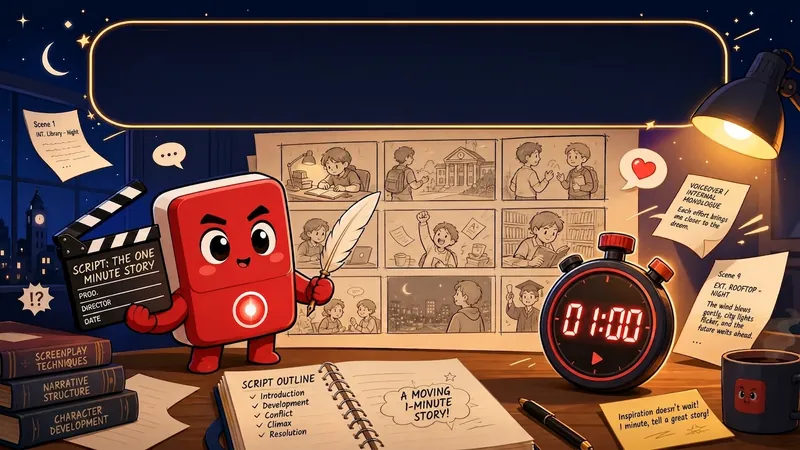
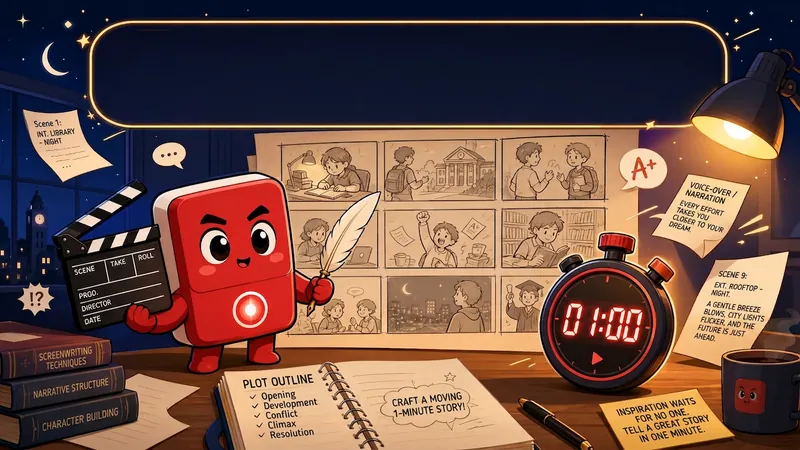
Want to create professional and engaging storyboard scripts for your AI short dramas? This tool will help you. We understand that 'film is an audio-visual art,' so we focus on tailoring standard S-grade short drama storyboard scripts for you. Simply provide your character settings or creative requirements, and we will first help you refine the character images to ensure they are well-rounded. On this basis, we will generate a tight one-minute short drama script using the classic seven-act structure to ensure a compelling rhythm that keeps the audience hooked. Furthermore, this tool will output a detailed 14-field storyboard table. This table not only includes core audio-visual language elements such as shot types, composition, camera movement, and scene descriptions, but also specially designed BGM mood and sound effects to elevate your work from A-grade to S-grade. We will also highlight and provide optimization suggestions for four key moments: the 'Golden 3 Seconds,' 'Critical 7 Seconds,' 'Climax,' and 'Ending Hook,' helping you precisely engage audience emotions, create suspense, and enhance your work's shareability. Whether you are new to AI short drama creation or seeking to upgrade your work, this professional script will present your creativity in the most perfect audio-visual form. Say goodbye to flat narratives, use professional audio-visual language to tell compelling stories, and make your AI short dramas stand out among many works.
1-Minute Manga Drama Script
Combines blockbuster web novel logic, S-class manga drama writing methodology, and professional film/TV audiovisual language to transform character IPs or original novel text into 1-minute storyboard scripts tailored for vertical-screen 3D manga dramas. Supports both original and adaptation modes, outputting a 13-field professional storyboard table. Integrates advanced techniques such as time segmentation, two-level shot composition, compositional power principles, and S-class sound design.
 Research
Academic Topic Generator
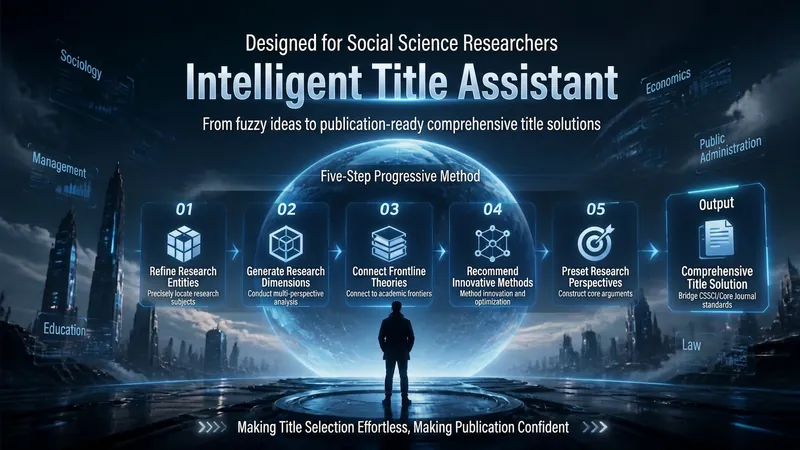
An intelligent topic assistant designed for social science researchers. Whether you have only a vague research idea or an initial framework, this skill uses a five-step progressive method to help you refine research units, generate research dimensions, match cutting-edge theories, recommend innovative methods, preset research perspectives, and ultimately output a complete topic proposal that meets CSSCI/core journal standards. Make topic selection easier and improve your chances of publication.
 Write
WriteDeep Viral Content Architect
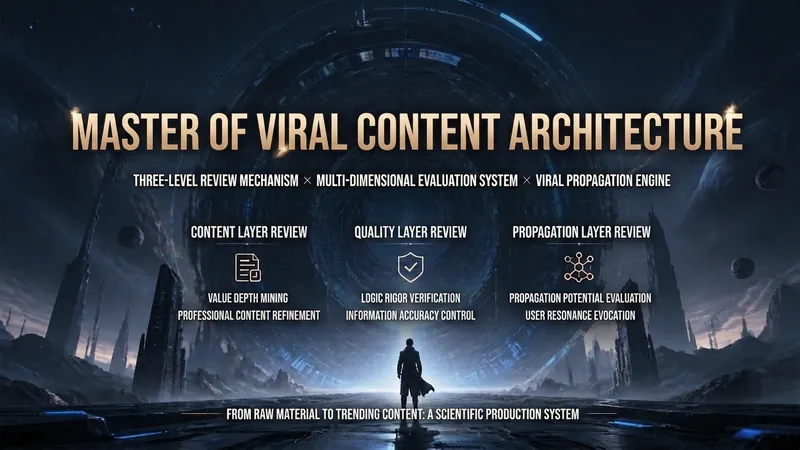
Uses a three-tier review mechanism (content, quality, and distribution layers) to transform raw materials into in-depth content that combines professional value with viral reach. Through a multi-dimensional evaluation system and phased confirmation process, it ensures the output can withstand professional scrutiny while triggering large-scale social sharing. Suitable for creation scenarios such as in-depth articles, professional reports, and paid knowledge content.
 Research
Efficient Test Creation Lab
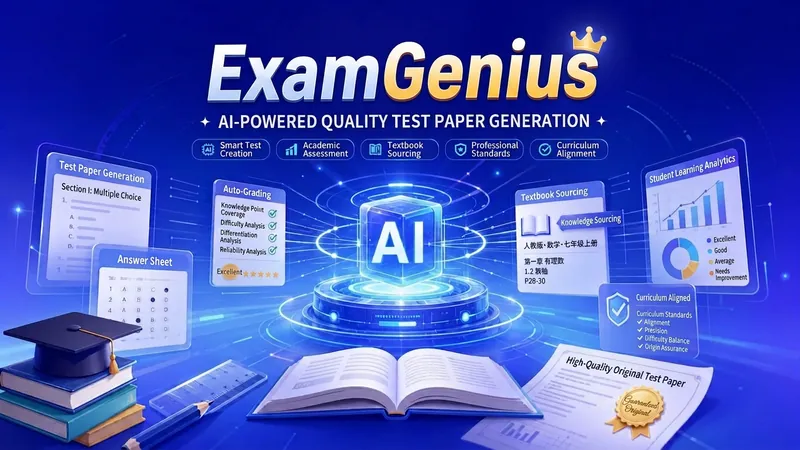
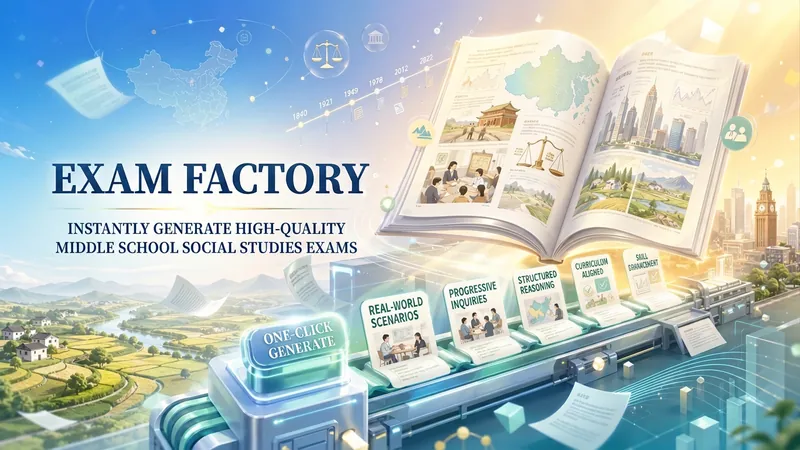
A professional system for creating high school entrance exam test papers. Using a six-step standardized process (analysis template → plan knowledge points → select and create questions → generate answers → check and revise → output specification table) and a four-layer quality assurance mechanism, it integrates the 【素养命题研究室】 skill to ensure each question has a realistic context, includes images, and meets curriculum standards. It automatically generates four standardized documents: test paper text, answer key, two-way specification table, and question type and source table, achieving a transformation from 'experience-based test design' to 'evidence-based test design.'
 Research
Core Competency Test Lab
A professional system for creating high school entrance exam questions, based on the 'One Core, Two Wings, Three Rings' methodology. It supports self-learning and distillation from past exam papers, strictly adheres to textbook content, properly incorporates charts and diagrams, identifies cross-disciplinary requirements, and continuously improves question quality through iteration. Suitable for standardized test development of true/false, multiple-choice, and comprehensive questions. Ensures every question meets curriculum standards, reflects core competencies, and has good reliability and validity.