Kasey.Inc
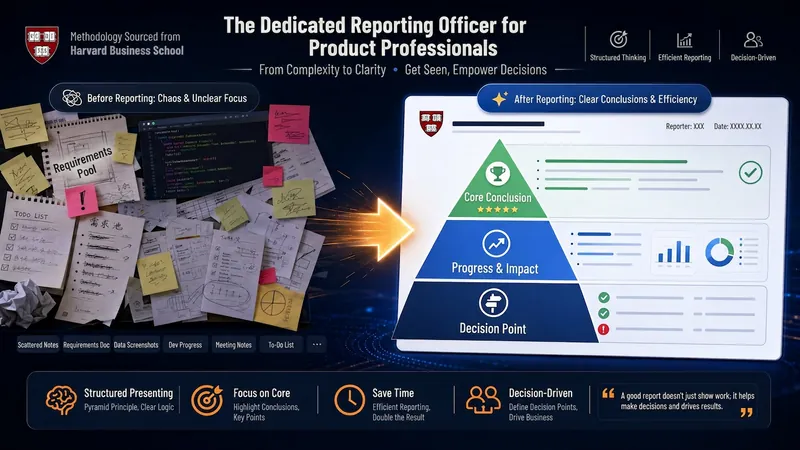
PM Report Assistant
A specialized upward reporting skill for product managers: accepts scattered materials like work notes, weekly report drafts, OKR progress, or references from product context archives. Based on Harvard's six principles of Effective Writing, it translates and compresses work records into upward reports structured as 'Conclusion → Impact → Action'. Supports written reports (concise/detailed), oral reports (key outline, full script, data cards), and PPT version (framework first, then optionally generate presentations or output PPT generation instructions for other AI tools). It marks decision points and sync points, enabling bosses to grasp key points in 30 seconds.
 Research
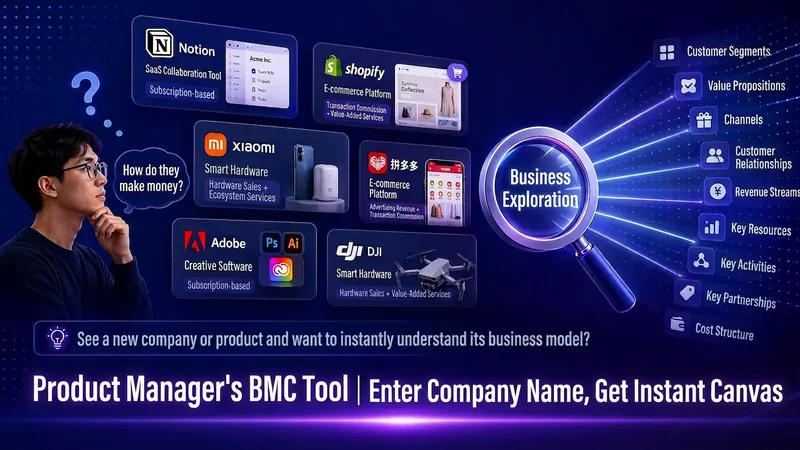
Product People's Business Canvas
Enter a company name and instantly get a business model canvas with 9 grids. Still opening ten tabs to piece together competitor analysis? Enter a company name, and this skill automatically searches online, cross-validates sources, and outputs a structured analysis report based on the 9 BMC modules. 🎯 Smart matching for 5 scenarios: Competitor research, learning about an interesting company, job application reference, investment reference, entrepreneurial inspiration—different purposes, different focus insights. 📊 3 output formats: Text document, canvas table, PPT presentation. 🔍 3 levels of analysis depth auto-adapt: From a quick question to a formal report. ✅ Strict source verification: Each citation is verified via actual access; invalid links are directly discarded, eliminating hallucinations. 🏷️ Information credibility labels: Each piece of info is marked as "Confirmed" or "Inferred", with traceable sources. 🚫 Zero fabrication commitment: If a company is not found, inform directly; do not fabricate or invent. From fragmented information to structured insights, product people instantly understand any company's business logic.
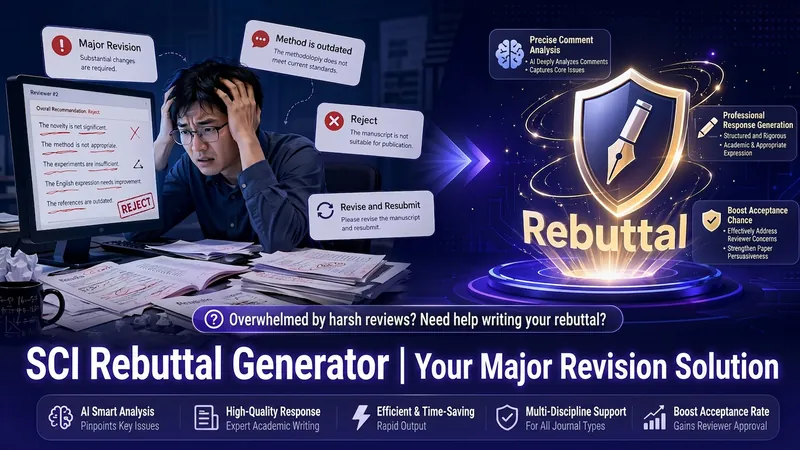
SCI Rebuttal Generator
At the final stage of SCI paper publication, properly handling peer review comments is crucial. When facing a Major Revision or harsh review comments, authors often spend significant effort deciphering the reviewer's intent and crafting a response in rigorous, appropriate academic English. A single misstep in tone, logic, or format in the rebuttal letter can trigger negative emotions from reviewers, leading to eventual rejection and severely delaying research dissemination. This skill is specifically designed for graduate students, university faculty, and researchers, built on established best practices from top international journals and academic publishing standards. Simply input the reviewer's original comment and briefly describe your actual response in Chinese (no matter how straightforward), and the engine will automatically restructure the logic to generate: ✅ Academic Tone Restructuring: Convert plain Chinese ideas into objective, humble, and professional top-tier academic English, avoiding misunderstandings due to language habits. ✅ Standardized Point-by-Point Response: Strictly follow the point-by-point response paradigm favored by top international journals, with clear structure for rapid verification by editors and reviewers. ✅ Multi-Scenario Strategy Matching: Includes 5 professional response strategies (accept suggestion and revise, agree but need extensive revision, acknowledge limitations, define research scope, politely refute), providing airtight defensive phrasing. ✅ Taboo Expression Filter: Automatically identify and correct implied offensive expressions in rebuttals (like 'obviously', 'the reviewer is wrong'), ensuring tone remains appropriate. [Use Case Demo] 📝 Your Input: Reviewer's Comment: The experimental method is somewhat outdated. Why not use the latest Method X? Your Chinese Idea: Method X is indeed new, but it doesn't suit the specific materials of this study, and current experimental conditions cannot realize it. I have already added an explanation in the discussion section for why the current method was chosen. ✨ AI-Generated Top-Tier Response: Reviewer's Comment: The experimental method is somewhat outdated. Why not use the latest Method X? Author's Response: We are grateful for this insightful suggestion. While we recognize the value of Method X as a highly advanced approach, it falls outside the primary focus of the current study because our material system requires specific characterization conditions that Method X does not currently support. We have explicitly discussed this methodological choice and its rationale in the revised manuscript (Discussion Section, Page 8, Lines 234-241) to clarify this point. Action Taken: Added a new paragraph in the Discussion section (Page 8) explaining the rationale for the chosen method. [Academic Integrity Commitment] This skill strictly adheres to academic ethics: it does not fabricate references, invent experimental data, or make academic judgments for you. All response strategies are reconstructed based on the real information you provide; AI is only responsible for language restructuring and logical optimization. When your input is insufficient to generate a complete response, AI will clearly indicate what needs to be supplemented, never making up scientific reasons on its own. [Scope of Application] SCI / SSCI / EI journal revision submissions, conference paper rebuttals, peer review communications. Eliminate cross-language communication barriers, reduce energy loss during revision. Hand over the tedious response work to AI, allowing you to focus on research itself. Help your academic work achieve acceptance!

Harvard-Level Writing Coach
In the workplace, your words are your professional image. Have you ever encountered these situations? ❌ Your emails are long-winded, and colleagues can't grasp the key points? ❌ Cross-department communication suffers from unclear requests leading to finger-pointing? ❌ You write with emotion, making you look unprofessional? This skill is built on the six core principles of Harvard's Effective Writing course. Simply input your raw thoughts, verbose drafts, or even emotional rants, and it will generate logical, conclusion-first, well-structured professional workplace writing—just like a senior executive.