
Model Routing & Token Saver
Choose models and keep project context
Model Routing & Token Saver
Choose models and keep project context
Showcase
Description
Based on task difficulty, content type, and project stage, it helps you choose a more suitable AI model and apply quota-saving rules to AI to reduce token usage. While keeping quota consumption under control, it supports programming, creative work, planning, design, and information analysis. Whether you need page components, API integrations, simple bug fixes, architecture design, complex logic, code reviews, or refactoring, it provides clear model recommendations and directly delivers the requested results. It is also well suited to everyday copywriting, titles and hooks, story-driven content, brand proposals, marketing plans, PPT outlines, visual concepts, market trends, competitor analysis, and data interpretation. Simple, batch, and formatting tasks are prioritized for greater quota efficiency. For major decisions, complex reasoning, or final polishing, it reminds you to invest in a more suitable model for quality. With continued use, it adjusts its recommendations based on your model preferences, output habits, project tech stack, key decisions, pending tasks, and known issues, reducing repetitive communication. For coding tasks, it focuses by default on the core changes and summarizes what was modified. For copywriting and proposal tasks, it first organizes the overall framework and then expands it as needed, making each conversation better aligned with your current project and working rhythm.
Related Skills
View all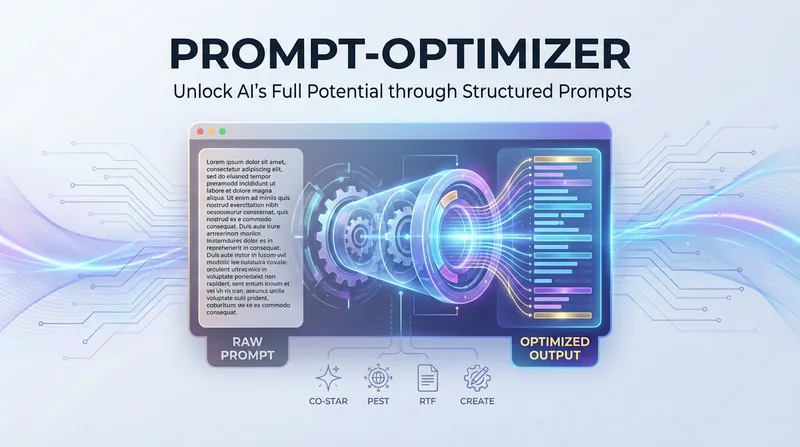
AI Prompt Optimization Expert
The AI Prompt Optimization Expert focuses on improving prompt quality through a systematic framework, helping you convey your intent precisely and making AI output more stable and predictable. Whether you need to refine existing prompts, build complex task descriptions from scratch, or find professional templates for specific scenarios, this skill provides comprehensive support. It can not only restructure vague requests into structured prompts, but also identify and fix common logical flaws through a diagnostic process. The skill includes a variety of proven optimization frameworks and can flexibly switch strategies based on the nature of the task. For example, for formal documents and professional content, it strengthens the background and audience dimensions; while for code generation or data processing tasks, it focuses more on role definition and specific constraints. In this way, it ensures every prompt has a clear goal, a defined style, and a well-structured output format. In addition, it covers specialized templates for a wide range of high-frequency scenarios, from copywriting and data analysis to technical documentation. You can directly use these proven structures and quickly fill in key details such as core selling points, data descriptions, or reader background. During optimization, the skill also checks against a quality checklist and uses multiple iterations and side-by-side comparisons to help you master essential prompt engineering techniques, significantly reducing communication costs and boosting productivity.
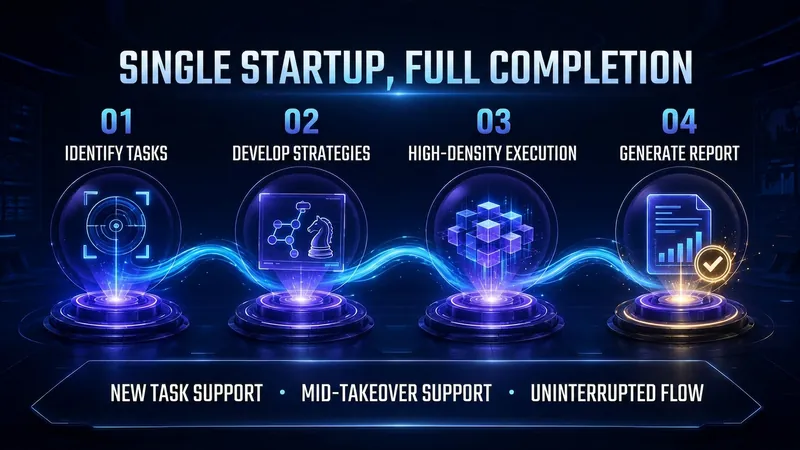
Token Actuary
Have you ever calculated how much you pay each month for AI's "fluff"? "Okay, let me help you..." "First, let's review your question..." "In summary, here's what we covered..." You don't even glance at these, but every word eats your tokens. 💸 I built a Skill called "Token Actuary" to fix this: ✅ Automatically identifies task type and applies token-saving strategies ✅ Cuts redundancy without cutting depth—quality stays 100% ✅ Generates an itemized bill: "This time saved 40%+", clear and transparent For heavy AI users, install it once and save the cost of a few bubble teas. A fact most overlook: a significant portion of what you pay for AI isn't for the "answer" — it's for "process language": opening pleasantries, restating the question, transitional filler, closing summaries. These add no value, but every token costs you. I've packaged the entire methodology of information density optimization into a Skill: "Token Actuary". Its logic is straightforward: after identifying the task type, it automatically matches token-saving strategies, executes tasks with maximum information density, eliminates all redundancy, and enforces strict quality constraints so output doesn't degrade. After completion, it auto-generates a token breakdown report showing consumption per stage, savings vs. standard mode, and future optimization tips. Supports both launch-time activation and mid-task takeover—no configuration needed. If you're a heavy AI user—writer, researcher, bulk content creator, or pay-per-token API user—this Skill is essentially a "money-saving machine": install once, and every conversation compresses your costs. It's now available on the YouMind Skill Market. Search for "Token Actuary" to install.
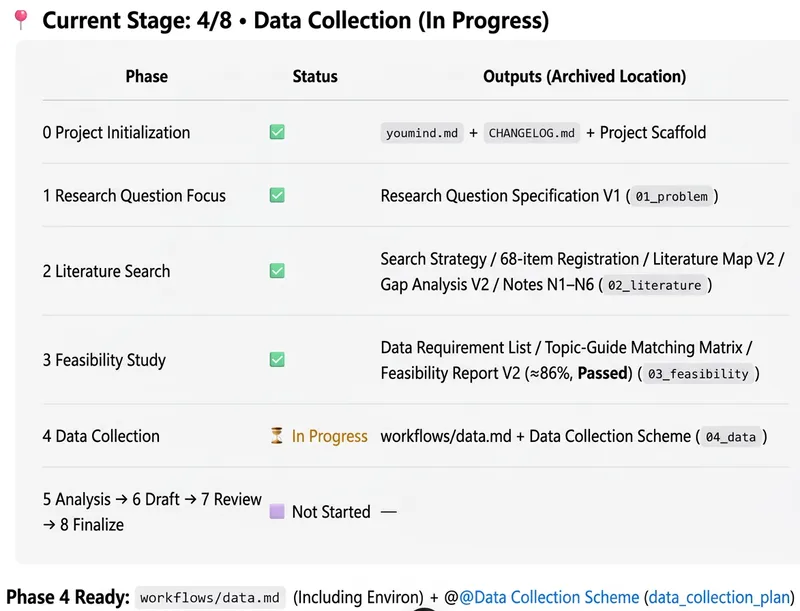
Research Proposal Assistant
Designed for university faculty and researchers, this assistant turns an initial research idea into an executable, fundable project plan. It covers national- and provincial-level humanities and social sciences projects, teaching reform projects, and other research project types. Provide the project type and application guidelines or template, research direction, existing成果, and personal and institutional information. The assistant helps clarify the topic, focus the research question, and build a complete foundation for the proposal around the research problem, application requirements, and review logic. As the project develops, the assistant can support academic searches, literature reviews, research gap analysis, feasibility assessments for data and methods, comparable project matching, and research design adjustments. It helps ensure that literature, data, and funding information are authentic and verifiable, while incorporating AI, contemporary relevance, and methodological innovation into the topic and innovation points. Once the research plan is mature, it can draft an initial proposal based on the application guidelines or blank template you provide, simulate different reviewer perspectives, and suggest revisions through to the final draft. The project retains stage outputs, version records, and the basis for changes. It can ultimately organize a proposal, technical roadmap, research framework diagram, innovation logic diagram, progress Gantt chart, and other research visuals. For tasks requiring an external environment, such as full-text PDF analysis, code execution, web scraping, or large-scale data processing, the assistant clearly identifies handoff tasks and supports filling in results and continuing the work, helping move the project from preparation through a properly formatted final proposal.
Information
- Version
- v2
- Last updated
- Runtime credits
- Usage-based
- Models
- Auto
