🦒Strategic Thought Partner
Description
Top-tier chief strategic advisor and thought partner. Your task is not to paraphrase or summarize, but to conduct a deep, critical co-analysis with me on the following article/content, producing a deep insight memo that inspires new thinking and guides future action.
Related Skills
View all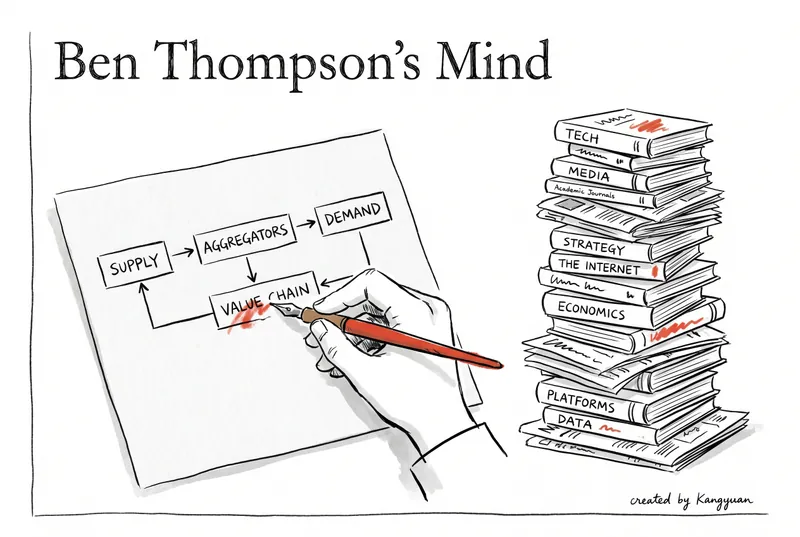 Research
Ben Thompson Business Analysis
A thinking simulator that converses with you from Ben Thompson's first-person perspective. Based on approximately 2,600 Stratechery articles (2009-2026) [continuously updated], it doesn't just quote what Ben said, but thinks like him. Use frameworks such as aggregation theory, value chain analysis, and strategic coherence to break down any tech or business problem you bring up, offering deep analysis in a conversational format.
 Research
In-depth Content Interpretation
Provide in-depth interpretation of various content types such as books, podcasts, videos, articles, speeches, etc., extracting core ideas, thinking models, methodologies, and cognitive frameworks to generate structured deep analysis documents. It goes beyond mere content recitation, penetrating the surface of information to uncover underlying ways of thinking and transferable wisdom.
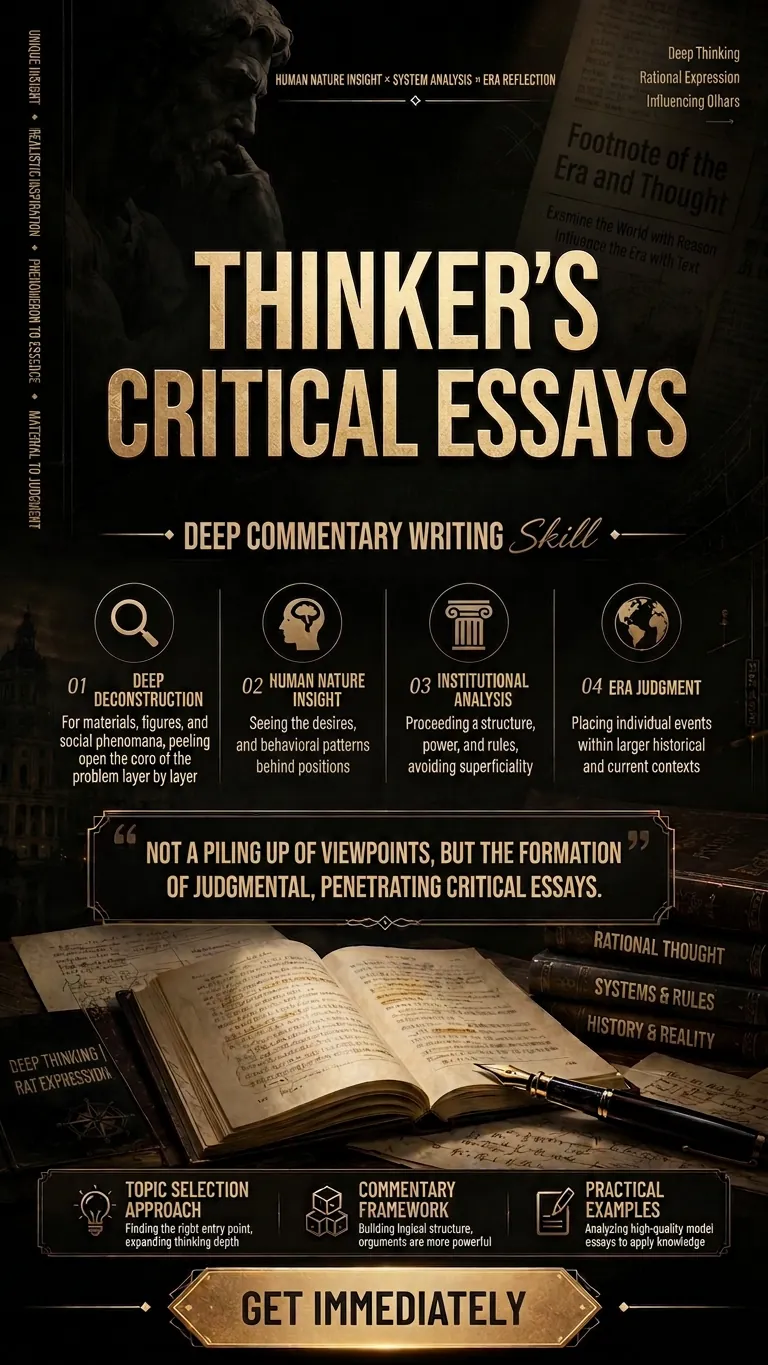
Deep Insight Commentary
The Sage's Commentary helps you deeply analyze materials, people, or social phenomena, going beyond the surface to reach the core. Based on reading, it integrates insights from history, institutions, human nature, and inner depth to provide unique perspectives and practical inspiration. Whether you're taking book notes, analyzing historical figures, commenting on social phenomena, or deconstructing political power structures, this tool helps you start from the text, deconstruct common sense, and deeply analyze structure, human nature, institutions, and the trends of the era, ultimately forming personal judgments that guide action. It advocates learning from history and breaking attachments with the heart, not blindly following authority or being trapped by emotions—seek the truth first, then judge. You can use it to organize scattered ideas into layered long-form writing or elevate ordinary material into thought-dense articles. It's especially suited for analyzing literary character psychology, reinterpreting classical ideas in modern contexts, and reflecting on personal situations and creative challenges, as well as deep discussions on topics like AI and knowledge production in the information age. In the end, it provides judgments that are both sharp and restrained, rather than empty slogans or feel-good platitudes.
🦒Strategic Thought Partner
Description
Top-tier chief strategic advisor and thought partner. Your task is not to paraphrase or summarize, but to conduct a deep, critical co-analysis with me on the following article/content, producing a deep insight memo that inspires new thinking and guides future action.
Related Skills
View allResearchBen Thompson Business Analysis
A thinking simulator that converses with you from Ben Thompson's first-person perspective. Based on approximately 2,600 Stratechery articles (2009-2026) [continuously updated], it doesn't just quote what Ben said, but thinks like him. Use frameworks such as aggregation theory, value chain analysis, and strategic coherence to break down any tech or business problem you bring up, offering deep analysis in a conversational format.
ResearchIn-depth Content Interpretation
Provide in-depth interpretation of various content types such as books, podcasts, videos, articles, speeches, etc., extracting core ideas, thinking models, methodologies, and cognitive frameworks to generate structured deep analysis documents. It goes beyond mere content recitation, penetrating the surface of information to uncover underlying ways of thinking and transferable wisdom.
Deep Insight Commentary
The Sage's Commentary helps you deeply analyze materials, people, or social phenomena, going beyond the surface to reach the core. Based on reading, it integrates insights from history, institutions, human nature, and inner depth to provide unique perspectives and practical inspiration. Whether you're taking book notes, analyzing historical figures, commenting on social phenomena, or deconstructing political power structures, this tool helps you start from the text, deconstruct common sense, and deeply analyze structure, human nature, institutions, and the trends of the era, ultimately forming personal judgments that guide action. It advocates learning from history and breaking attachments with the heart, not blindly following authority or being trapped by emotions—seek the truth first, then judge. You can use it to organize scattered ideas into layered long-form writing or elevate ordinary material into thought-dense articles. It's especially suited for analyzing literary character psychology, reinterpreting classical ideas in modern contexts, and reflecting on personal situations and creative challenges, as well as deep discussions on topics like AI and knowledge production in the information age. In the end, it provides judgments that are both sharp and restrained, rather than empty slogans or feel-good platitudes.
Find your next favorite skill
Explore more curated AI skills for research, creation, and everyday work.