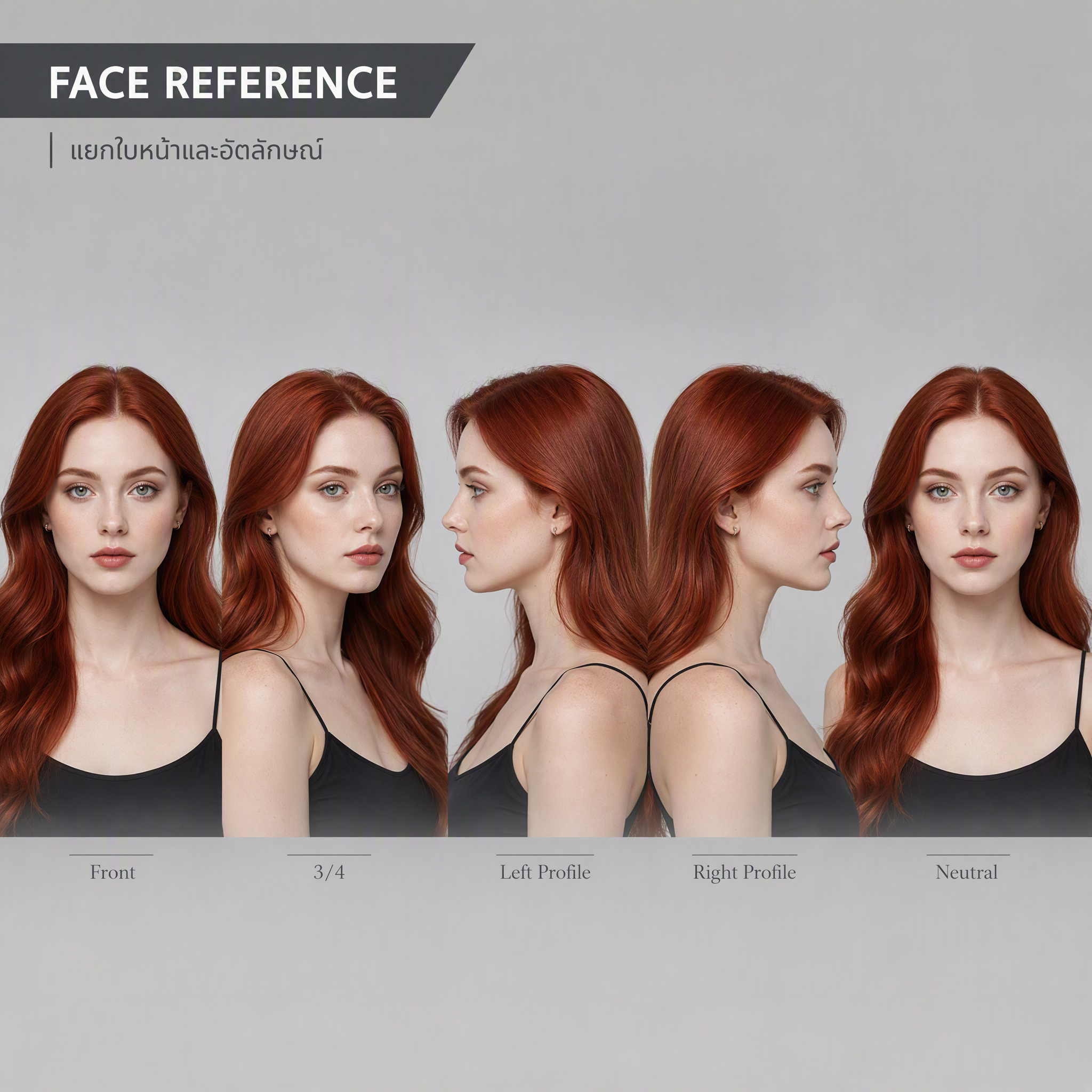
Face Detail Scanner
Description
Tips for best results Use at least one reference image that shows the character as clearly as possible. If you have multiple images, choose ones that clearly show the face, clothing, and proportions from different angles. Avoid images with other people, dark scenes, or clothing that obscures too much of the character. For headless prompts, the most important instruction is to specify that the crop starts just below the base of the neck and reiterate: no head, no face, no hair, no neck-up content. Image models often try to add the head back in, so including these instructions in the Layout, Body Rules, and Negative Prompt sections can greatly reduce the problem. If you plan to use the result for a 3D model, use Front, Side, and Back images with the character in the same pose and the feet aligned at the same level. Three-quarter images can help check the depth of the character’s form and clothing components. For animation, create a Character Reference Sheet first, then create separate Expression Sheet and Pose Sheet sets. Avoid putting too many facial features, poses, and emotional expressions on the same sheet as the Turnaround, as this may make the character’s identity and proportions inconsistent.
Face Detail Scanner
Description
Tips for best results Use at least one reference image that shows the character as clearly as possible. If you have multiple images, choose ones that clearly show the face, clothing, and proportions from different angles. Avoid images with other people, dark scenes, or clothing that obscures too much of the character. For headless prompts, the most important instruction is to specify that the crop starts just below the base of the neck and reiterate: no head, no face, no hair, no neck-up content. Image models often try to add the head back in, so including these instructions in the Layout, Body Rules, and Negative Prompt sections can greatly reduce the problem. If you plan to use the result for a 3D model, use Front, Side, and Back images with the character in the same pose and the feet aligned at the same level. Three-quarter images can help check the depth of the character’s form and clothing components. For animation, create a Character Reference Sheet first, then create separate Expression Sheet and Pose Sheet sets. Avoid putting too many facial features, poses, and emotional expressions on the same sheet as the Turnaround, as this may make the character’s identity and proportions inconsistent.
Find your next favorite skill
Explore more curated AI skills for research, creation, and everyday work.