Pre-Publish Integrity Audit
The last gate before you publish: facts, risk, accessibility
Description
Recommended by
淡苍
Why we love this skill
Featured for treating publication readiness as an evidence and access problem, not a copyedit. It traces every factual claim to primary sources, calibrates real-world risk, catches reasoning failures, and writes the exact corrections, including unusually thorough accessibility fixes.
Every generator in the marketplace makes first drafts. Almost nothing checks them before they go out with your name on top. This is the desk between your draft and the public. It does not improve your prose. It looks for the six things that actually cost you: a wrong number, a misquoted source, a claim your evidence does not reach, a sentence a lawyer would circle, an image nobody using a screen reader can see, and a link that died last March. Six passes. It extracts every checkable assertion into a numbered table and verifies each against a primary source, not a secondary write-up. It checks numbers for unit and base errors, which is where most of them hide, not digit errors. It finds the original wording of every quote and reports the drift. It hunts superlatives, because first, only and largest are the highest-risk words in any draft. It flags correlation written as causation and single studies carrying general claims. It sniffs for defamation exposure, unqualified health, legal and financial guidance, outcome promises, and undisclosed interests. Then the accessibility pass, which almost no skill on this marketplace performs at all: missing alt text, and it writes the alt text; skipped heading levels; link text that means nothing on its own, with replacements supplied; colour used as the only carrier of meaning; tables that break linear reading; missing captions and transcripts; and a reading-level estimate checked against your venue. Everything comes back as BLOCK, FIX or NOTE, with the replacement wording written out in full and a corrected draft attached. It will not tell you to consider rephrasing. It hands you the sentence. It also tells you what it could not verify, and why. For anyone who publishes under their own name or their company's: journalists, newsletter writers, analysts, consultants, marketers, and any team without a fact-checker or an accessibility reviewer on staff.
Related Skills
View all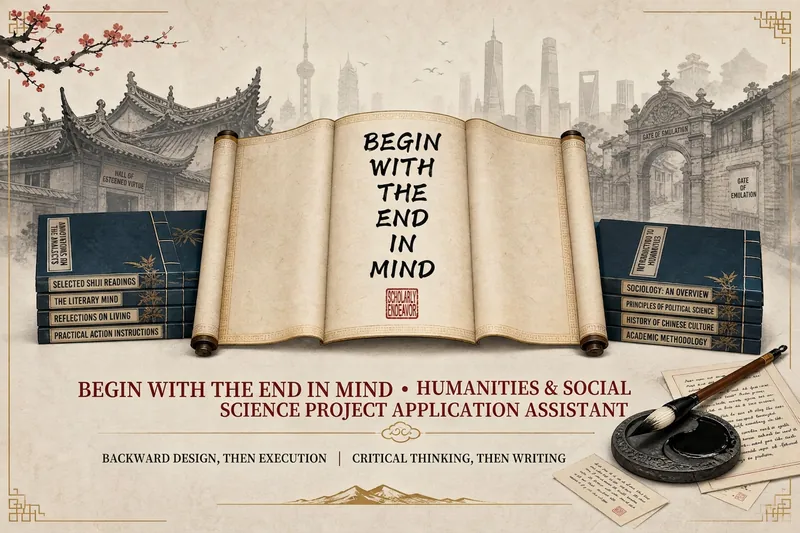 Write
WriteEnd-First Humanities Proposals
The biggest risk in a proposal isn’t writing slowly—it’s heading in the wrong direction. Most methods have you “write from start to finish, following the research process.” This Skill takes the opposite approach—backward first, then forward: it pushes you to clarify “what exactly is the innovation,” then work backward from the reviewers’ perspective to determine “what needs to be shown and why they should believe you.” Only after that does it have you write in a logical reading order. It sets three hard gates: you can’t lock in a topic until you’ve searched the literature thoroughly, you can’t start writing until the innovation is clear, and the final draft can’t be completed without your confirmation. It also uses XYZ multi-axis searches to verify that a “research gap” truly exists—never treating “I didn’t find it” as “no one has studied it.” Other AI helps you write faster. This Skill has you start later, so you get it right the first time.
 Write
WriteHuman-Voice WeChat Writing
Turn a trending event, social phenomenon, workplace or relationship topic, personal experience, industry observation, product material, or existing draft into a WeChat Official Account article with a clear position, genuine emotion, and strong shareability. It doesn’t stop at the safe, even-handed “everyone has a point.” Instead, it helps you find an angle that fits your target readers, identify the real conflicts and pain points, and use specific scenes, everyday details, and memorable judgments to make the article sound like it was written by a real person with experience and preferences—someone who also acknowledges the limits of their understanding. Along with a publish-ready draft, it also organizes the creative decisions, title directions, and article’s core points. It prepares authorial responses for real-world comment scenarios, including challenges to the facts, opposing views, personal experience sharing, and quotes taken out of context, making it easier to handle discussion after publication. For trending topics, controversial events, and high-risk subjects such as law, medicine, and finance, it distinguishes known facts, reasonable inferences, and the author’s judgments, avoids fabricated information, and flags areas that still need sources or verification. It’s suited to WeChat Official Account writers, independent media editors, and content teams creating social commentary, workplace perspectives, relationship and emotional opinions, personal growth topics, and industry commentary. It’s especially useful when you want to move beyond detached “both-sides” writing and AI-sounding prose without relying on personal attacks, exaggerating facts, or creating needless conflict to gain attention.
 Write
WriteVideo copywriting for social media
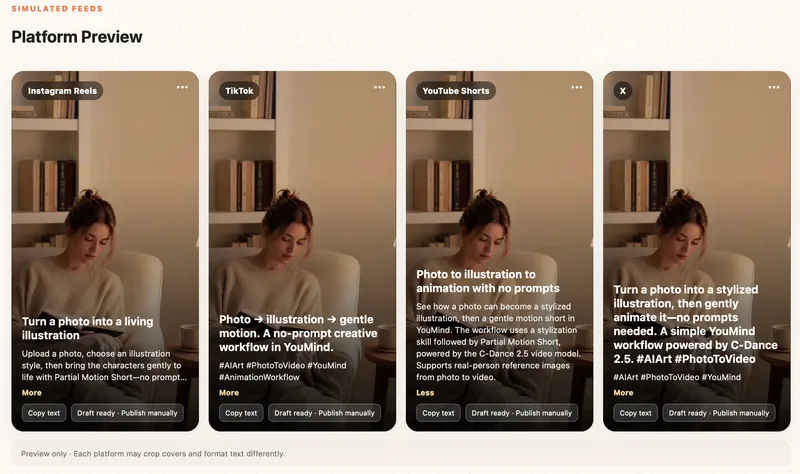
Analyze a video or transcript immediately, prepare evidence-based and platform-native multi-platform including Instagram, X, YouTube, TikTok, titles and copy, and recommend an editable social media editor webpage with 9:16 previews while keeping a concise plain-text copy document available as an alternative.
Pre-Publish Integrity Audit
The last gate before you publish: facts, risk, accessibility
Description
Recommended by
淡苍
Why we love this skill
Featured for treating publication readiness as an evidence and access problem, not a copyedit. It traces every factual claim to primary sources, calibrates real-world risk, catches reasoning failures, and writes the exact corrections, including unusually thorough accessibility fixes.
Every generator in the marketplace makes first drafts. Almost nothing checks them before they go out with your name on top. This is the desk between your draft and the public. It does not improve your prose. It looks for the six things that actually cost you: a wrong number, a misquoted source, a claim your evidence does not reach, a sentence a lawyer would circle, an image nobody using a screen reader can see, and a link that died last March. Six passes. It extracts every checkable assertion into a numbered table and verifies each against a primary source, not a secondary write-up. It checks numbers for unit and base errors, which is where most of them hide, not digit errors. It finds the original wording of every quote and reports the drift. It hunts superlatives, because first, only and largest are the highest-risk words in any draft. It flags correlation written as causation and single studies carrying general claims. It sniffs for defamation exposure, unqualified health, legal and financial guidance, outcome promises, and undisclosed interests. Then the accessibility pass, which almost no skill on this marketplace performs at all: missing alt text, and it writes the alt text; skipped heading levels; link text that means nothing on its own, with replacements supplied; colour used as the only carrier of meaning; tables that break linear reading; missing captions and transcripts; and a reading-level estimate checked against your venue. Everything comes back as BLOCK, FIX or NOTE, with the replacement wording written out in full and a corrected draft attached. It will not tell you to consider rephrasing. It hands you the sentence. It also tells you what it could not verify, and why. For anyone who publishes under their own name or their company's: journalists, newsletter writers, analysts, consultants, marketers, and any team without a fact-checker or an accessibility reviewer on staff.
Related Skills
View allWriteEnd-First Humanities Proposals
The biggest risk in a proposal isn’t writing slowly—it’s heading in the wrong direction. Most methods have you “write from start to finish, following the research process.” This Skill takes the opposite approach—backward first, then forward: it pushes you to clarify “what exactly is the innovation,” then work backward from the reviewers’ perspective to determine “what needs to be shown and why they should believe you.” Only after that does it have you write in a logical reading order. It sets three hard gates: you can’t lock in a topic until you’ve searched the literature thoroughly, you can’t start writing until the innovation is clear, and the final draft can’t be completed without your confirmation. It also uses XYZ multi-axis searches to verify that a “research gap” truly exists—never treating “I didn’t find it” as “no one has studied it.” Other AI helps you write faster. This Skill has you start later, so you get it right the first time.
WriteHuman-Voice WeChat Writing
Turn a trending event, social phenomenon, workplace or relationship topic, personal experience, industry observation, product material, or existing draft into a WeChat Official Account article with a clear position, genuine emotion, and strong shareability. It doesn’t stop at the safe, even-handed “everyone has a point.” Instead, it helps you find an angle that fits your target readers, identify the real conflicts and pain points, and use specific scenes, everyday details, and memorable judgments to make the article sound like it was written by a real person with experience and preferences—someone who also acknowledges the limits of their understanding. Along with a publish-ready draft, it also organizes the creative decisions, title directions, and article’s core points. It prepares authorial responses for real-world comment scenarios, including challenges to the facts, opposing views, personal experience sharing, and quotes taken out of context, making it easier to handle discussion after publication. For trending topics, controversial events, and high-risk subjects such as law, medicine, and finance, it distinguishes known facts, reasonable inferences, and the author’s judgments, avoids fabricated information, and flags areas that still need sources or verification. It’s suited to WeChat Official Account writers, independent media editors, and content teams creating social commentary, workplace perspectives, relationship and emotional opinions, personal growth topics, and industry commentary. It’s especially useful when you want to move beyond detached “both-sides” writing and AI-sounding prose without relying on personal attacks, exaggerating facts, or creating needless conflict to gain attention.
WriteVideo copywriting for social media
Analyze a video or transcript immediately, prepare evidence-based and platform-native multi-platform including Instagram, X, YouTube, TikTok, titles and copy, and recommend an editable social media editor webpage with 9:16 previews while keeping a concise plain-text copy document available as an alternative.
Find your next favorite skill
Explore more curated AI skills for research, creation, and everyday work.