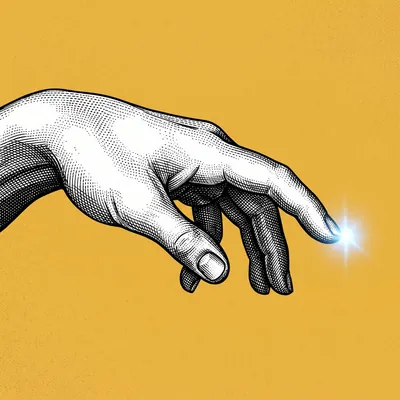
The Engraver's Muse
Generate engraving-style editorial illustrations.
Description
Recommended by
Shuting@YouMind
Why we love this skill
This skill blends 19th-century copperplate engraving with bold pop-art aesthetics. It creates sophisticated editorial illustrations by pairing intricate monochrome stipple textures with vibrant, high-saturation backgrounds and subtle classical motifs for a distinct, high-end magazine feel.
Inkwell & Marble turns any subject into a striking editorial illustration where 19th-century engraving meets pop-art color. Fine stipple and cross-hatching build every form in rich black and white, set against a bold flat color field with one tiny pop of color. Inspired by The Economist covers and WSJ hedcuts: sharp, sophisticated, quietly witty. Just name what you want drawn.
Related Skills
View all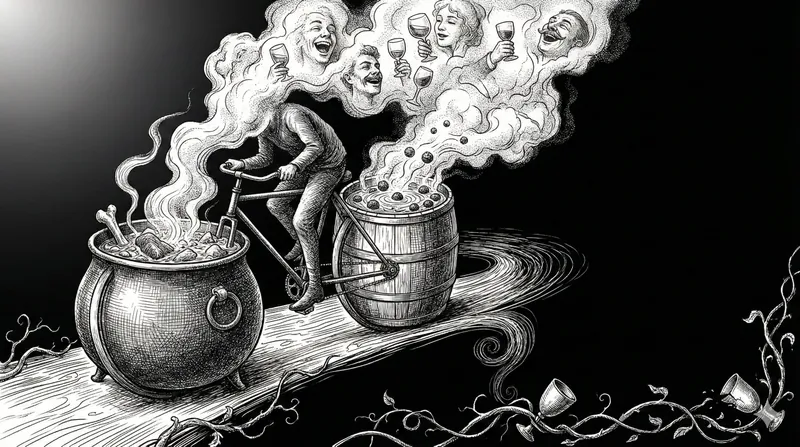 Image
ImageDan Koe style article cover
Create covers like a Victorian engraving master. Transform abstract concepts into Gustave Doré-style black and white woodcut covers, telling your story through surreal metaphors with both depth and beauty. Reference to the origanl creator @seekjourney
 Image
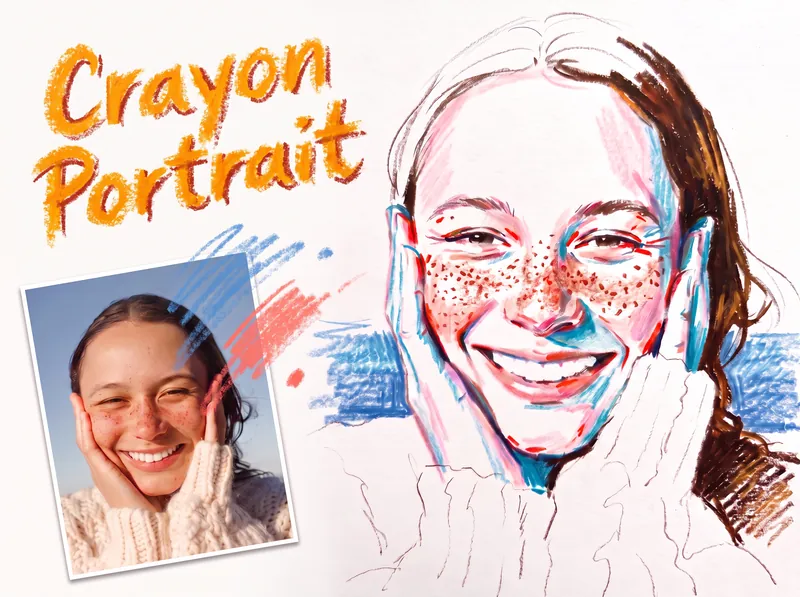
ImageCrayon Portrait
Turn a portrait photo into a faithful colored crayon or oil pastel sketch that preserves the person’s identity, expression, pose, proportions, hairstyle, clothing, composition, and recognizable details. Freckles, dimples, glasses, earrings, loose strands, teeth, and fabric texture remain part of the likeness rather than being smoothed away or exaggerated. The finished image has the spontaneous character of a quick on-location drawing on white sketch paper, with visible grain, dry rubbing, broken strokes, and airy areas of untouched paper. Facial color stays restrained, using layered pink, coral, and brick-red accents along structural turns while keeping most of the face white; cool blue or peacock-green marks add transparent shadow notes, and yellow is excluded. Hair is rendered in warm brown tones with a deliberate balance between open, light areas and denser textured sections, while clothing and exposed shoulders remain mostly white with only a few expressive lines. A simple, single-hue background softly supports the figure from the sides near the shoulders without filling the page or competing with the portrait. Its uneven, open-edged crayon marks meet the silhouette cleanly and preserve broad white space around the head and lower composition. The result is a distinctive handmade portrait sketch rather than a photorealistic rendering, polished digital painting, or caricature.
 Image
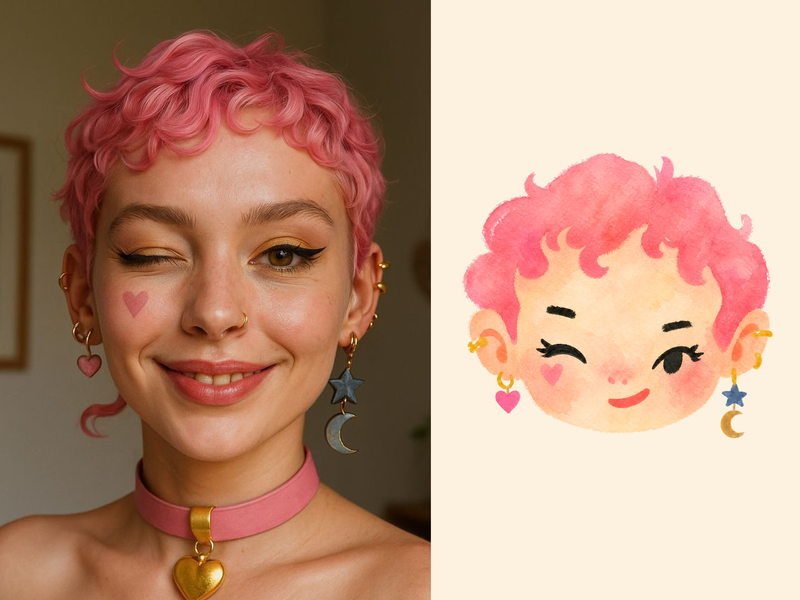
ImageNaive Doodle Avatar
Turn a portrait, appearance description, or creative character idea into a distinctive naive doodle fashion-chibi avatar with a childlike yet cool editorial feel. The style emphasizes bold graphic hair shapes, rough marker or dry-brush edges, restrained watercolor-like color, and a clean white or warm-white background. Real photos guide recognizable cues such as hairstyle silhouette, face shape, expression, and attached accessories while remaining clearly transformed into an illustrated avatar rather than a realistic likeness. You can also start with a set of fresh fictional avatars when you want random inspiration instead of a photo-based transformation. The result stays flat, expressive, and fashion-forward, avoiding photographic skin, 3D rendering, heavy shading, detailed anatomy, distracting backgrounds, text, and watermarks.
The Engraver's Muse
Generate engraving-style editorial illustrations.
Description
Recommended by
Shuting@YouMind
Why we love this skill
This skill blends 19th-century copperplate engraving with bold pop-art aesthetics. It creates sophisticated editorial illustrations by pairing intricate monochrome stipple textures with vibrant, high-saturation backgrounds and subtle classical motifs for a distinct, high-end magazine feel.
Inkwell & Marble turns any subject into a striking editorial illustration where 19th-century engraving meets pop-art color. Fine stipple and cross-hatching build every form in rich black and white, set against a bold flat color field with one tiny pop of color. Inspired by The Economist covers and WSJ hedcuts: sharp, sophisticated, quietly witty. Just name what you want drawn.
Related Skills
View allImageDan Koe style article cover
Create covers like a Victorian engraving master. Transform abstract concepts into Gustave Doré-style black and white woodcut covers, telling your story through surreal metaphors with both depth and beauty. Reference to the origanl creator @seekjourney
ImageCrayon Portrait
Turn a portrait photo into a faithful colored crayon or oil pastel sketch that preserves the person’s identity, expression, pose, proportions, hairstyle, clothing, composition, and recognizable details. Freckles, dimples, glasses, earrings, loose strands, teeth, and fabric texture remain part of the likeness rather than being smoothed away or exaggerated. The finished image has the spontaneous character of a quick on-location drawing on white sketch paper, with visible grain, dry rubbing, broken strokes, and airy areas of untouched paper. Facial color stays restrained, using layered pink, coral, and brick-red accents along structural turns while keeping most of the face white; cool blue or peacock-green marks add transparent shadow notes, and yellow is excluded. Hair is rendered in warm brown tones with a deliberate balance between open, light areas and denser textured sections, while clothing and exposed shoulders remain mostly white with only a few expressive lines. A simple, single-hue background softly supports the figure from the sides near the shoulders without filling the page or competing with the portrait. Its uneven, open-edged crayon marks meet the silhouette cleanly and preserve broad white space around the head and lower composition. The result is a distinctive handmade portrait sketch rather than a photorealistic rendering, polished digital painting, or caricature.
ImageNaive Doodle Avatar
Turn a portrait, appearance description, or creative character idea into a distinctive naive doodle fashion-chibi avatar with a childlike yet cool editorial feel. The style emphasizes bold graphic hair shapes, rough marker or dry-brush edges, restrained watercolor-like color, and a clean white or warm-white background. Real photos guide recognizable cues such as hairstyle silhouette, face shape, expression, and attached accessories while remaining clearly transformed into an illustrated avatar rather than a realistic likeness. You can also start with a set of fresh fictional avatars when you want random inspiration instead of a photo-based transformation. The result stays flat, expressive, and fashion-forward, avoiding photographic skin, 3D rendering, heavy shading, detailed anatomy, distracting backgrounds, text, and watermarks.
Find your next favorite skill
Explore more curated AI skills for research, creation, and everyday work.