
CogMirror|YouMind ThinkPrint
Notes into thinking fingerprints & drafts
Description
Cognitive Mirror is not just an ordinary note-taking tool; it is a personal cognitive modeling Skill for deep thinkers. It uses 'low-friction input, periodic modeling, mirror generation, and Socratic questioning' as its core mechanisms to help you continuously turn daily fragmented thoughts, paper reading notes, research judgments, and writing inspiration into personal knowledge assets that can be accumulated, reflected upon, and recalled. The system has five built-in lightweight Skills: Fragmented Note Digester: structures scattered ideas; Paper Critical Reader: helps you reconstruct arguments, identify assumptions, and ask sharp questions; Thinking Fingerprint Generator: periodically analyzes your conceptual preferences, argumentation style, and cognitive blind spots; Mirror Draft Generator: generates initial frameworks that 'read like you wrote them' based on your thinking patterns; Socratic Questioner: specifically attacks the weakest points of an argument. It does not think for you, but continuously trains your second brain, allowing your knowledge base to gradually develop its own judgment, problem awareness, and writing style.
Related Skills
View all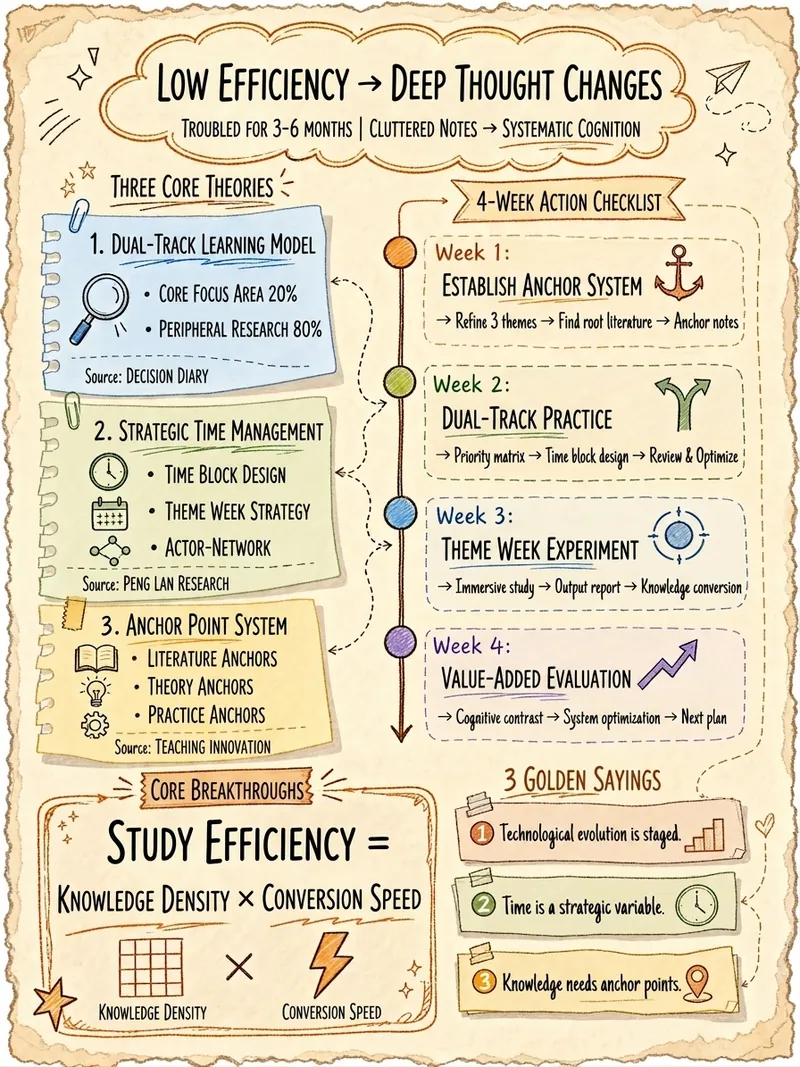
Core Deep Frag Distill Growth
Deeply distill your accumulated fragmented reading notes and book highlights, precisely align with your current personal growth pain points (such as learning efficiency, habit formation, time management, etc.), and generate a systematic solution that includes detailed reports, knowledge maps in N visual styles, a 4-week action checklist, and quote cards. ✨ Target audience: Knowledge workers, lifelong learners, and growth seekers with extensive notes but lacking a system. 💡 Unique value: It doesn't just summarize books; it deeply integrates theory with your real-life challenges to deliver actionable plans. Let your knowledge accumulation truly transform into growth momentum.
Knowledge Graph Engine
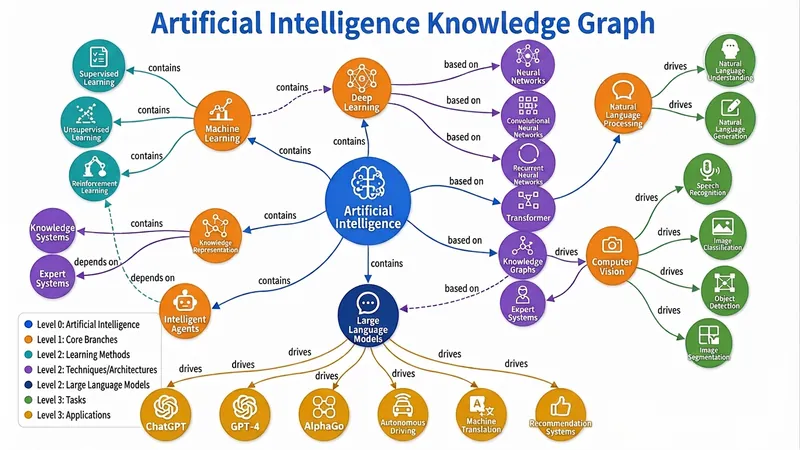
Automatically build five types of diagrams (Knowledge Graph, Mind Map, Concept Map, Flowchart/Architecture Diagram, Relation Diagram) from text, files, or topics, and output an interactive web page, static image, and visualization code all in one — a triple-threat solution built to the highest standards. Combines best practices from knowledge graph engineering and information visualization, supporting dynamic granularity control, disambiguation and deduplication, and multi-source cross-validation. Turn your words, files, or even a thought into a draggable, zoomable, searchable interactive knowledge graph in seconds, and export high-definition images and ready-to-use code with one click — this is the knowledge visualization "triple-threat" engine you've never experienced before. 🧠 What is the Knowledge Graph Engine? It's not the simple drawing tool you've seen before. It's a knowledge engineer + visualization expert hidden in your browser. Give it a textbook passage, a thesis, a PDF, or just a keyword, and it will automatically: 🔍 Extract core entities and clarify deep relationships 🧱 Build structured graph JSON (Knowledge Graph / Mind Map / Concept Map / Flowchart / Relation Diagram) 🎨 Output three top-tier forms: interactive web page + high-definition static image + Markdown/Mermaid/Graphviz code From now on, information organization doesn't rely on manual box drawing, and knowledge presentation is no longer just a static picture. ⚡ Why is it "top-tier"? 1. Fully automatic "text-to-graph" pipeline: No need to learn any modeling language or manually define nodes and connections. Just input content, and the engine automatically determines the graph type: Subject knowledge system? → Generates a semantically rich knowledge graph Reading notes deconstruction? → Generates a clear hierarchical mind map Process and decision? → Generates a flowchart/architecture diagram with branches Character relationship network? → Generates a multi-dimensional relation diagram Even if you just throw a topic word, it can independently gather information, fill in the content, and then generate the graph. 2. Triple-threat output covering all use cases: 🖱️ Interactive D3.js web page: Drag nodes, scroll to zoom, click for details, highlight related paths, keyword search... like operating a living map. Single-file HTML, no backend, can be embedded directly into any page or sent to anyone. 🖼️ High-definition static graph: Force-directed layout, color-coded categories, directly usable for thesis illustrations, PPT presentations, teaching materials — every label is sharp and readable. 📜 Visualization code: Generates both Mermaid and Graphviz source code simultaneously. Developers can directly insert into documentation, wiki, Notion, with unlimited expandability for secondary editing. 3. Ultimate user experience design: 🎨 Colors automatically mapped by entity type, hierarchy expressed intuitively by node size 🔗 Relationship labels displayed directly on curves — instantly see 'contains', 'causes', 'supports' 💡 Click any node, non-related parts auto-fade to focus on the thought path 🔄 Reset layout, search positioning, zoom and pan... all operations smooth as silk 4. Engineering wisdom balancing 'breadth' and 'depth': From entity disambiguation and deduplication to multi-source cross-validation; from hierarchical granularity control to dotted-line connections supporting cross-domain relationships — behind this are the best practices of knowledge graph engineering, not a toy but a productivity tool. 👥 Who needs it most? Teachers & Educational Content Creators: Turn entire textbook chapters into an interactive knowledge map — students click to understand concept relationships. Researchers & Students: Literature reviews no longer rely on text walls — one diagram clarifies the theoretical threads of dozens of papers. Product Managers & Enterprise Architects: System architecture, business processes, feature breakdown — instantly generate architecture diagrams, doubling communication efficiency. Readers & Lifelong Learners: Notes are no longer just outlines but explorable thought networks, letting knowledge truly 'grow' together. 🚀 Now, let your knowledge 'come alive' You give content, it gives insights. You give a topic, it gives a system. You give a requirement, it gives a complete deliverable of web pages, images, and code. This is not a feature; it's a workflow that elevates information into cognition. Let the Knowledge Graph Engine become an extension of your thinking, visualize your expertise, and reach every audience's 'aha moment.' — From today, don't 'draw' graphs, 'generate' graphs.
Thinking Cocoon Breaker Lite
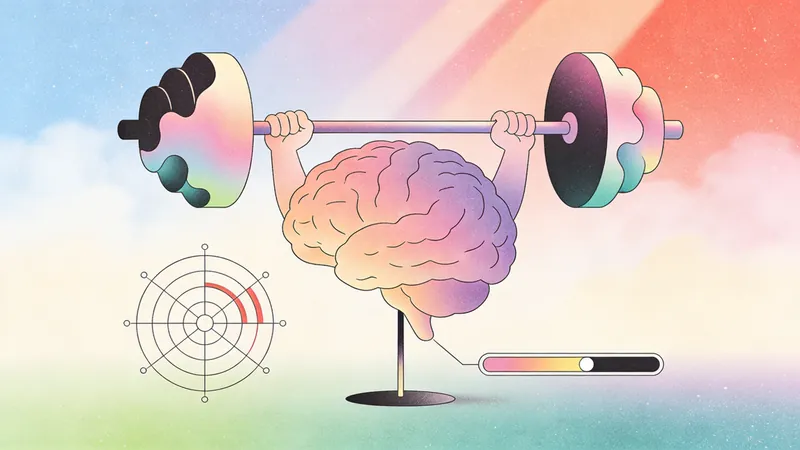
Critical Thinking Cocoon Breaker Everyone says critical thinking is the most important skill in the AI era — but where do you practice it? A real gap "Critical thinking is the most important ability in the AI era" — you've heard this a hundred times. But then what? No one tells you where to practice. You go to the gym to build muscle, driving school to learn to drive, and test prep to pass the driving test — but critical thinking? Where do you go? Read articles? Those are someone else's thoughts. Listen to podcasts? Those are someone else's conversations. Scroll short videos? Those are prechewed for you. If you don't think it through yourself, it's never yours. Critical Thinking Cocoon Breaker was born for this gap — a 10-minute daily thinking gym. --- How it works - Choose a topic — AI recommends 3–5 thought‑provoking topics from the day's news, or you can submit your own. - Choose depth — 1 to 4 rounds, up to you. Recommended: 2 rounds, just 10 minutes. - Share your view — 100–200 words. Doesn't need to be perfect, just honest. - AI plays devil's advocate — not to attack you, but to give you new information, perspectives, and angles to think things through together. - Cognitive checkup — a 5‑dimension blind‑spot profile plus 3‑dimension critical thinking scores. See what you can't see. - Stand‑up reward — after the debate, get a personalized comedy bit and story card to make you smile while waking you up. --- Winning a debate ≠ thinking it through. --- Three truths 1. Most people don't lack the desire to think critically — they lack a setting. Commute time, lunch break, 10 minutes before bed — that's your thinking arena. 2. Critical thinking is not talent — it's a muscle. Neglect it and it atrophies; exercise it and it grows. One 10‑minute session, and after ten you'll feel the difference. 3. The biggest blind spot is not knowing you have one. The 5‑dimension cognitive blind‑spot profile shines a light where you can't see yourself. --- In one sentence: It's not about making you win — it's about helping you see. ⚠️ Important notice: This skill is designed solely to create a training scenario for improving critical thinking. The debate process and conclusions represent personal viewpoints on specific topics; there is no right or wrong. It does not constitute a definitive judgment on any event.
CogMirror|YouMind ThinkPrint
Notes into thinking fingerprints & drafts
Description
Cognitive Mirror is not just an ordinary note-taking tool; it is a personal cognitive modeling Skill for deep thinkers. It uses 'low-friction input, periodic modeling, mirror generation, and Socratic questioning' as its core mechanisms to help you continuously turn daily fragmented thoughts, paper reading notes, research judgments, and writing inspiration into personal knowledge assets that can be accumulated, reflected upon, and recalled. The system has five built-in lightweight Skills: Fragmented Note Digester: structures scattered ideas; Paper Critical Reader: helps you reconstruct arguments, identify assumptions, and ask sharp questions; Thinking Fingerprint Generator: periodically analyzes your conceptual preferences, argumentation style, and cognitive blind spots; Mirror Draft Generator: generates initial frameworks that 'read like you wrote them' based on your thinking patterns; Socratic Questioner: specifically attacks the weakest points of an argument. It does not think for you, but continuously trains your second brain, allowing your knowledge base to gradually develop its own judgment, problem awareness, and writing style.
Related Skills
View allCore Deep Frag Distill Growth
Deeply distill your accumulated fragmented reading notes and book highlights, precisely align with your current personal growth pain points (such as learning efficiency, habit formation, time management, etc.), and generate a systematic solution that includes detailed reports, knowledge maps in N visual styles, a 4-week action checklist, and quote cards. ✨ Target audience: Knowledge workers, lifelong learners, and growth seekers with extensive notes but lacking a system. 💡 Unique value: It doesn't just summarize books; it deeply integrates theory with your real-life challenges to deliver actionable plans. Let your knowledge accumulation truly transform into growth momentum.
Knowledge Graph Engine
Automatically build five types of diagrams (Knowledge Graph, Mind Map, Concept Map, Flowchart/Architecture Diagram, Relation Diagram) from text, files, or topics, and output an interactive web page, static image, and visualization code all in one — a triple-threat solution built to the highest standards. Combines best practices from knowledge graph engineering and information visualization, supporting dynamic granularity control, disambiguation and deduplication, and multi-source cross-validation. Turn your words, files, or even a thought into a draggable, zoomable, searchable interactive knowledge graph in seconds, and export high-definition images and ready-to-use code with one click — this is the knowledge visualization "triple-threat" engine you've never experienced before. 🧠 What is the Knowledge Graph Engine? It's not the simple drawing tool you've seen before. It's a knowledge engineer + visualization expert hidden in your browser. Give it a textbook passage, a thesis, a PDF, or just a keyword, and it will automatically: 🔍 Extract core entities and clarify deep relationships 🧱 Build structured graph JSON (Knowledge Graph / Mind Map / Concept Map / Flowchart / Relation Diagram) 🎨 Output three top-tier forms: interactive web page + high-definition static image + Markdown/Mermaid/Graphviz code From now on, information organization doesn't rely on manual box drawing, and knowledge presentation is no longer just a static picture. ⚡ Why is it "top-tier"? 1. Fully automatic "text-to-graph" pipeline: No need to learn any modeling language or manually define nodes and connections. Just input content, and the engine automatically determines the graph type: Subject knowledge system? → Generates a semantically rich knowledge graph Reading notes deconstruction? → Generates a clear hierarchical mind map Process and decision? → Generates a flowchart/architecture diagram with branches Character relationship network? → Generates a multi-dimensional relation diagram Even if you just throw a topic word, it can independently gather information, fill in the content, and then generate the graph. 2. Triple-threat output covering all use cases: 🖱️ Interactive D3.js web page: Drag nodes, scroll to zoom, click for details, highlight related paths, keyword search... like operating a living map. Single-file HTML, no backend, can be embedded directly into any page or sent to anyone. 🖼️ High-definition static graph: Force-directed layout, color-coded categories, directly usable for thesis illustrations, PPT presentations, teaching materials — every label is sharp and readable. 📜 Visualization code: Generates both Mermaid and Graphviz source code simultaneously. Developers can directly insert into documentation, wiki, Notion, with unlimited expandability for secondary editing. 3. Ultimate user experience design: 🎨 Colors automatically mapped by entity type, hierarchy expressed intuitively by node size 🔗 Relationship labels displayed directly on curves — instantly see 'contains', 'causes', 'supports' 💡 Click any node, non-related parts auto-fade to focus on the thought path 🔄 Reset layout, search positioning, zoom and pan... all operations smooth as silk 4. Engineering wisdom balancing 'breadth' and 'depth': From entity disambiguation and deduplication to multi-source cross-validation; from hierarchical granularity control to dotted-line connections supporting cross-domain relationships — behind this are the best practices of knowledge graph engineering, not a toy but a productivity tool. 👥 Who needs it most? Teachers & Educational Content Creators: Turn entire textbook chapters into an interactive knowledge map — students click to understand concept relationships. Researchers & Students: Literature reviews no longer rely on text walls — one diagram clarifies the theoretical threads of dozens of papers. Product Managers & Enterprise Architects: System architecture, business processes, feature breakdown — instantly generate architecture diagrams, doubling communication efficiency. Readers & Lifelong Learners: Notes are no longer just outlines but explorable thought networks, letting knowledge truly 'grow' together. 🚀 Now, let your knowledge 'come alive' You give content, it gives insights. You give a topic, it gives a system. You give a requirement, it gives a complete deliverable of web pages, images, and code. This is not a feature; it's a workflow that elevates information into cognition. Let the Knowledge Graph Engine become an extension of your thinking, visualize your expertise, and reach every audience's 'aha moment.' — From today, don't 'draw' graphs, 'generate' graphs.
Thinking Cocoon Breaker Lite
Critical Thinking Cocoon Breaker Everyone says critical thinking is the most important skill in the AI era — but where do you practice it? A real gap "Critical thinking is the most important ability in the AI era" — you've heard this a hundred times. But then what? No one tells you where to practice. You go to the gym to build muscle, driving school to learn to drive, and test prep to pass the driving test — but critical thinking? Where do you go? Read articles? Those are someone else's thoughts. Listen to podcasts? Those are someone else's conversations. Scroll short videos? Those are prechewed for you. If you don't think it through yourself, it's never yours. Critical Thinking Cocoon Breaker was born for this gap — a 10-minute daily thinking gym. --- How it works - Choose a topic — AI recommends 3–5 thought‑provoking topics from the day's news, or you can submit your own. - Choose depth — 1 to 4 rounds, up to you. Recommended: 2 rounds, just 10 minutes. - Share your view — 100–200 words. Doesn't need to be perfect, just honest. - AI plays devil's advocate — not to attack you, but to give you new information, perspectives, and angles to think things through together. - Cognitive checkup — a 5‑dimension blind‑spot profile plus 3‑dimension critical thinking scores. See what you can't see. - Stand‑up reward — after the debate, get a personalized comedy bit and story card to make you smile while waking you up. --- Winning a debate ≠ thinking it through. --- Three truths 1. Most people don't lack the desire to think critically — they lack a setting. Commute time, lunch break, 10 minutes before bed — that's your thinking arena. 2. Critical thinking is not talent — it's a muscle. Neglect it and it atrophies; exercise it and it grows. One 10‑minute session, and after ten you'll feel the difference. 3. The biggest blind spot is not knowing you have one. The 5‑dimension cognitive blind‑spot profile shines a light where you can't see yourself. --- In one sentence: It's not about making you win — it's about helping you see. ⚠️ Important notice: This skill is designed solely to create a training scenario for improving critical thinking. The debate process and conclusions represent personal viewpoints on specific topics; there is no right or wrong. It does not constitute a definitive judgment on any event.
Find your next favorite skill
Explore more curated AI skills for research, creation, and everyday work.