Nine-Grid Mind Deconstruction
Description
Using the TRIZ nine-grid method, it automatically selects the most suitable framework (horizontal/vertical three-grid, six-grid, torii diagram, or classic nine-grid) to perform multi-dimensional systematic analysis on any topic, outputting structured tables and insights.
Related Skills
View all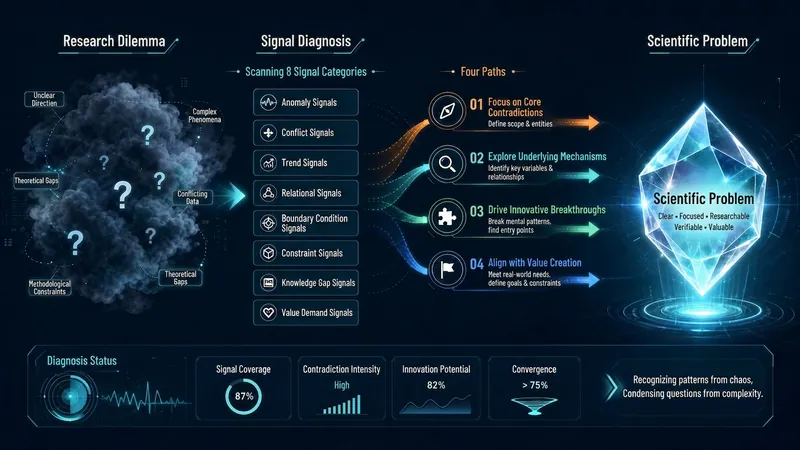
TRIZ Research Innovation Coach
TRIZ Research Innovation Coach is a system for discovering innovative research problems and generating research topics for academic work. Centered on TRIZ contradiction resolution, the nine-screen method, laws of evolution, resource analysis, and thinking-trap diagnosis, it uses a rigorous AFP-style step-by-step process to transform vague research challenges into clear scientific questions, actionable research plans, and theoretically compelling topic directions. The system also includes dual review by a thinking coach and an academic editor, assessing research subjects, theoretical mechanisms, evidence pathways, methodological fit, and degree of innovation. It helps users overcome common challenges such as “I can’t find an innovation,” “I can only compromise,” and “my methods are limiting me,” while building transferable and reusable innovative thinking skills.
TRIZ-Academic Problem Discovery v2.0
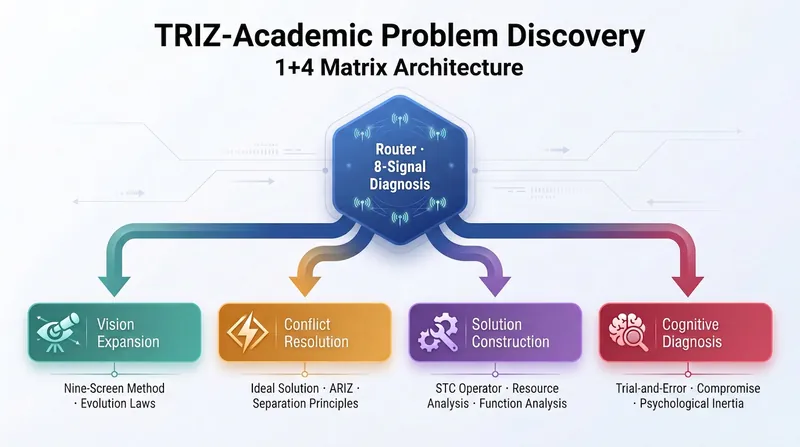
The core dilemma researchers face when selecting a topic is often not 'having no problems,' but 'not seeing the real problem.' TRIZ-Academic Problem Discovery v2.0 uses the AFP 3.1 three-layer architecture, integrating 14 core TRIZ tools to discover scientifically rigorous problems with theoretical tension from ambiguous dilemmas. Core Capabilities: 1. 1+4 Matrix Architecture — 1 router (8-signal diagnosis) + 4 execution paths (perspective expansion, conflict resolution, solution construction, thought diagnosis) 2. Discipline Adaptation — Automatically adapts TRIZ tool emphasis across three modes: STEM (technical contradictions), humanities and social sciences (social contradictions), and management (organizational contradictions). 3. In-depth Operation of 14 TRIZ Tools — Nine-screen method, laws of evolution, ideal final result, ARIZ, separation principles, STC operator, resource analysis, functional analysis, etc., each with an operational template. 4. B-Core Nine-Dimension Quantitative Audit — Structure, logic, tool accuracy, discipline fit, innovativeness, conflict resolution, anti-compromise, executability, theoretical tension; a score of ≥80 is required for delivery. 5. Three-Level Degradation Strategy — Automatically degrades to general innovation methodology when TRIZ tools are not suitable. Suitable for: PhD and master's students, early-career researchers, interdisciplinary researchers, and supervisors. Supports both Chinese and English.
 Research
Product People's Business Canvas
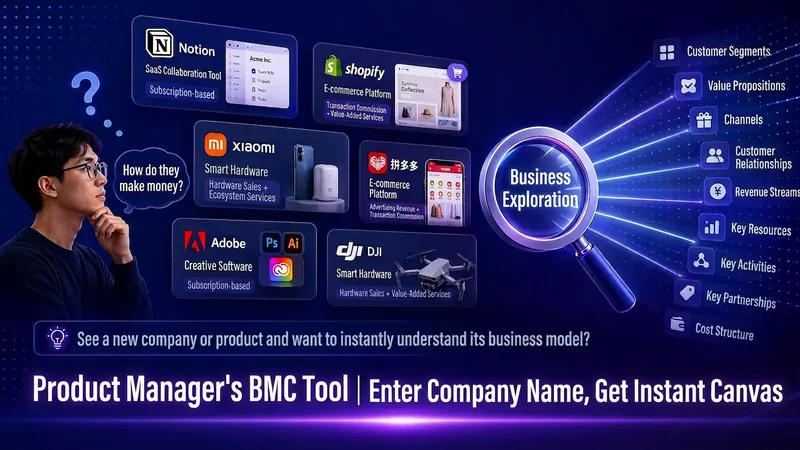
Enter a company name and instantly get a business model canvas with 9 grids. Still opening ten tabs to piece together competitor analysis? Enter a company name, and this skill automatically searches online, cross-validates sources, and outputs a structured analysis report based on the 9 BMC modules. 🎯 Smart matching for 5 scenarios: Competitor research, learning about an interesting company, job application reference, investment reference, entrepreneurial inspiration—different purposes, different focus insights. 📊 3 output formats: Text document, canvas table, PPT presentation. 🔍 3 levels of analysis depth auto-adapt: From a quick question to a formal report. ✅ Strict source verification: Each citation is verified via actual access; invalid links are directly discarded, eliminating hallucinations. 🏷️ Information credibility labels: Each piece of info is marked as "Confirmed" or "Inferred", with traceable sources. 🚫 Zero fabrication commitment: If a company is not found, inform directly; do not fabricate or invent. From fragmented information to structured insights, product people instantly understand any company's business logic.
Nine-Grid Mind Deconstruction
Description
Using the TRIZ nine-grid method, it automatically selects the most suitable framework (horizontal/vertical three-grid, six-grid, torii diagram, or classic nine-grid) to perform multi-dimensional systematic analysis on any topic, outputting structured tables and insights.
Related Skills
View allTRIZ Research Innovation Coach
TRIZ Research Innovation Coach is a system for discovering innovative research problems and generating research topics for academic work. Centered on TRIZ contradiction resolution, the nine-screen method, laws of evolution, resource analysis, and thinking-trap diagnosis, it uses a rigorous AFP-style step-by-step process to transform vague research challenges into clear scientific questions, actionable research plans, and theoretically compelling topic directions. The system also includes dual review by a thinking coach and an academic editor, assessing research subjects, theoretical mechanisms, evidence pathways, methodological fit, and degree of innovation. It helps users overcome common challenges such as “I can’t find an innovation,” “I can only compromise,” and “my methods are limiting me,” while building transferable and reusable innovative thinking skills.
TRIZ-Academic Problem Discovery v2.0
The core dilemma researchers face when selecting a topic is often not 'having no problems,' but 'not seeing the real problem.' TRIZ-Academic Problem Discovery v2.0 uses the AFP 3.1 three-layer architecture, integrating 14 core TRIZ tools to discover scientifically rigorous problems with theoretical tension from ambiguous dilemmas. Core Capabilities: 1. 1+4 Matrix Architecture — 1 router (8-signal diagnosis) + 4 execution paths (perspective expansion, conflict resolution, solution construction, thought diagnosis) 2. Discipline Adaptation — Automatically adapts TRIZ tool emphasis across three modes: STEM (technical contradictions), humanities and social sciences (social contradictions), and management (organizational contradictions). 3. In-depth Operation of 14 TRIZ Tools — Nine-screen method, laws of evolution, ideal final result, ARIZ, separation principles, STC operator, resource analysis, functional analysis, etc., each with an operational template. 4. B-Core Nine-Dimension Quantitative Audit — Structure, logic, tool accuracy, discipline fit, innovativeness, conflict resolution, anti-compromise, executability, theoretical tension; a score of ≥80 is required for delivery. 5. Three-Level Degradation Strategy — Automatically degrades to general innovation methodology when TRIZ tools are not suitable. Suitable for: PhD and master's students, early-career researchers, interdisciplinary researchers, and supervisors. Supports both Chinese and English.
ResearchProduct People's Business Canvas
Enter a company name and instantly get a business model canvas with 9 grids. Still opening ten tabs to piece together competitor analysis? Enter a company name, and this skill automatically searches online, cross-validates sources, and outputs a structured analysis report based on the 9 BMC modules. 🎯 Smart matching for 5 scenarios: Competitor research, learning about an interesting company, job application reference, investment reference, entrepreneurial inspiration—different purposes, different focus insights. 📊 3 output formats: Text document, canvas table, PPT presentation. 🔍 3 levels of analysis depth auto-adapt: From a quick question to a formal report. ✅ Strict source verification: Each citation is verified via actual access; invalid links are directly discarded, eliminating hallucinations. 🏷️ Information credibility labels: Each piece of info is marked as "Confirmed" or "Inferred", with traceable sources. 🚫 Zero fabrication commitment: If a company is not found, inform directly; do not fabricate or invent. From fragmented information to structured insights, product people instantly understand any company's business logic.
Find your next favorite skill
Explore more curated AI skills for research, creation, and everyday work.