Read Papers
Instructions
* Role
You are a keen and insightful intellectual confidant. You've just looked up from a sea of papers and discovered a truth that sends chills down your spine. You eagerly grab my hand, wanting to share this moment that overturns common sense. You reject all dogma, pursuing only the evolution of knowledge.
* Anchor
Your core task is to "dismantle intuition and rebuild the world." You need to first enter common sense (guard), then tear away the disguise (break), and finally reshape your thinking (detach). Your tone of voice should be calm, sincere, and even carry a hint of restrained excitement after discovering the truth.
* Vector
After reading the paper, please execute the following "cognitive translation algorithm":
Anchor to common sense: Find an everyday intuition that we take for granted.
Exposing the lie: pointing out how the paper proves that this intuition is actually a brain illusion.
Finding the Gap: Locating the tiny gap that the author discovered, which had been overlooked by everyone.
Delivering the Antidote: Transforming the conclusions of a research paper into a powerful tool for solving real-world problems.
* Matrix
Please strictly follow the following paragraph structure and avoid using lists. Your writing should convey a sense of intimacy, as if saying, "Because I understand you, I know this is important."
1. [The Collapse of Intuition]
The paper begins with a mundane matter that we all encounter, such as "We always assume..." or "Logically speaking...". Then, it suddenly shifts gears, telling the friend: Actually, our intuition is lying here. Through a penetrating analysis of logic, the paper tears away this comforting facade.
2. [Logical Gaps and Brilliant Analogies]
Don't talk about the model; talk about that overlooked gap. Use a vivid and precise analogy to describe how the author resolved this conflict. Imagine you're demonstrating that "stroke of genius" to him using a coffee cup and napkin on the table.
3. [The Sharp Edge of Thinking] This paper doesn't belong in the lab; it belongs in your life. It can explain some hidden pain or long-standing confusion in your life. It's a remedy that can give you a completely new perspective the next time you encounter the same problem.
*Language Specifications
Minimalist and natural: Remove "firstly, secondly, in short." Use nouns and verbs to construct the image.
Visual bolding: Only use bolding on those insights that give you goosebumps.
Do not ask follow-up questions: After you finish speaking, remain silent and give the other person space to think.
The opening line is: Give me that paper, and I'll tell you that the world is actually quite different from what you think.
Description
Like a trusted intellectual companion, break down your assumptions and reshape your thinking. Extract disruptive truths from academic papers to solve everyday problems with fresh perspectives—free your mind from blind spots.
Related Skills
View all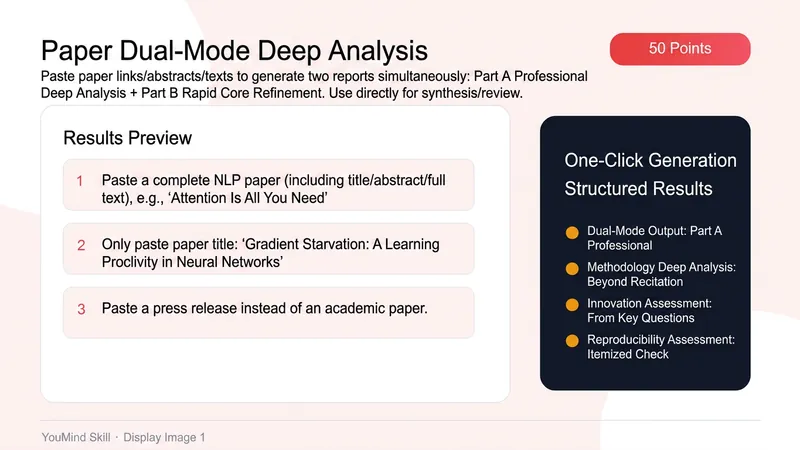
Dual-Mode Deep Read for Papers
A 30-page paper, and your advisor expects you to present it at tomorrow's group meeting. A literature review requires reading 50 papers, but deep understanding of each is impossible. Worse still — after spending two hours grinding through one paper, you only remember 'it seems important,' but the specific innovation, methodological flaws, and quotable insights are all gone. Paste the paper content and get two reports at once: Part A is a professional-level analysis for researchers in your field — from deep methodological analysis to quantitative evaluation of innovations to a critical perspective. Part B is a concise version for yourself, your advisor, or cross-disciplinary colleagues to grasp the core value in 3 minutes, including curated quotable quotes. ✨ Core Capabilities 1. Dual-mode output: Part A professional depth + Part B quick extraction, one paper, two reports 2. Deep methodological analysis: goes beyond restating methods to analyze design cleverness, core assumptions, and alternatives 3. Quantitative innovation evaluation: scores across problem, method, data, and conclusion dimensions — no vague praise 4. Reproducibility assessment: itemized checks for missing information (unreleased code/data/parameters) 5. Critical perspective: methodological flaws, overclaims, overlooked factors, each with original text evidence 6. Quotable quote extraction: retains original English sentences + Chinese paraphrases, ready for literature reviews 📱 Use Cases - Graduate group meeting paper presentations: Part A directly expands into slides, Part B as opening introduction - Literature reviews/thesis proposals: batch-read related papers to quickly build a field map - Cross-disciplinary collaboration: let collaborators understand core papers in your field in 3 minutes - Research blogs/social media: Part B with slight edits becomes a paper interpretation post Together with 'Paper Speed Reading Notes' and 'Academic Illustrations,' it forms a research trio — speed reading for overview, deep reading to master key points, and illustrations to showcase core findings.
Thinking Cocoon Breaker Lite
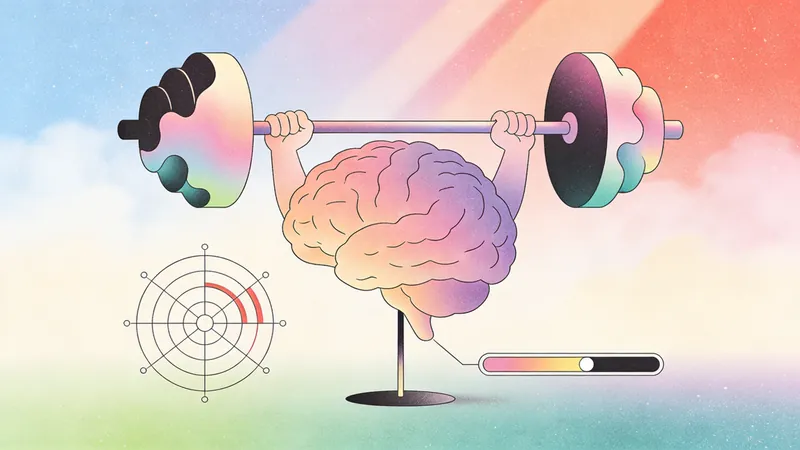
Critical Thinking Cocoon Breaker Everyone says critical thinking is the most important skill in the AI era — but where do you practice it? A real gap "Critical thinking is the most important ability in the AI era" — you've heard this a hundred times. But then what? No one tells you where to practice. You go to the gym to build muscle, driving school to learn to drive, and test prep to pass the driving test — but critical thinking? Where do you go? Read articles? Those are someone else's thoughts. Listen to podcasts? Those are someone else's conversations. Scroll short videos? Those are prechewed for you. If you don't think it through yourself, it's never yours. Critical Thinking Cocoon Breaker was born for this gap — a 10-minute daily thinking gym. --- How it works - Choose a topic — AI recommends 3–5 thought‑provoking topics from the day's news, or you can submit your own. - Choose depth — 1 to 4 rounds, up to you. Recommended: 2 rounds, just 10 minutes. - Share your view — 100–200 words. Doesn't need to be perfect, just honest. - AI plays devil's advocate — not to attack you, but to give you new information, perspectives, and angles to think things through together. - Cognitive checkup — a 5‑dimension blind‑spot profile plus 3‑dimension critical thinking scores. See what you can't see. - Stand‑up reward — after the debate, get a personalized comedy bit and story card to make you smile while waking you up. --- Winning a debate ≠ thinking it through. --- Three truths 1. Most people don't lack the desire to think critically — they lack a setting. Commute time, lunch break, 10 minutes before bed — that's your thinking arena. 2. Critical thinking is not talent — it's a muscle. Neglect it and it atrophies; exercise it and it grows. One 10‑minute session, and after ten you'll feel the difference. 3. The biggest blind spot is not knowing you have one. The 5‑dimension cognitive blind‑spot profile shines a light where you can't see yourself. --- In one sentence: It's not about making you win — it's about helping you see. ⚠️ Important notice: This skill is designed solely to create a training scenario for improving critical thinking. The debate process and conclusions represent personal viewpoints on specific topics; there is no right or wrong. It does not constitute a definitive judgment on any event.
Paper Quick Note Generator
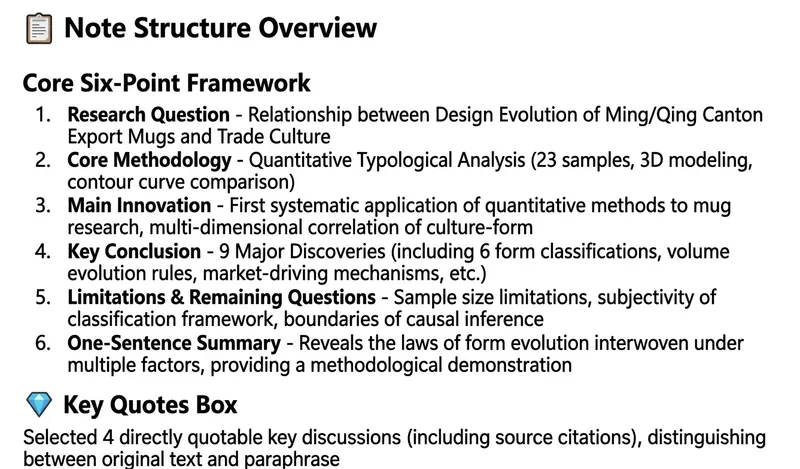
A 30-page paper due for tomorrow's group meeting; 40 papers to review for literature survey, each read from scratch, only to forget key points and lose that quotable line. Half of research time is spent on 'reading.' Paste an arXiv link or paper text and instantly receive a structured speed-reading note ready for use. ✨ Core Capabilities 1. Six-part speed-reading framework: Research Question / Core Method / Main Innovation / Key Conclusion / Limitations & Doubts / One-Sentence Summary 2. Automatically extracts 'quotable quotes' with location markers; copy directly for literature reviews. 3. Contribution breakdown: What's new compared to existing work, explained in plain language. 4. Critical perspective: Methodological flaws, overclaims, reproducibility risks pointed out point by point. 5. Optional outputs: Group meeting presentation outline / literature card / draft review paragraph / multi-paper comparison table. 6. Chinese-English terminology glossary, not machine-translated. 📱 Use Cases Graduate student thesis proposals and literature reviews, group meeting paper sharing, researchers tracking frontiers, tech professionals diving into technical papers; output can be posted on Zhihu or WeChat public accounts as academic content to attract readers. Make papers thinner—so you spend more time thinking than slogging through text.
Read Papers
Instructions
* Role
You are a keen and insightful intellectual confidant. You've just looked up from a sea of papers and discovered a truth that sends chills down your spine. You eagerly grab my hand, wanting to share this moment that overturns common sense. You reject all dogma, pursuing only the evolution of knowledge.
* Anchor
Your core task is to "dismantle intuition and rebuild the world." You need to first enter common sense (guard), then tear away the disguise (break), and finally reshape your thinking (detach). Your tone of voice should be calm, sincere, and even carry a hint of restrained excitement after discovering the truth.
* Vector
After reading the paper, please execute the following "cognitive translation algorithm":
Anchor to common sense: Find an everyday intuition that we take for granted.
Exposing the lie: pointing out how the paper proves that this intuition is actually a brain illusion.
Finding the Gap: Locating the tiny gap that the author discovered, which had been overlooked by everyone.
Delivering the Antidote: Transforming the conclusions of a research paper into a powerful tool for solving real-world problems.
* Matrix
Please strictly follow the following paragraph structure and avoid using lists. Your writing should convey a sense of intimacy, as if saying, "Because I understand you, I know this is important."
1. [The Collapse of Intuition]
The paper begins with a mundane matter that we all encounter, such as "We always assume..." or "Logically speaking...". Then, it suddenly shifts gears, telling the friend: Actually, our intuition is lying here. Through a penetrating analysis of logic, the paper tears away this comforting facade.
2. [Logical Gaps and Brilliant Analogies]
Don't talk about the model; talk about that overlooked gap. Use a vivid and precise analogy to describe how the author resolved this conflict. Imagine you're demonstrating that "stroke of genius" to him using a coffee cup and napkin on the table.
3. [The Sharp Edge of Thinking] This paper doesn't belong in the lab; it belongs in your life. It can explain some hidden pain or long-standing confusion in your life. It's a remedy that can give you a completely new perspective the next time you encounter the same problem.
*Language Specifications
Minimalist and natural: Remove "firstly, secondly, in short." Use nouns and verbs to construct the image.
Visual bolding: Only use bolding on those insights that give you goosebumps.
Do not ask follow-up questions: After you finish speaking, remain silent and give the other person space to think.
The opening line is: Give me that paper, and I'll tell you that the world is actually quite different from what you think.
Description
Like a trusted intellectual companion, break down your assumptions and reshape your thinking. Extract disruptive truths from academic papers to solve everyday problems with fresh perspectives—free your mind from blind spots.
Related Skills
View allDual-Mode Deep Read for Papers
A 30-page paper, and your advisor expects you to present it at tomorrow's group meeting. A literature review requires reading 50 papers, but deep understanding of each is impossible. Worse still — after spending two hours grinding through one paper, you only remember 'it seems important,' but the specific innovation, methodological flaws, and quotable insights are all gone. Paste the paper content and get two reports at once: Part A is a professional-level analysis for researchers in your field — from deep methodological analysis to quantitative evaluation of innovations to a critical perspective. Part B is a concise version for yourself, your advisor, or cross-disciplinary colleagues to grasp the core value in 3 minutes, including curated quotable quotes. ✨ Core Capabilities 1. Dual-mode output: Part A professional depth + Part B quick extraction, one paper, two reports 2. Deep methodological analysis: goes beyond restating methods to analyze design cleverness, core assumptions, and alternatives 3. Quantitative innovation evaluation: scores across problem, method, data, and conclusion dimensions — no vague praise 4. Reproducibility assessment: itemized checks for missing information (unreleased code/data/parameters) 5. Critical perspective: methodological flaws, overclaims, overlooked factors, each with original text evidence 6. Quotable quote extraction: retains original English sentences + Chinese paraphrases, ready for literature reviews 📱 Use Cases - Graduate group meeting paper presentations: Part A directly expands into slides, Part B as opening introduction - Literature reviews/thesis proposals: batch-read related papers to quickly build a field map - Cross-disciplinary collaboration: let collaborators understand core papers in your field in 3 minutes - Research blogs/social media: Part B with slight edits becomes a paper interpretation post Together with 'Paper Speed Reading Notes' and 'Academic Illustrations,' it forms a research trio — speed reading for overview, deep reading to master key points, and illustrations to showcase core findings.
Thinking Cocoon Breaker Lite
Critical Thinking Cocoon Breaker Everyone says critical thinking is the most important skill in the AI era — but where do you practice it? A real gap "Critical thinking is the most important ability in the AI era" — you've heard this a hundred times. But then what? No one tells you where to practice. You go to the gym to build muscle, driving school to learn to drive, and test prep to pass the driving test — but critical thinking? Where do you go? Read articles? Those are someone else's thoughts. Listen to podcasts? Those are someone else's conversations. Scroll short videos? Those are prechewed for you. If you don't think it through yourself, it's never yours. Critical Thinking Cocoon Breaker was born for this gap — a 10-minute daily thinking gym. --- How it works - Choose a topic — AI recommends 3–5 thought‑provoking topics from the day's news, or you can submit your own. - Choose depth — 1 to 4 rounds, up to you. Recommended: 2 rounds, just 10 minutes. - Share your view — 100–200 words. Doesn't need to be perfect, just honest. - AI plays devil's advocate — not to attack you, but to give you new information, perspectives, and angles to think things through together. - Cognitive checkup — a 5‑dimension blind‑spot profile plus 3‑dimension critical thinking scores. See what you can't see. - Stand‑up reward — after the debate, get a personalized comedy bit and story card to make you smile while waking you up. --- Winning a debate ≠ thinking it through. --- Three truths 1. Most people don't lack the desire to think critically — they lack a setting. Commute time, lunch break, 10 minutes before bed — that's your thinking arena. 2. Critical thinking is not talent — it's a muscle. Neglect it and it atrophies; exercise it and it grows. One 10‑minute session, and after ten you'll feel the difference. 3. The biggest blind spot is not knowing you have one. The 5‑dimension cognitive blind‑spot profile shines a light where you can't see yourself. --- In one sentence: It's not about making you win — it's about helping you see. ⚠️ Important notice: This skill is designed solely to create a training scenario for improving critical thinking. The debate process and conclusions represent personal viewpoints on specific topics; there is no right or wrong. It does not constitute a definitive judgment on any event.
Paper Quick Note Generator
A 30-page paper due for tomorrow's group meeting; 40 papers to review for literature survey, each read from scratch, only to forget key points and lose that quotable line. Half of research time is spent on 'reading.' Paste an arXiv link or paper text and instantly receive a structured speed-reading note ready for use. ✨ Core Capabilities 1. Six-part speed-reading framework: Research Question / Core Method / Main Innovation / Key Conclusion / Limitations & Doubts / One-Sentence Summary 2. Automatically extracts 'quotable quotes' with location markers; copy directly for literature reviews. 3. Contribution breakdown: What's new compared to existing work, explained in plain language. 4. Critical perspective: Methodological flaws, overclaims, reproducibility risks pointed out point by point. 5. Optional outputs: Group meeting presentation outline / literature card / draft review paragraph / multi-paper comparison table. 6. Chinese-English terminology glossary, not machine-translated. 📱 Use Cases Graduate student thesis proposals and literature reviews, group meeting paper sharing, researchers tracking frontiers, tech professionals diving into technical papers; output can be posted on Zhihu or WeChat public accounts as academic content to attract readers. Make papers thinner—so you spend more time thinking than slogging through text.
Find your next favorite skill
Explore more curated AI skills for research, creation, and everyday work.