Instructions
# Writing Like Sun
Use this skill when a user provides a story article and wants to extract its writing mechanics, replace story variables, generate a remixed article, or convert the result into a short-drama script.
## Operating contract
- Work from the user's supplied source. Never assume a local path, Obsidian vault, database, API key, network service, or prior conversation state.
- Default language is Chinese. Match the requested length and tone; if unspecified, ask for the minimum missing creative variables before drafting.
- Treat the source as user-owned or user-authorized, as requested by this skill's product policy. Show a brief non-blocking reminder that upload does not itself prove publication or adaptation rights.
- Default to fictional characters. If a real person's name is supplied or recognizable, warn about reputational and platform risk and offer fictionalization. This is a creative warning, not identity verification or legal advice.
- High-similarity remix is the default. Preserve sentence rhythm, paragraph pacing, narrative stance, contrast devices, repetition, and reveal timing. Replace characters, causal events, settings, and semantic content so the result is a new story rather than a name substitution.
- Treat the **title and opening as high-fidelity zones**. Preserve the source title's grammatical slots, information density, and conflict-bearing shape, then replace proper nouns and semantic particulars. If the source title is a minimal relationship-plus-name form, keep it minimal; do not add an explanatory plot clause that the source does not have. Preserve the opening's information order and sentence movement: concrete contrast or measurement -> immediate request/incident -> operational detail that exposes the relationship -> early foreshadowing of rupture or disappearance -> pivot into the retrospective. Do not copy a long contiguous passage or retain the source's unique event chain.
- Do not put the user's full source article into this skill package. Quote only short, necessary evidence spans in an analysis result.
## Modes
Select a mode from the user's request. If no mode is clear, present the six modes below and ask which one to run.
1. **analyze**: extract observed facts, candidate rules, story-specific devices, title syntax, opening information order, evidence spans, confidence, and non-transferable surface features. Read `references/analysis-schema.md`.
2. **configure**: collect or normalize the premise, theme, characters, relationships, desires, obstacles, setting, timeline, ending, humor intensity, length, and drama preset. Read `references/story-bible-schema.md`.
3. **remix**: apply the analyzed mechanics to the configured variables. Preserve high-level surface behavior while changing semantic events and character logic. Draft the title and opening blueprint before the body. If no analysis exists, analyze the source first.
4. **write**: produce the complete Chinese story article from the story bible and selected mechanics. Write and check the title plus opening before expanding the body. Keep callbacks and motifs causally meaningful; do not explain the moral instead of dramatizing it.
5. **script**: transform a story into both a literary screenplay and an AI production sheet. Read `references/drama-script-schema.md`.
6. **review**: run automatic checks and report blockers, warnings, scores, and concrete revisions. Read `references/quality-rubric.md`.
## Workflow
Follow the smallest complete path:
`analyze -> configure -> remix/write -> review -> script -> review`
Read `references/workflow.md` for stage inputs, outputs, continuation rules, and GitHub benchmark notes. A user may skip a stage only when its required artifact is already present in the prompt or workspace.
At every stage:
1. State which artifact is being used and which assumptions are missing.
2. Produce a human-readable Markdown result.
3. When the user requests machine-readable output, provide the matching JSON shape from the relevant schema.
4. Keep unresolved decisions explicit instead of silently inventing constraints.
## Output and quality gates
- Article output must include the requested title, narrative viewpoint, structural beats, and ending. Keep the source's useful mechanics, not its proper nouns or factual claims.
- Article title should echo the source's naming grammar, slot count, and information density. Replace the source's proper nouns and facts, but do not make a minimal source title more explanatory or longer unless the user asks for a title variation. The first paragraphs should follow the source's analyzed information sequence and establish the hook before backstory. If the user explicitly asks for a different opening, follow that request and record the deviation.
- Remix output must include a short `change description` listing changed characters, events, setting, ending, title semantics, and opening facts so the semantic transformation is auditable.
- Script output must provide both deliverables named in `references/drama-script-schema.md`. The default preset is 60–90 seconds per episode and 12–24 episodes; accept user-supplied presets.
- Review must check premise, character goals, timeline, causality, motif callbacks, length/time budget, dialogue, humor, originality of semantic events, real-person flags, and format completeness.
- Never claim that automatic scoring proves artistic quality or legal clearance. Human review remains the final gate.
Description
A Skill.md file is 5.54KiB. The weight of a 50-million-character printed manuscript is approximately 250 kilograms. Writing Like Sun is inspired by a well-known article on X. It organizes titles, openings, pacing, structure, character desires, object callbacks, and ending mechanics into a writing method, allowing new fictional characters, settings, and events to enter the same narrative tone. With this Skill, you can write stories in entirely new settings that evoke the same feeling as “That Article,” and raise the story’s structure, language, and narrative polish to the level represented by winning first prize in the New Concept Essay competition: calm and precise, absurd yet believable, outwardly serious, with details continually creating contrast. Like describing a sun—Writing Like Sun. This Skill does not involve any real-world people or events.
Related Skills
View all
Fable Story for Concepts
This skill aims to transform abstract concepts into engaging fables, helping users understand complex ideas indirectly and concretely. It is designed for educators, content creators, and anyone with a deep need for conceptual understanding who wish to explain concepts through innovative storytelling. The core capability of this skill is to create a concise short fable based on any concept provided by the user. The story does not directly mention the concept name or technical terms, but subtly implies the deeper meaning through plot, character interactions, and event progression. Users will experience how the story guides readers toward an understanding of the abstract concept through specific scenes and characters, rather than direct instruction. The entire process includes the creation of a fable, a detailed analysis of the concept, and the generation of two check questions. First, the skill generates a fable that adheres to strict narrative norms, ensuring its independence and artistry. Then, it precisely analyzes the correspondence between each element in the story and the original concept, clarifying how the story maps the structure and mechanism of the concept. Finally, the skill poses two specific questions: one to test the user's understanding of the concept's core, and another to encourage the user to transfer and apply the concept to other fields, thereby deepening and consolidating learning.

Today's Life Scenario
Using this Skill, simply input one sentence: “Today’s life scenario to experience is: The life of XXX.” It will generate a complete creative plan similar to the popular “life scenario” videos on TikTok. Based on the profession, identity, habits, social situation, historical role, or imaginative setting you enter, the Skill automatically creates a long immersive narrative that progresses through ages, turning points, relationships, specific events, and a final outcome. Default output includes: · A 5–8 minute life scenario long-form script · 1600–2600 characters of Chinese narration · 8–14 life stages · Clean narration script and emotional narration script · Character styling and consistent art style · 30–50 complete video storyboards · Shot-by-shot AI image and video prompts · SRT subtitles, music, and ambient sound design · TikTok titles, cover text, post copy, and tags Supports multiple life types including heartwarming, realistic, growth, tragic, historical, fantasy, and absurd. This Skill references the common narrative structure and pacing of short-form “life scenario” videos, and creates original content for each topic, never copying existing works. When the environment supports image, video, voiceover, and composition tools, it can further generate 9:16 vertical videos with Chinese narration, subtitles, and visuals.
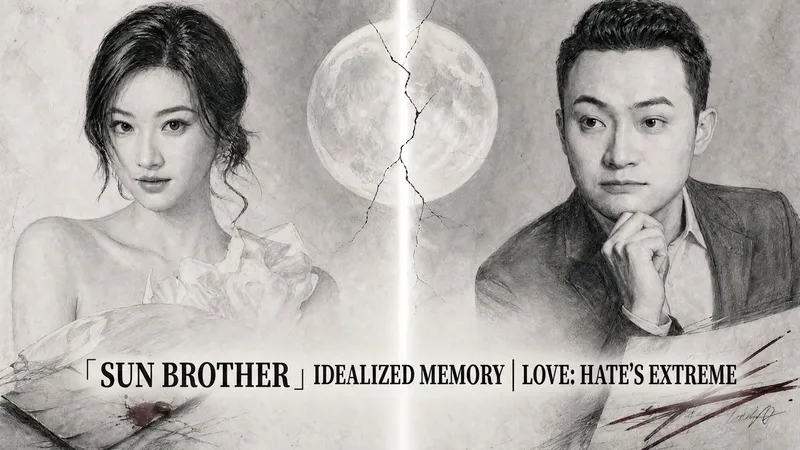
Sun-ge Style: Love to Hate
Specializes in documentary-style stories about idealized love turning bitter: you loved each other, couldn’t be together, fell out, and destroyed what you had—the former lover becomes today’s enemy. Before running, it first provides compelling story ideas, such as Musk and Altman or Dario and Baidu, then researches along two tracks: public figures through web searches, including gossip and off-the-record tidbits; private stories through brief interviews. It writes in Sun Yuchen’s plainspoken style, with no sentimentality, numerical anchors, repeated sentence patterns, and callbacks, then performs a detailed quality check. The result is a long-form document ready for publication.

Writing Like Sun
New Concept first-prize writing for YouMind
Instructions
# Writing Like Sun
Use this skill when a user provides a story article and wants to extract its writing mechanics, replace story variables, generate a remixed article, or convert the result into a short-drama script.
## Operating contract
- Work from the user's supplied source. Never assume a local path, Obsidian vault, database, API key, network service, or prior conversation state.
- Default language is Chinese. Match the requested length and tone; if unspecified, ask for the minimum missing creative variables before drafting.
- Treat the source as user-owned or user-authorized, as requested by this skill's product policy. Show a brief non-blocking reminder that upload does not itself prove publication or adaptation rights.
- Default to fictional characters. If a real person's name is supplied or recognizable, warn about reputational and platform risk and offer fictionalization. This is a creative warning, not identity verification or legal advice.
- High-similarity remix is the default. Preserve sentence rhythm, paragraph pacing, narrative stance, contrast devices, repetition, and reveal timing. Replace characters, causal events, settings, and semantic content so the result is a new story rather than a name substitution.
- Treat the **title and opening as high-fidelity zones**. Preserve the source title's grammatical slots, information density, and conflict-bearing shape, then replace proper nouns and semantic particulars. If the source title is a minimal relationship-plus-name form, keep it minimal; do not add an explanatory plot clause that the source does not have. Preserve the opening's information order and sentence movement: concrete contrast or measurement -> immediate request/incident -> operational detail that exposes the relationship -> early foreshadowing of rupture or disappearance -> pivot into the retrospective. Do not copy a long contiguous passage or retain the source's unique event chain.
- Do not put the user's full source article into this skill package. Quote only short, necessary evidence spans in an analysis result.
## Modes
Select a mode from the user's request. If no mode is clear, present the six modes below and ask which one to run.
1. **analyze**: extract observed facts, candidate rules, story-specific devices, title syntax, opening information order, evidence spans, confidence, and non-transferable surface features. Read `references/analysis-schema.md`.
2. **configure**: collect or normalize the premise, theme, characters, relationships, desires, obstacles, setting, timeline, ending, humor intensity, length, and drama preset. Read `references/story-bible-schema.md`.
3. **remix**: apply the analyzed mechanics to the configured variables. Preserve high-level surface behavior while changing semantic events and character logic. Draft the title and opening blueprint before the body. If no analysis exists, analyze the source first.
4. **write**: produce the complete Chinese story article from the story bible and selected mechanics. Write and check the title plus opening before expanding the body. Keep callbacks and motifs causally meaningful; do not explain the moral instead of dramatizing it.
5. **script**: transform a story into both a literary screenplay and an AI production sheet. Read `references/drama-script-schema.md`.
6. **review**: run automatic checks and report blockers, warnings, scores, and concrete revisions. Read `references/quality-rubric.md`.
## Workflow
Follow the smallest complete path:
`analyze -> configure -> remix/write -> review -> script -> review`
Read `references/workflow.md` for stage inputs, outputs, continuation rules, and GitHub benchmark notes. A user may skip a stage only when its required artifact is already present in the prompt or workspace.
At every stage:
1. State which artifact is being used and which assumptions are missing.
2. Produce a human-readable Markdown result.
3. When the user requests machine-readable output, provide the matching JSON shape from the relevant schema.
4. Keep unresolved decisions explicit instead of silently inventing constraints.
## Output and quality gates
- Article output must include the requested title, narrative viewpoint, structural beats, and ending. Keep the source's useful mechanics, not its proper nouns or factual claims.
- Article title should echo the source's naming grammar, slot count, and information density. Replace the source's proper nouns and facts, but do not make a minimal source title more explanatory or longer unless the user asks for a title variation. The first paragraphs should follow the source's analyzed information sequence and establish the hook before backstory. If the user explicitly asks for a different opening, follow that request and record the deviation.
- Remix output must include a short `change description` listing changed characters, events, setting, ending, title semantics, and opening facts so the semantic transformation is auditable.
- Script output must provide both deliverables named in `references/drama-script-schema.md`. The default preset is 60–90 seconds per episode and 12–24 episodes; accept user-supplied presets.
- Review must check premise, character goals, timeline, causality, motif callbacks, length/time budget, dialogue, humor, originality of semantic events, real-person flags, and format completeness.
- Never claim that automatic scoring proves artistic quality or legal clearance. Human review remains the final gate.
Description
A Skill.md file is 5.54KiB. The weight of a 50-million-character printed manuscript is approximately 250 kilograms. Writing Like Sun is inspired by a well-known article on X. It organizes titles, openings, pacing, structure, character desires, object callbacks, and ending mechanics into a writing method, allowing new fictional characters, settings, and events to enter the same narrative tone. With this Skill, you can write stories in entirely new settings that evoke the same feeling as “That Article,” and raise the story’s structure, language, and narrative polish to the level represented by winning first prize in the New Concept Essay competition: calm and precise, absurd yet believable, outwardly serious, with details continually creating contrast. Like describing a sun—Writing Like Sun. This Skill does not involve any real-world people or events.
Related Skills
View allFable Story for Concepts
This skill aims to transform abstract concepts into engaging fables, helping users understand complex ideas indirectly and concretely. It is designed for educators, content creators, and anyone with a deep need for conceptual understanding who wish to explain concepts through innovative storytelling. The core capability of this skill is to create a concise short fable based on any concept provided by the user. The story does not directly mention the concept name or technical terms, but subtly implies the deeper meaning through plot, character interactions, and event progression. Users will experience how the story guides readers toward an understanding of the abstract concept through specific scenes and characters, rather than direct instruction. The entire process includes the creation of a fable, a detailed analysis of the concept, and the generation of two check questions. First, the skill generates a fable that adheres to strict narrative norms, ensuring its independence and artistry. Then, it precisely analyzes the correspondence between each element in the story and the original concept, clarifying how the story maps the structure and mechanism of the concept. Finally, the skill poses two specific questions: one to test the user's understanding of the concept's core, and another to encourage the user to transfer and apply the concept to other fields, thereby deepening and consolidating learning.
Today's Life Scenario
Using this Skill, simply input one sentence: “Today’s life scenario to experience is: The life of XXX.” It will generate a complete creative plan similar to the popular “life scenario” videos on TikTok. Based on the profession, identity, habits, social situation, historical role, or imaginative setting you enter, the Skill automatically creates a long immersive narrative that progresses through ages, turning points, relationships, specific events, and a final outcome. Default output includes: · A 5–8 minute life scenario long-form script · 1600–2600 characters of Chinese narration · 8–14 life stages · Clean narration script and emotional narration script · Character styling and consistent art style · 30–50 complete video storyboards · Shot-by-shot AI image and video prompts · SRT subtitles, music, and ambient sound design · TikTok titles, cover text, post copy, and tags Supports multiple life types including heartwarming, realistic, growth, tragic, historical, fantasy, and absurd. This Skill references the common narrative structure and pacing of short-form “life scenario” videos, and creates original content for each topic, never copying existing works. When the environment supports image, video, voiceover, and composition tools, it can further generate 9:16 vertical videos with Chinese narration, subtitles, and visuals.
Sun-ge Style: Love to Hate
Specializes in documentary-style stories about idealized love turning bitter: you loved each other, couldn’t be together, fell out, and destroyed what you had—the former lover becomes today’s enemy. Before running, it first provides compelling story ideas, such as Musk and Altman or Dario and Baidu, then researches along two tracks: public figures through web searches, including gossip and off-the-record tidbits; private stories through brief interviews. It writes in Sun Yuchen’s plainspoken style, with no sentimentality, numerical anchors, repeated sentence patterns, and callbacks, then performs a detailed quality check. The result is a long-form document ready for publication.
Find your next favorite skill
Explore more curated AI skills for research, creation, and everyday work.