
Journal Article Writing Engine
Enter your research direction in one sentence and complete the entire AFP process step by step.
Why we love this skill
This skill provides a one-stop solution for journal article writing, featuring the unique "Five-Source Model" and "AFP Step-by-Step" full-process guidance, deeply simulating a senior academic mentor to ensure that every step of the paper from topic selection to submission is professional and rigorous.
Description
Enter your research direction in a single sentence, and the AFP step-by-step engine will guide you through the entire process. P1 Topic Design—Davis's interesting theory + Problematization five-level topic selection method, extracting real problems from phenomena. P2 Introduction Writing—Five-color template analysis method, breaking down top-journal model articles paragraph by paragraph: emotional mobilization → knowledge gap → literature positioning → research space → value declaration, with embedded complete deconstruction prompts. P3 Literature Review—Structured organization, distinguishing research context and dialogue objects. P4 Theoretical Framework—6 sets of theoretical integration templates are embedded throughout the text (complementary, comparative, bridging, hierarchical, evolutionary, universal), each set containing six paragraphs: introduction → reasons → analysis → premise → interpretation → conclusion; plus five layers of in-depth sentence structure for developing a single theory in depth. P5 Research Methodology—Automatic adaptation strategy based on four paths: empirical quantitative/qualitative/speculative/hybrid. P6 Main Body Writing—9-3-1 pyramid structure. P7 Conclusion Writing—Three-level processing of conclusions (discovery → dialogue → extension). P8 Submission Preparation—8 Methods to Reduce AI Rate. P9 Global Assembly—Independent documents from each stage are compiled into a complete draft, supporting cross-chapter bidirectional backfilling and iterative iteration at any time. 🎯 Suitable for: Master's and doctoral students and young scholars who need to submit to C-level journals/core/SSCI journals, especially researchers stuck on theoretical frameworks and preface writing. ⚙️ Underlying Architecture: Five-Source Model × AFP Step-by-Step Human-Machine Relay Protocol, Heartbeat Signal + Forced Stop Point + Dual-Core Audit.
Related Skills
View all Write
WriteRewrite for Native EN Tweets
Convert short text in ANY language (Chinese, English, Japanese, etc. — ≤200 chars) into 2-3 native-sounding English variants for X/Twitter, using authentic casual phrasing and current Gen Z slang (without being flippant), each followed by a brief glossary of slang used. This means you can refine your own expression while learning the most current English trends—slang, colloquialisms, and other things they don't teach you in textbooks—straight from the English-speaking world.
 Write
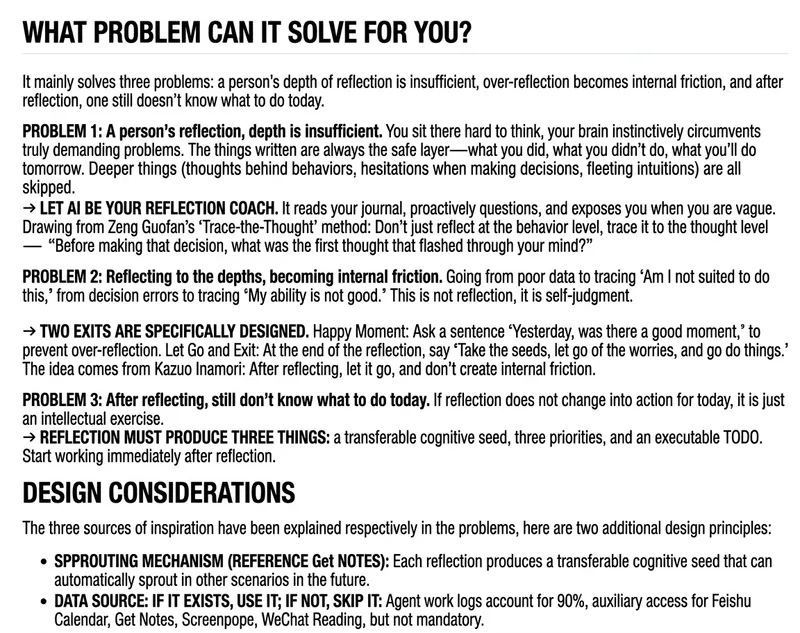
WriteZeng Guofan's review skills
Morning Reflection—A daily structured reflection dialogue. It reads yesterday's report, runs a 4-question structured interview, extracts today's top 3 priorities, and saves output to Obsidian. Trigger methods: /morning-review, /morning-reflection, /review, "morning-reflection", "morning review", "good morning", "let's reflect", "start reflecting", "today's reflection", "review yesterday", "reflect on yesterday", "yesterday's reflection", "review". Quick mode supported: /morning-review quick, /morning-reflection quick.
 Write
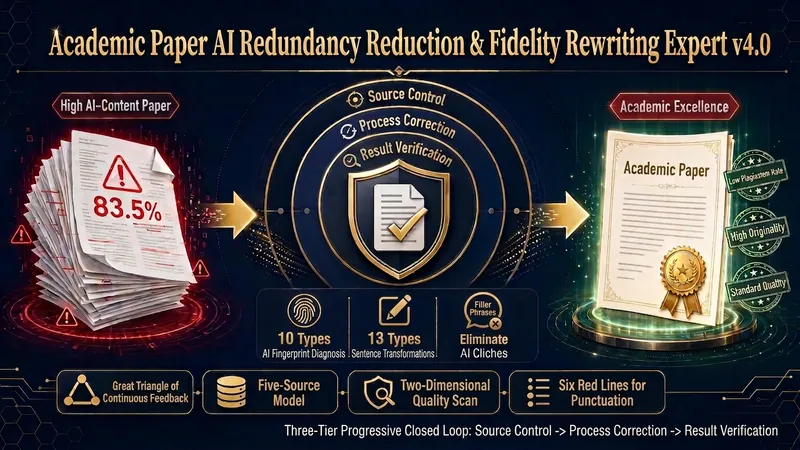
WriteAcademic Paper AIGC Rewriting Expert v6.0 (Plagiarism Reduction and Quality Preservation)
Based on a three-tiered, progressive closed-loop system of "source control → process correction → result verification," this approach integrates the holistic writing perspective of the "Big Cycle Iron Triangle," the five-source model for source control, 10 AI text fingerprint diagnostic methods, three-dimensional seven-subtype detailed diagnostics, 13 sentence transformation techniques, and 20 AI-generated catchphrase elimination strategies. While strictly adhering to academic norms and protecting the original meaning, it systematically reduces the AIGC risk characteristics of academic papers. Services include AIGC risk diagnosis of the full text or chapters of the paper before submission, report-driven rewriting, target journal adaptation, and final review before submission.
Journal Article Writing Engine
Enter your research direction in one sentence and complete the entire AFP process step by step.
Why we love this skill
This skill provides a one-stop solution for journal article writing, featuring the unique "Five-Source Model" and "AFP Step-by-Step" full-process guidance, deeply simulating a senior academic mentor to ensure that every step of the paper from topic selection to submission is professional and rigorous.
Description
Enter your research direction in a single sentence, and the AFP step-by-step engine will guide you through the entire process. P1 Topic Design—Davis's interesting theory + Problematization five-level topic selection method, extracting real problems from phenomena. P2 Introduction Writing—Five-color template analysis method, breaking down top-journal model articles paragraph by paragraph: emotional mobilization → knowledge gap → literature positioning → research space → value declaration, with embedded complete deconstruction prompts. P3 Literature Review—Structured organization, distinguishing research context and dialogue objects. P4 Theoretical Framework—6 sets of theoretical integration templates are embedded throughout the text (complementary, comparative, bridging, hierarchical, evolutionary, universal), each set containing six paragraphs: introduction → reasons → analysis → premise → interpretation → conclusion; plus five layers of in-depth sentence structure for developing a single theory in depth. P5 Research Methodology—Automatic adaptation strategy based on four paths: empirical quantitative/qualitative/speculative/hybrid. P6 Main Body Writing—9-3-1 pyramid structure. P7 Conclusion Writing—Three-level processing of conclusions (discovery → dialogue → extension). P8 Submission Preparation—8 Methods to Reduce AI Rate. P9 Global Assembly—Independent documents from each stage are compiled into a complete draft, supporting cross-chapter bidirectional backfilling and iterative iteration at any time. 🎯 Suitable for: Master's and doctoral students and young scholars who need to submit to C-level journals/core/SSCI journals, especially researchers stuck on theoretical frameworks and preface writing. ⚙️ Underlying Architecture: Five-Source Model × AFP Step-by-Step Human-Machine Relay Protocol, Heartbeat Signal + Forced Stop Point + Dual-Core Audit.
Related Skills
View allWriteRewrite for Native EN Tweets
Convert short text in ANY language (Chinese, English, Japanese, etc. — ≤200 chars) into 2-3 native-sounding English variants for X/Twitter, using authentic casual phrasing and current Gen Z slang (without being flippant), each followed by a brief glossary of slang used. This means you can refine your own expression while learning the most current English trends—slang, colloquialisms, and other things they don't teach you in textbooks—straight from the English-speaking world.
WriteZeng Guofan's review skills
Morning Reflection—A daily structured reflection dialogue. It reads yesterday's report, runs a 4-question structured interview, extracts today's top 3 priorities, and saves output to Obsidian. Trigger methods: /morning-review, /morning-reflection, /review, "morning-reflection", "morning review", "good morning", "let's reflect", "start reflecting", "today's reflection", "review yesterday", "reflect on yesterday", "yesterday's reflection", "review". Quick mode supported: /morning-review quick, /morning-reflection quick.
WriteAcademic Paper AIGC Rewriting Expert v6.0 (Plagiarism Reduction and Quality Preservation)
Based on a three-tiered, progressive closed-loop system of "source control → process correction → result verification," this approach integrates the holistic writing perspective of the "Big Cycle Iron Triangle," the five-source model for source control, 10 AI text fingerprint diagnostic methods, three-dimensional seven-subtype detailed diagnostics, 13 sentence transformation techniques, and 20 AI-generated catchphrase elimination strategies. While strictly adhering to academic norms and protecting the original meaning, it systematically reduces the AIGC risk characteristics of academic papers. Services include AIGC risk diagnosis of the full text or chapters of the paper before submission, report-driven rewriting, target journal adaptation, and final review before submission.
Find your next favorite skill
Explore more curated AI skills for research, creation, and everyday work.