Quick Reference Assistant
Description
Remember saving a YouTube tutorial but can't find it after searching all boards? Materials scattered across dozens of boards, always scrambling when you need them. Quick Reference Assistant lets you locate them instantly with natural language—"Find YouTube videos about OpenClaw." One sentence, it automatically searches across all boards and gives you direct links. Say goodbye to 'save and forget.'
Related Skills
View all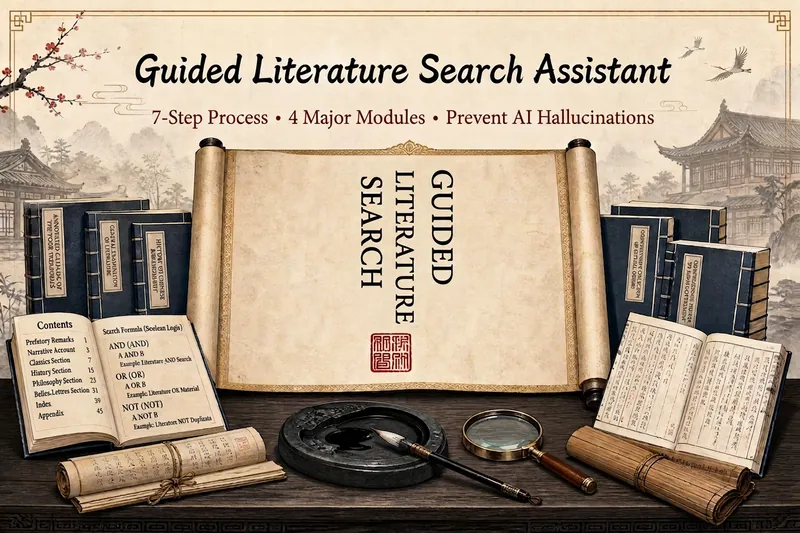 Research
Guided Literature Search
Search literature differently: this Skill gives you a “map of the field” first. It offers five standout capabilities: ① Reviews first, core papers second (a strict rule)—find 3–5 review articles to map the field, then follow their references to locate core literature, so you are not overwhelmed by hundreds of papers from the start; ② Literature authenticity verification (to prevent AI hallucinations)—uses placeholder-pattern checks and real-time verification through CrossRef, DOI, CNKI, and Wanfang, checking each author, journal, DOI, and page number without fabricating a single reference; ③ Automated advanced CSSCI searches on CNKI—when you have VPN or institutional access, automatically extract CSSCI records and abstracts, up to 100 papers at a time, and save them directly to Excel; ④ Direct English OA downloads—download directly from arXiv, MDPI, Frontiers, and other sources at 100%; download approximately 50–70% of Springer and Elsevier OA papers directly; for paywalled papers, receive a DOI link and VPN download instructions; ⑤ Topic selection with the Three-Circle Focus Method—intersect policy trends, your prior experience, and your problem awareness to turn a vague idea into a genuinely worthwhile research topic. The seven-step core workflow is: research topic design → keyword refinement → find reviews first → find core literature → screen and verify → attempt downloads → produce a prioritized reading list. It also includes two enhanced modules: a structured 12-element breakdown in Excel and iterative reflection after reading. Clear boundaries: it does not promise to bypass CNKI’s anti-scraping protections to download Chinese full texts, log in to a VPN on your behalf, or write the main body of your paper. Designed for graduate students, university faculty, and academic researchers who need to conduct systematic literature searches.
Optimize Project Materials
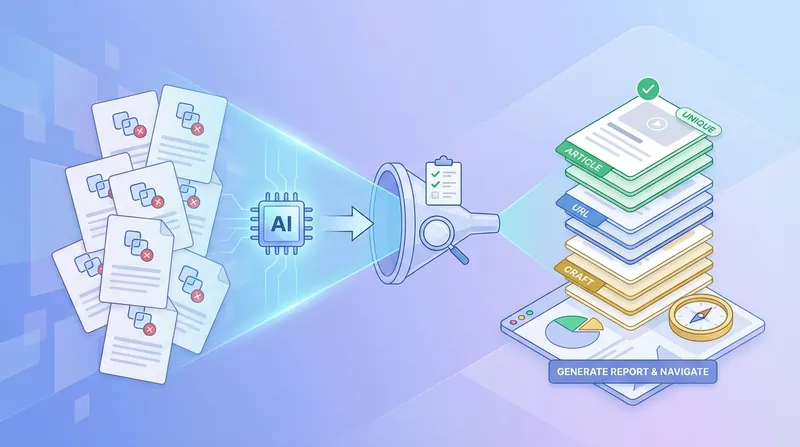
Say goodbye to cluttered material boards. One-click deduplication and auto-generated smart navigation documents with links keep your knowledge base well-organized.
Clipping Organization
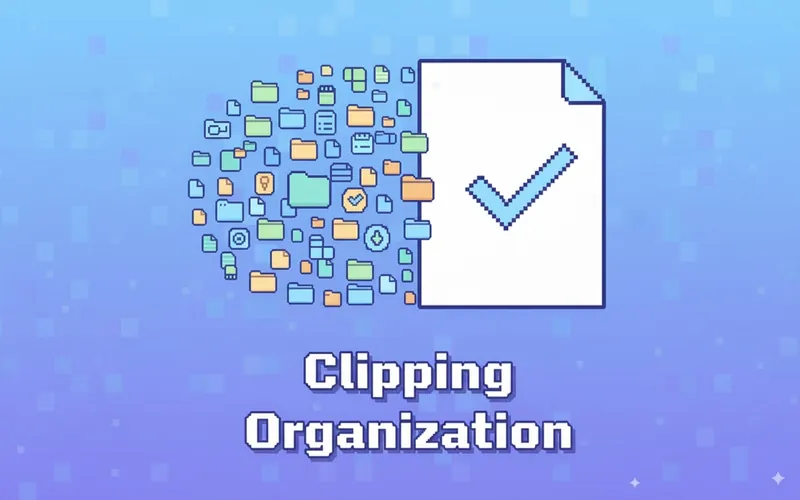
This is an Agent that helps you quickly organize information from clipped web page resources. It significantly reduces the tedious process of organizing materials, avoids cumbersome copy-paste operations, and rapidly forms the Raw Material information framework for clipped materials. It creates highly mature resource notes that can be referenced, serving as supporting material for subsequent complete personal notes, and can also be used for information compression of clipped knowledge.
Quick Reference Assistant
Description
Remember saving a YouTube tutorial but can't find it after searching all boards? Materials scattered across dozens of boards, always scrambling when you need them. Quick Reference Assistant lets you locate them instantly with natural language—"Find YouTube videos about OpenClaw." One sentence, it automatically searches across all boards and gives you direct links. Say goodbye to 'save and forget.'
Related Skills
View allResearchGuided Literature Search
Search literature differently: this Skill gives you a “map of the field” first. It offers five standout capabilities: ① Reviews first, core papers second (a strict rule)—find 3–5 review articles to map the field, then follow their references to locate core literature, so you are not overwhelmed by hundreds of papers from the start; ② Literature authenticity verification (to prevent AI hallucinations)—uses placeholder-pattern checks and real-time verification through CrossRef, DOI, CNKI, and Wanfang, checking each author, journal, DOI, and page number without fabricating a single reference; ③ Automated advanced CSSCI searches on CNKI—when you have VPN or institutional access, automatically extract CSSCI records and abstracts, up to 100 papers at a time, and save them directly to Excel; ④ Direct English OA downloads—download directly from arXiv, MDPI, Frontiers, and other sources at 100%; download approximately 50–70% of Springer and Elsevier OA papers directly; for paywalled papers, receive a DOI link and VPN download instructions; ⑤ Topic selection with the Three-Circle Focus Method—intersect policy trends, your prior experience, and your problem awareness to turn a vague idea into a genuinely worthwhile research topic. The seven-step core workflow is: research topic design → keyword refinement → find reviews first → find core literature → screen and verify → attempt downloads → produce a prioritized reading list. It also includes two enhanced modules: a structured 12-element breakdown in Excel and iterative reflection after reading. Clear boundaries: it does not promise to bypass CNKI’s anti-scraping protections to download Chinese full texts, log in to a VPN on your behalf, or write the main body of your paper. Designed for graduate students, university faculty, and academic researchers who need to conduct systematic literature searches.
Optimize Project Materials
Say goodbye to cluttered material boards. One-click deduplication and auto-generated smart navigation documents with links keep your knowledge base well-organized.
Clipping Organization
This is an Agent that helps you quickly organize information from clipped web page resources. It significantly reduces the tedious process of organizing materials, avoids cumbersome copy-paste operations, and rapidly forms the Raw Material information framework for clipped materials. It creates highly mature resource notes that can be referenced, serving as supporting material for subsequent complete personal notes, and can also be used for information compression of clipped knowledge.
Find your next favorite skill
Explore more curated AI skills for research, creation, and everyday work.