Build top YouTuber knowledge base
Instructions
#### Description
Deep-dive into the core philosophies of top YouTube creators, transform video content into in-depth research papers, and ultimately generate highly stylized presentation slides—achieving the transformation from fragmented audiovisual content to systematic knowledge assets.
#### Core Task
For the **$material** topic, scan YouTube to uncover the **top 5 long-form videos** with the highest view counts from **$material**. Goal: Extract core mental models, generate 5 in-depth articles, and ultimately produce a **15-page** **Brutalist-style** presentation.
Before starting any action, first ask the user which influencer's knowledge base they want to build. Only proceed after the user provides their response.
**Step 1: Mining & Filtering**
- **Goal**: Lock in high-value content validated by the market.
- **Actions**:
- **Scan & Sort**: Automatically scan the YouTube channel, sorted by "Most Popular."
- **Filter**: Capture the Top 5 long-form videos, automatically excluding Shorts.
- **Save Materials**: Automatically collect and save these 5 videos to the Materials section of the current Board.
**Step 2: Deep Restructuring (Refining)**
- **Goal**: Transform audiovisual language into structured, in-depth reading materials.
- **Actions**:
- **Transcribe & Rewrite**: Go beyond mere summarization—extract the core "Mental Models."
- **Structured Output**: Transcribe and distill the content from 5 episodes into 1 rigorously structured deep-dive research paper.
Before generating the slides, first ask the user: "Would you like me to generate a slide deck based on the research and analysis results to present this influencer's core ideas?" If the user declines, the task ends here. If the user agrees, proceed with generating the slides.
**Step 3: Generate Brutalist Slides (Building)**
- **Goal**: Transform research findings into visually impactful, manifesto-style PPT.
- **Prompt Instruction**: "Generate a manifesto 15-pages slides based on these 5 articles."
- **Design Style**: Brutalism
- **Palette**: Gray, Black, Off-white.
- **Typography**: Utilitarian & Rigid—conveying a machine-like, industrial feel.
- **Vibe**: Serious, Uncompromising, Architectural.
- **Visual Presentation**: Slides should not appear soft—they should feel like heavy concrete slabs etched with Dan Koe's quotes. Use Dan Koe's photos as visual materials when necessary.
- **Brutalism**
- **Scenario**: Analyze Dan Koe's top 5 YouTube videos and synthesize findings into a 15-slide PPT. Include core mental models, structural frameworks, philosophical axioms, and direct quotes etched into the design.
- **Requirement**: Extract and standardize core attributes such as key concepts, actionable steps, and contrarian insights. Present content using raw text blocks and heavy grids, and display quotes as massive, manifesto-style declarations. Auto-crop Dan Koe's portraits and architectural textures to fit consistent layouts.
- **Design Style**: Neo-Brutalism—utilitarian & rigid typography (Machine-like, Industrial), raw background textures (Gray, Black, Off-white), exposed grid lines, and asymmetry. No decorative graphics, no softness, no gradients. The presentation should feel serious, uncompromising, architectural, and heavy like concrete slabs, prioritizing impact, rawness, and authority.
Description
Recommended by
nene@YouMind
Why we love this skill
Uncover the deep philosophies of top YouTubers with this unique skill. It transforms popular video content into rigorous research papers, then distills these insights into a powerful, 15-page Brutalist-style presentation. Perfect for dissecting creator strategies and building systematic knowledge assets from fragmented audiovisual content.
Batch-convert top YouTube influencers' videos into systematic knowledge assets. Generate in-depth research papers and Brutalist-style presentations from top YouTube creators' core philosophies.
Related Skills
View all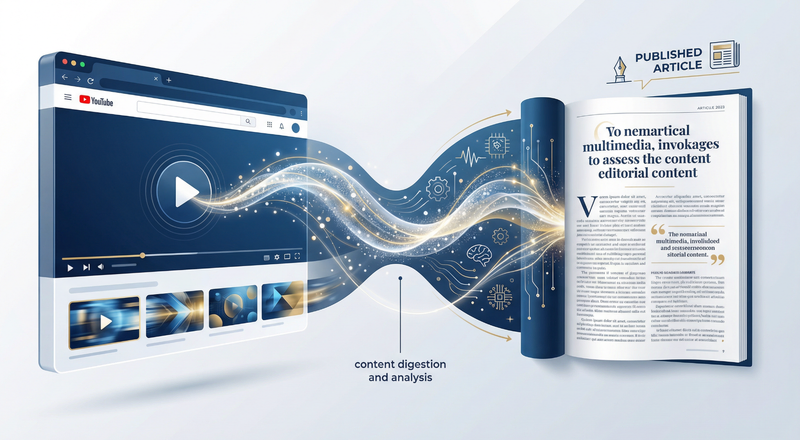 Write
WriteYouTube to Article
Transform any YouTube video into a polished, in-depth feature article. Digest complex video content and rewrite it into a cohesive, publication-ready narrative with professional tone and detailed insights.
 Research
Deconstruct viral YouTube scripts
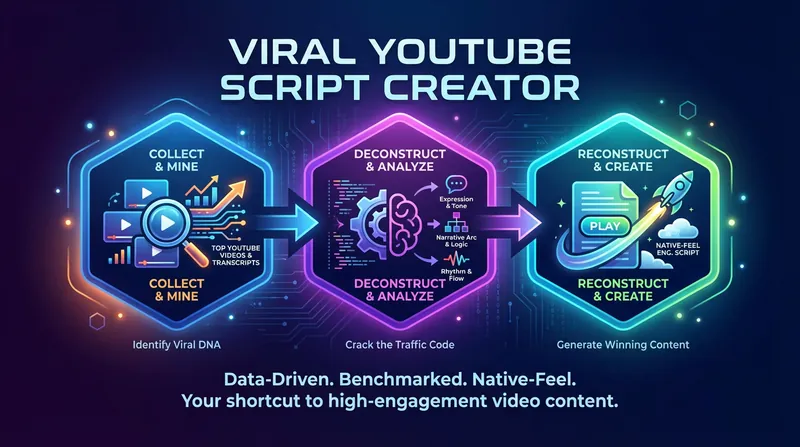
Analyzes top YouTube hits, deconstructs their style, and crafts a native script with built-in engagement, ensuring your content resonates from the start.
 Research
Multiple YouTubes cross analysis
Synthesize multiple YouTube episodes into a unified framework, automatically surface conflicting viewpoints, and build a more objective, well-rounded understanding.
Build top YouTuber knowledge base
Instructions
#### Description
Deep-dive into the core philosophies of top YouTube creators, transform video content into in-depth research papers, and ultimately generate highly stylized presentation slides—achieving the transformation from fragmented audiovisual content to systematic knowledge assets.
#### Core Task
For the **$material** topic, scan YouTube to uncover the **top 5 long-form videos** with the highest view counts from **$material**. Goal: Extract core mental models, generate 5 in-depth articles, and ultimately produce a **15-page** **Brutalist-style** presentation.
Before starting any action, first ask the user which influencer's knowledge base they want to build. Only proceed after the user provides their response.
**Step 1: Mining & Filtering**
- **Goal**: Lock in high-value content validated by the market.
- **Actions**:
- **Scan & Sort**: Automatically scan the YouTube channel, sorted by "Most Popular."
- **Filter**: Capture the Top 5 long-form videos, automatically excluding Shorts.
- **Save Materials**: Automatically collect and save these 5 videos to the Materials section of the current Board.
**Step 2: Deep Restructuring (Refining)**
- **Goal**: Transform audiovisual language into structured, in-depth reading materials.
- **Actions**:
- **Transcribe & Rewrite**: Go beyond mere summarization—extract the core "Mental Models."
- **Structured Output**: Transcribe and distill the content from 5 episodes into 1 rigorously structured deep-dive research paper.
Before generating the slides, first ask the user: "Would you like me to generate a slide deck based on the research and analysis results to present this influencer's core ideas?" If the user declines, the task ends here. If the user agrees, proceed with generating the slides.
**Step 3: Generate Brutalist Slides (Building)**
- **Goal**: Transform research findings into visually impactful, manifesto-style PPT.
- **Prompt Instruction**: "Generate a manifesto 15-pages slides based on these 5 articles."
- **Design Style**: Brutalism
- **Palette**: Gray, Black, Off-white.
- **Typography**: Utilitarian & Rigid—conveying a machine-like, industrial feel.
- **Vibe**: Serious, Uncompromising, Architectural.
- **Visual Presentation**: Slides should not appear soft—they should feel like heavy concrete slabs etched with Dan Koe's quotes. Use Dan Koe's photos as visual materials when necessary.
- **Brutalism**
- **Scenario**: Analyze Dan Koe's top 5 YouTube videos and synthesize findings into a 15-slide PPT. Include core mental models, structural frameworks, philosophical axioms, and direct quotes etched into the design.
- **Requirement**: Extract and standardize core attributes such as key concepts, actionable steps, and contrarian insights. Present content using raw text blocks and heavy grids, and display quotes as massive, manifesto-style declarations. Auto-crop Dan Koe's portraits and architectural textures to fit consistent layouts.
- **Design Style**: Neo-Brutalism—utilitarian & rigid typography (Machine-like, Industrial), raw background textures (Gray, Black, Off-white), exposed grid lines, and asymmetry. No decorative graphics, no softness, no gradients. The presentation should feel serious, uncompromising, architectural, and heavy like concrete slabs, prioritizing impact, rawness, and authority.
Description
Recommended by
nene@YouMind
Why we love this skill
Uncover the deep philosophies of top YouTubers with this unique skill. It transforms popular video content into rigorous research papers, then distills these insights into a powerful, 15-page Brutalist-style presentation. Perfect for dissecting creator strategies and building systematic knowledge assets from fragmented audiovisual content.
Batch-convert top YouTube influencers' videos into systematic knowledge assets. Generate in-depth research papers and Brutalist-style presentations from top YouTube creators' core philosophies.
Related Skills
View allWriteYouTube to Article
Transform any YouTube video into a polished, in-depth feature article. Digest complex video content and rewrite it into a cohesive, publication-ready narrative with professional tone and detailed insights.
ResearchDeconstruct viral YouTube scripts
Analyzes top YouTube hits, deconstructs their style, and crafts a native script with built-in engagement, ensuring your content resonates from the start.
ResearchMultiple YouTubes cross analysis
Synthesize multiple YouTube episodes into a unified framework, automatically surface conflicting viewpoints, and build a more objective, well-rounded understanding.
Find your next favorite skill
Explore more curated AI skills for research, creation, and everyday work.