
Order Without Regrets
Plan portions, variety, and dietary needs
Order Without Regrets
Plan portions, variety, and dietary needs
Showcase
Description
The cost of ordering the wrong dishes isn’t the money—it’s the awkward silence. It first asks about the number of diners, occasion, budget, and dietary restrictions. Then it uses a portion formula to determine how many hot dishes, cold dishes, soups, and staple foods to order. It also provides a balanced structure: how many signature dishes to anchor the meal, the ratio of spicy to non-spicy dishes, and ways to avoid repeating ingredients. You’ll also get a ready-to-use ordering phrase and three checks to avoid common mistakes: check dietary restrictions, check for repeated dishes or ingredients, and check the remaining budget. Hard rules: it does not recommend specific restaurants, make up current dish prices, or provide medical dietary advice. Ideal for first-time hosts, business dinners, or anyone who gets nervous every time they order for a group.
Best for
Ideal for first-time hosts, business dinners, or anyone who wants to plan a group meal with confidence.
How to use this Skill
Provide your input
Provide the number of diners, occasion, budget, dietary restrictions, restaurant type, and dishes you’re considering.
Run the Skill
Use this information to check portions, dish variety, spice levels, and repeated ingredients, then prepare ready-to-use ordering phrases.
Review your result
Get a group ordering plan with quantity guidance, pairing suggestions, ready-to-use ordering phrases, and three checks.
Related Skills
View all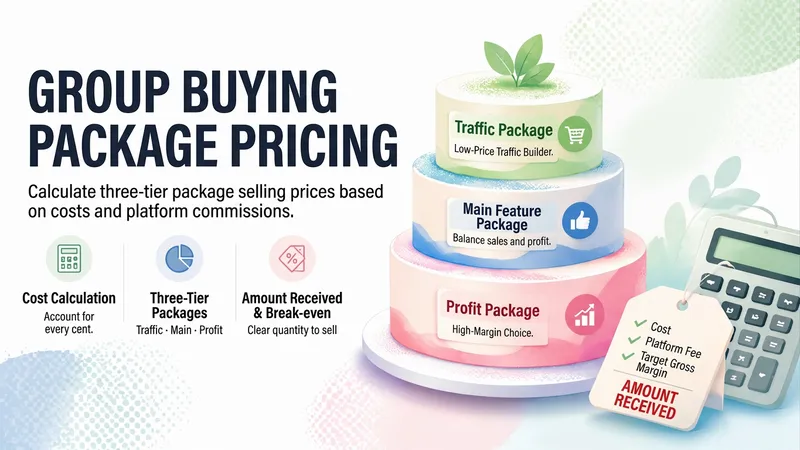
Group Deal Pricing
The biggest risks with group deals are selling out without making money or pricing too high for anyone to buy. 【Group Deal Pricing】uses dish costs, platform fees, and target gross margin to calculate what to include in three bundles—the traffic-builder, main offer, and profit offer—along with the selling price, net payout, and number of sales needed to break even. It also flags dishes that should not go into a bundle, such as those with high costs, slow preparation, or high waste, and shows the actual payout after threshold discounts and other discounts are combined. Hard rules: every calculation is shown step by step, costs are based on the numbers you provide, missing items are given as ranges and clearly marked as estimates, and it does not calculate “guaranteed profits.”
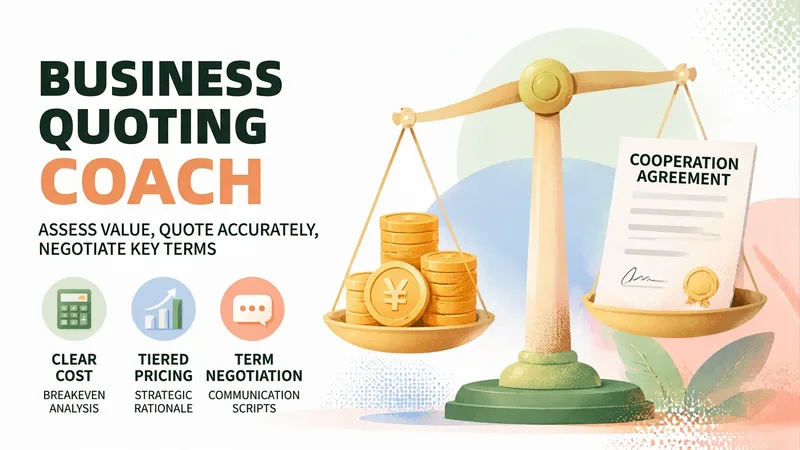
Brand Deal Pricing Coach
The hardest part of taking a brand deal isn't finding one—it's knowing what the deal is worth. You spend three days negotiating, then the client says, “That’s the entire budget.” You don’t know whether it’s a firm limit or a negotiation tactic. Quote too high and you may lose the deal; quote too low and you may finish the work after staying up late, only to realize you lost money. This skill brings in the knowledgeable friend who knows the business. Share the basic details of the deal—who the client is, the format, how many deliverables and revision rounds are required, and what price they offered. It will first ask for key missing information, then provide a Brand Deal Pricing Evaluation Report: ✨ Core capabilities 1. Break-even price calculation: Time costs + hard costs + taxes and commissions + revision and payment-term risks, so you can first determine “below what price am I losing money?” 2. Three pricing tiers: Floor price / target price / ideal price, with the reasoning behind each tier and the amount tied to every add-on and discount item 3. Contract checklist: Payment, advance payment, revision limits, licensing scope and duration, exclusivity period, and the right to publish the work as a case study—beginners often lose out more on terms than on price 4. Negotiation scripts: For the initial quote, “the budget is limited,” “let’s test the results first,” exclusivity requests, requests for free trial work, and more. Each scenario includes a ready-to-copy version with tone and risks noted 5. One-page quote letter: Once you reach an agreement, generate a quote letter you can send directly to the client with one click 6. Pricing archive: Remember your past deal prices and minimum hourly rate, becoming more accurate the more you use it 🛡️ Three firm principles · No invented market figures: All amounts come only from the anchors and cost calculations you provide. Estimated ranges are clearly marked as “not the market average” · No sugarcoating: If the price is below your costs, it will tell you directly, “Taking this deal means losing money,” and calculate where the loss comes from · No deciding for you: It provides analysis and supporting reasons; the decision remains yours 📱 Who it’s for Bloggers, creators, and up creators handling brand partnerships, platform deals, or sponsored content; public-account writers; Xiaohongshu and Douyin creators; as well as designers, writers, and podcast hosts taking on projects. 💡 How to use it Simply describe your deal. You can also use /报价 /还价 /条款 /出函 /复盘 /档案 for precise access. Getting one quote right can mean a difference of hundreds or even thousands.
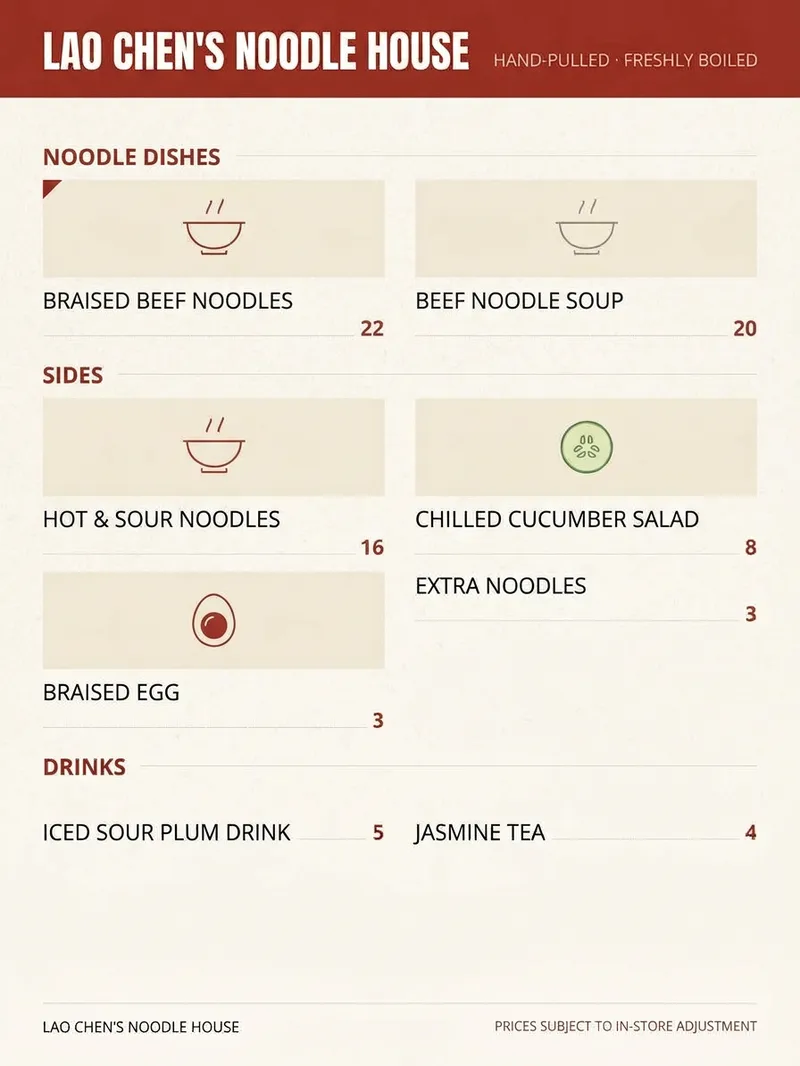
Dish Photos to Menu
Small restaurants often rely on a Word-printed sheet or a photographed old menu, with tiny text and messy pricing. 【Dish Photos to Menu】takes your dish photos, names, and prices and arranges them into a portrait menu: a restaurant-name banner at the top, a two-column dish grid, a fine dotted line from each dish name to its price, and color blocks to highlight signature dishes. Dishes without photos are automatically shown as text entries, with no empty placeholders left behind. Hard rules: dish names and prices are kept exactly as provided; no dishes or prices are invented; “Signature” is not added unless you specify which dishes qualify.
Information
- Version
- v3
- Last updated
- Runtime credits
- Usage-based
- Models
- Auto
- Use cases
- Lifestyle & entertainment
- What you get
- Plan
