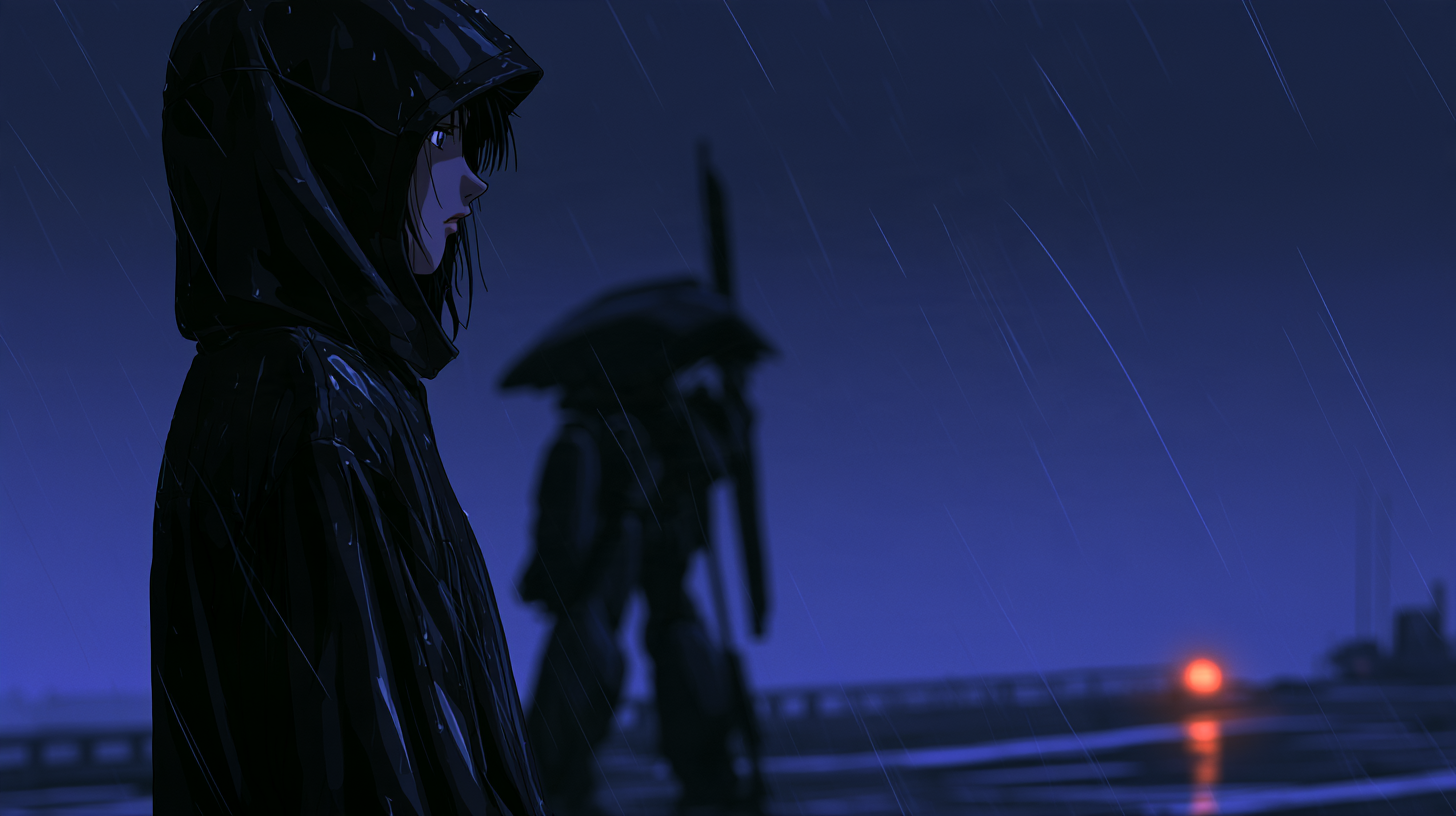
Neon Genesis Evangelion Style
Bilingual prompts for angular mecha stills
Neon Genesis Evangelion Style
Bilingual prompts for angular mecha stills
Showcase
Description
Transform characters, mecha, still lifes, or architectural scenes into sharp, slender visual prompts suited to still-image generation. Empty-space geometry, broad color fields, hard-edged shadows, and clear scale relationships work together to create distinctive compositions. Whether it is a character in an empty corridor, machinery framed by architecture, or mecha emphasizing points of contact and support, the style preserves the number of subjects, actions, objects, proportions, and specified colors while transferring the visual language. You will receive Chinese composition guidance, English Midjourney prompts, and native Chinese prompts for ImageGen, suitable for single images or series work that requires changes and contact relationships to remain consistent frame by frame. The style emphasizes negative space, slender forms, hard geometry, and cool, stark warning colors, avoiding a shift toward dense industrial cyberpunk or dependence on neon elements. By default, it writes prompts only and does not generate images.
Recommended by
Dancang
Why we love this skill
Distinctive mecha still frames built from slender forms, empty-space geometry, broad color fields, and clear scale relationships—without relying on giant robots or neon overload.
Best for
Visual creators turning characters, mecha, or architectural scenes into sharp, slender prompts for geometric still images with empty space.
How to use this Skill
Provide your input
Provide a character, mecha, still life, or architectural scene, including the number of subjects, actions, objects, proportions, colors, and whether it is a single image or series.
Run the Skill
Transform the subject into a still-image aesthetic built from empty-space geometry, slender forms, broad color fields, and hard shadows while preserving explicit constraints.
Review your result
Receive Chinese composition guidance, English Midjourney prompts, and Chinese ImageGen prompts. By default, this skill writes prompts only and does not generate images.
Related Skills
View all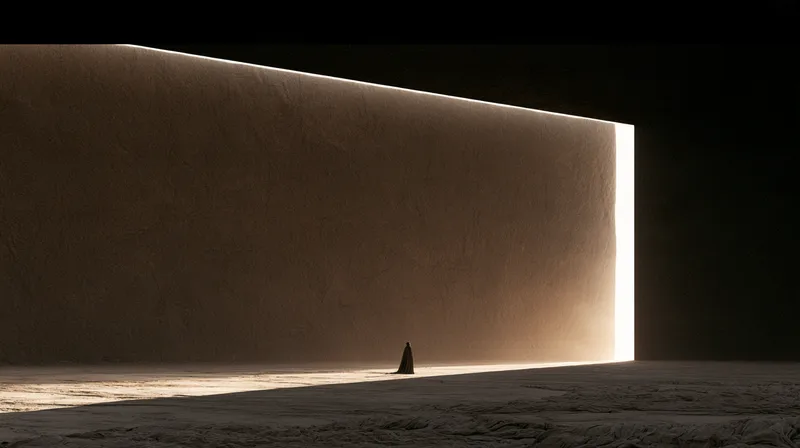 Image
Desert Megastructure Aesthetic
Turn people, objects, cities, interiors, or other suitable subjects into ready-to-use minimalist still-image prompts in a desert megastructure style. The skill preserves the user’s specified subject, number of people, actions, contact relationships, and scene function, while using low-saturation sand and mineral gray, monolithic wedge-shaped geometric megastructures, hard sunlight, vast pure-dark surfaces, and extreme contrasts of scale to create a silent, restrained, architectural image. It does not rely on a film title as a substitute for specific descriptions of lighting, materials, and composition. You’ll get a clear compositional intent, native Chinese ImageGen prompts, and English Midjourney prompts. You can also reduce the output to a single-platform version as needed. This is suitable for single stills, consistently styled image sets, and correcting common deviations such as oversaturated colors, overly dense machinery, unbalanced scale, or visual noise. The visual language can also be applied to city and interior subjects without forcing in a desert. When you request actual image generation, the skill can additionally check character visibility, contact relationships, style anchors, and consistency across images.
 Image
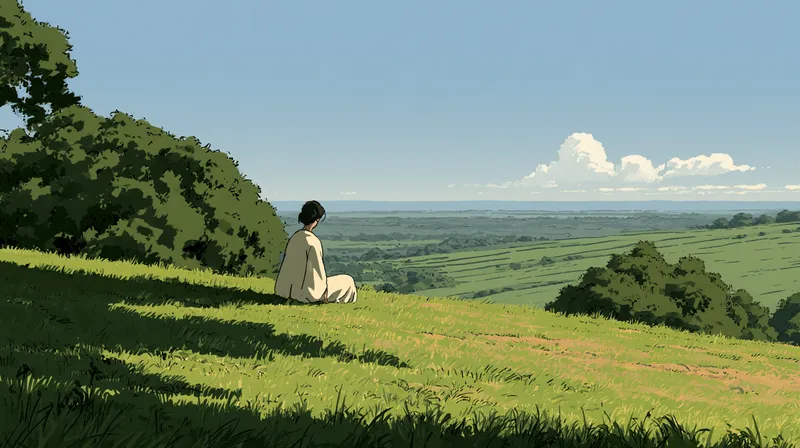
Miyazaki Healing Hand-Drawn
Turn nature, city, and product scenes into image-generation prompts with a hand-drawn sense of natural wonder. Ideal for visual projects that call for soft two-dimensional contours, rounded yet not childish characters, and spacious, livable environments. Whether depicting everyday life in the woods, urban corners, or product displays, the prompts extend a cohesive, layered visual language while preserving the number of people, actions, objects, proportions, and specified colors. The prompts emphasize gouache-like vegetation color blocks, clear foreground, middle ground, and background separation, complete tree canopies, and natural color ranges. They avoid turning backgrounds into fragmented visual noise or forcing rural elements or specific props into urban and product scenes. For close-ups, overcast conditions, or requests where the style has drifted, the background density, lighting, and character presentation can be adjusted while maintaining the hand-drawn texture and spacious sense of place. Each image includes Chinese composition guidance, an English Midjourney prompt, and a native Chinese ImageGen prompt by default. For series of images, the prompts consider frame-by-frame independence, variations in character actions, and contact relationships between subjects. Suitable for illustration concepts, scene setting, product visual proposals, and sequential image planning. Prompts only are generated by default; images are not created automatically.
 Image
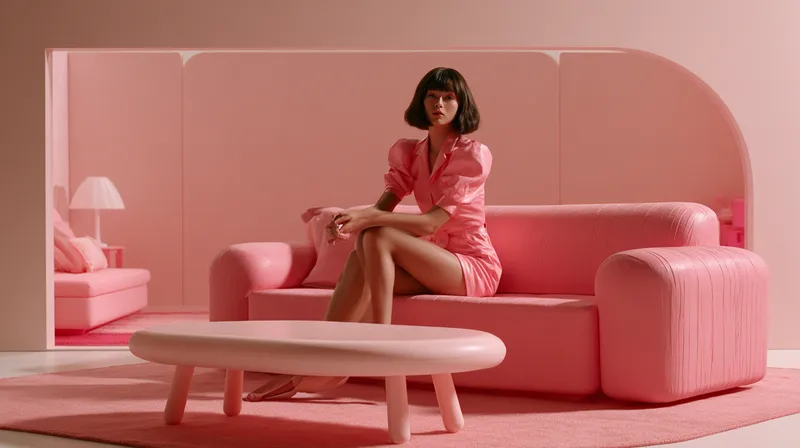
Pink Western Fashion Aesthetic
Turn people, spaces, products, or story scenes into ready-to-use still-image prompts for pink open-toy architecture. Place real people among sleek, open, slightly miniature-feeling plastic buildings and furniture while preserving realistic skin, natural textures, and clear action relationships. Ideal for creating Barbie-style candy-pink artificial paradises, open sectional rooms, pink toy homes, and coordinated scene sets in the same style. Descriptions combine material layering from pale cherry pink to rose pink, substantial rounded plastic components, open wall display spaces, scale comparisons between people and architecture, and contact shadows under bright, soft lighting. They avoid making people look plastic, as well as pink glass, unsupported stairs, clipping, and simply applying a pink filter. You can customize the number of people, actions, props, scene proportions, and image orientation to get composition intent and still-image generation prompts suited to your subject. When needed, the output can include Chinese ImageGen prompts, English Midjourney prompts, or related review points. When you clearly request actual image generation, it also checks the results around the number of people, load-bearing, contact relationships, style anchors, and consistency across images, then fixes only the issues that actually failed.
Information
- Version
- v2
- Last updated
- Runtime credits
- Usage-based
- Models
- Auto
- Use cases
- Images & design
- What you get
- Prompt
