Tweet rewriter
Featured by
nene@YouMind.AI
Why we love this skill
Transform how you engage on social media with this dynamic Tweet Rewriter. It crafts two distinct versions of any tweet: a direct restatement for independent sharing and an insightful extension perfect for quote retweets or direct replies. By integrating your unique voice and historical content, it ensures every post is both personal and impactful, moving beyond simple retweets to truly amplify your message.
Instructions
## Instructions
### Core Mission
**Task Background:** In the social media era, we often encounter Twitter content worth sharing, but direct retweets lack personal perspective, while creating completely original content is time-consuming. This Skill helps you inject your personal insights and creative style while preserving the core value of the original tweet, generating rewrites that are both deep and distinctive.
**Specific Goals:**
1. Deeply understand the core viewpoints, argumentation logic, and expression style of the original tweet
2. Extract personal viewpoint library, stance tendencies, and expression characteristics from user's historical creations
3. Generate two rewrite versions: Direct Restatement (suitable for independent publishing) and Insight Extension (suitable for quote retweets or @mentioning original author)
4. Ensure rewritten content follows "Hook-Body-Conclusion" structure with strong hooks and clear logic
5. Intelligently decide between single tweet or thread format based on content length
**Key Constraints:**
- Rewrites must integrate user's personal viewpoints, avoiding rigid mechanical rewriting
- Short tweets controlled within 280 characters, long content can expand into threads
- Must follow "Hook-Body-Conclusion" structure: powerful opening hook, clear middle argumentation, natural ending
- Avoid forced value elevation or AI tone
---
## Usage Example
**Input:**
- Original tweet: A 180-character tweet about "AI tools improving efficiency"
- User's historical content: Multiple articles about tool usage methodology
**Output:**
**Version 1 (Direct Restatement):**
> Tools don't automatically improve efficiency—the thinking behind using tools does.
>
> I've observed three key differences:
>
> 1. Beginners use tools to replace thinking; experts use tools to amplify thinking
>
> 2. Beginners pursue comprehensive features; experts only use 20% core functions
>
> 3. Beginners use tools in isolation; experts build tool combinations
>
> The essence of efficiency is doing the right things faster, not just doing things faster.
**Version 2 (Insight Extension):**
> This observation is spot-on. Adding a deeper question: Why can the same tool create 10x efficiency differences?
>
> My practice finds the key lies in "meta-cognition of tool usage":
>
> - Most people stop at the "learning operations" level
>
> - Few think about "when to use, when not to use"
>
> - Very few design "how tools fit into my workflow"
>
> Tools are amplifiers—they amplify your existing work methodology.
### Step 1: Deep Analysis of Original Tweet
**Goal:** Comprehensively understand the content structure, core viewpoints, and expression characteristics of the original tweet to lay the foundation for rewriting.
**Actions:**
- Extract the core arguments, key evidence, and conclusions of the original tweet
- Identify the writing structure of the original tweet (hook presence, argumentation method, ending style)
- Analyze the language style of the original tweet (formal/casual, rational/emotional, concise/detailed)
- Count the character count of the original tweet, determine if it's a single tweet (≤280 characters) or thread
- Mark reusable elements in the original tweet such as golden sentences, data, cases, etc.
**Quality Standards:**
- Accurately distill 1-3 core viewpoints
- Clearly identify structural characteristics of the original tweet
- Provide sufficient content understanding foundation for subsequent rewriting
---
###
### Step 2: Mine User's Personal Viewpoint Library
**Goal:** Extract relevant viewpoints, stances, and expression styles from user's historical creations to inject personal characteristics into rewrites.
**Actions:**
- Search all user boards for content related to the original tweet's topic
- Extract user's core viewpoints, unique insights, and stance tendencies on related topics
- Identify user's common expressions, sentence patterns, and language style
- Find high-frequency keywords, conceptual frameworks, and thinking models from user's past creations
- Organize user's knowledge accumulation and experience cases in this field
**Quality Standards:**
- Find at least 3-5 pieces of user's relevant historical content
- Distill 2-3 user core viewpoints that can be integrated
- Identify user's language style characteristics (e.g., likes using analogies, prefers data support, good at rhetorical questions, etc.)
### Step 3: Design Rewriting Strategy
**Goal:** Plan the structure and focus of two rewrite versions based on original tweet characteristics and user style.
**Actions:**
- **Version 1 (Direct Restatement)** Strategy Design:
- Determine how to re-express the original tweet's core viewpoints in user's language
- Plan how to integrate user's relevant insights naturally
- Design powerful opening hook (viewpoint, conclusion, or teaser)
- Plan middle argumentation method (methodology, takeaways, cases, etc.)
- Design concise and powerful ending (insight summary, no forced elevation)
- **Version 2 (Insight Extension)** Strategy Design:
- Determine the direction of extension based on original tweet (deeper analysis, different angles, practical applications, etc.)
- Plan how to reflect "reflection + insight" layering
- Design interactive tone suitable for @mentioning original author or quote retweeting
- Plan how to add unique value while acknowledging the original tweet
- **Length Decision:**
- If original tweet ≤280 characters with single viewpoint, rewrite as single tweet
- If original tweet >280 characters or multiple viewpoints, rewrite as thread (2-5 tweets)
- Ensure each tweet follows "Hook-Body-Conclusion" micro-structure
**Quality Standards:**
- Two versions have clear differentiated positioning
- Structural design follows "Hook-Body-Conclusion" principle
- Length decision is reasonable, aligns with Twitter reading habits
### Step 4: Generate Version 1 - Direct Restatement
**Goal:** Re-interpret the original tweet using user's language and viewpoints, suitable for publishing as independent content.
**Actions:**
- Write strong hook opening:
- Distill original tweet's core viewpoint into one golden sentence
- Or use rhetorical questions, data, counter-intuitive viewpoints to attract attention
- Ensure opening grabs readers within 20 characters
- Expand middle argumentation:
- Reorganize original tweet's evidence using user's language
- Integrate relevant viewpoints and cases from user's historical creations
- Use clear structure (e.g., 3 key points, comparative analysis, step breakdown, etc.)
- Maintain logical coherence, avoid rigid splicing
- Concluding summary:
- Elevate core insight in one sentence
- Or pose inspirational questions
- Avoid preachy endings like "So we should..."
- Length control:
- Single tweet version: Strictly control within 280 characters, remove redundant expressions
- Thread version: Split into 2-5 tweets, each independent yet logically coherent
**Quality Standards:**
- Opening hook is attractive, can grab readers in 3 seconds
- Middle argumentation is clear, with user's personal viewpoints integrated
- Ending is natural and powerful, no forced elevation
- Language flows smoothly, aligns with user style, no AI tone
use Ask mode,Grok 4
### Step 5: Generate Version 2 - Insight Extension
**Goal:** Extend deep insights based on original tweet, suitable for quote retweets or @mentioning original author for interaction.
**Actions:**
- Write "reflection-style" opening:
- Briefly comment on the value point of the original tweet (e.g., "This observation is sharp," "The data is very convincing")
- Or directly quote the original tweet's golden sentence as introduction
- Establish conversational feel with original author
- Extend deep insights:
- Propose deeper-level analysis based on original tweet
- Or supplement viewpoints from different angles
- Or provide application suggestions based on user's practical experience
- Or point out key issues not covered by original tweet
- Ensure extended content has unique value, not simple repetition
- Interactive ending:
- Can pose exploratory questions to original author
- Or express recognition and supplement own thinking
- Or propose directions for further discussion
- Maintain respectful and constructive tone
- Length control:
- Decide single tweet or thread based on complexity of extended content
- Ensure each part has substantial content, no padding
**Quality Standards:**
- Reflects understanding and recognition of original tweet
- Extended content has unique value, not simple restatement
- Tone suitable for interaction, has viewpoints yet remains polite
- Suitable for quote retweet or @mentioning original author scenarios
use Ask mode,Grok 4
### Step 6: Quality Check and Optimization
**Goal:** Ensure both versions meet high-quality tweet standards, perform final polishing.
**Actions:**
- **Structure Check:**
- Verify each version follows "Hook-Body-Conclusion" structure
- Check if opening hook is attractive enough
- Confirm if middle argumentation is clear and powerful
- Verify if ending is natural and not contrived
- **Content Check:**
- Confirm user's personal viewpoints are naturally integrated, not rigidly spliced
- Check for AI tone (e.g., "In the era of...", "Let us..." and other clichés)
- Verify logical coherence, no jumps or contradictions
- Ensure no forced value elevation or preaching
- **Length Check:**
- Single tweet version must be ≤280 characters
- Thread version each tweet is independently complete, appropriate length
- Remove redundant expressions, maintain information density
- **Style Check:**
- Does language align with user's historical creation style
- Does it preserve the core value of original tweet
- Do the two versions have clear differentiation
- **Final Optimization:**
- Polish golden sentences, enhance memorable points
- Optimize rhythm, improve readability
- Adjust punctuation and formatting, align with Twitter reading habits
**Quality Standards:**
- Pass all check items
- Both versions reach directly publishable quality
- No obvious AI generation traces
---
## Style & Presentation
**Language Style:**
- **Authenticity First:** Avoid AI tone, use user's authentic language style
- **Clear Viewpoints:** Not ambiguous, dare to express clear stances
- **Concise and Powerful:** Remove redundancy, every sentence has information
- **Natural Flow:** Write like humans, with rhythm and breathing space
**Prohibited Expressions:**
- "In this era of...", "With the development of..." and other universal openings
- "Let us...", "We should..." and other preachy endings
- "Deep thinking", "Provoke thinking" and other empty expressions
- Excessive use of exclamation marks and exaggerated rhetoric
**Recommended Expressions:**
- Direct statement of viewpoints: "X is Y"
- Use specific cases and data
- Good at using analogies and comparisons
- Pose inspirational questions
- Use short sentences to enhance rhythm
**Formatting Standards:**
- Thread tweets separated by blank lines
- Important viewpoints can stand alone as paragraphs
- Appropriate use of emojis to enhance expression (but not excessive)
- Numbers and key points presented in clear format
---
## Important Notes
1. **Respect Originality:** Rewriting is not plagiarism, must recreate value based on understanding
2. **Maintain Sincerity:** Don't rewrite for the sake of rewriting, ensure output content reflects viewpoints you genuinely endorse
3. **Avoid Excess:** Don't forcibly complicate simple viewpoints, maintain moderation
4. **Note Timeliness:** If original tweet involves current events, pay attention to time context when rewriting
5. **Copyright Awareness:** Preserve original author information when quote retweeting, @mention original author to show respect
---
## Output Specifications
**Deliverables:**
1. **Original Tweet Analysis Report:**
- Core viewpoint distillation (1-3 items)
- Structural characteristic analysis
- Character count and format determination (single tweet/thread)
- Reusable element annotation
2. **User Viewpoint Library Summary:**
- Relevant historical content citations (3-5 items)
- User core viewpoint distillation (2-3 items)
- User language style characteristic summary
3. **Version 1: Direct Restatement:**
- Complete rewritten content
- If thread, mark each tweet's number and content
- Character count (ensure compliance with limits)
- Structure annotation (mark hook, argumentation, conclusion parts)
4. **Version 2: Insight Extension:**
- Complete rewritten content
- If thread, mark each tweet's number and content
- Character count
- Extended value point explanation (explain what unique value was added compared to original tweet)
5. **Usage Recommendations:**
- Version 1 applicable scenario explanation
- Version 2 applicable scenario explanation
- Publishing timing and interaction suggestions
**Format Requirements:**
- Use Markdown format to organize content
- Mark each version's tweet content with quote blocks (>)
- Thread format clearly distinguishes each tweet with numbering
- Highlight key content with bold
- Provide clear dividers to separate different sections
**Quality Standards:**
- All content delivered completely, no omissions
- Rewritten content can be directly copied and used
- Analysis and recommendations have practical guiding value
- Clear formatting, easy to read and use
Description
Based on viral tweets, generate two versions of high-quality rewrites that perfectly blend your personal insights with trending content, making your shares both deep and distinctive.
Related Skills
View all Write
WriteRewrite for Native EN Tweets
Convert short text in ANY language (Chinese, English, Japanese, etc. — ≤200 chars) into 2-3 native-sounding English variants for X/Twitter, using authentic casual phrasing and current Gen Z slang (without being flippant), each followed by a brief glossary of slang used. This means you can refine your own expression while learning the most current English trends—slang, colloquialisms, and other things they don't teach you in textbooks—straight from the English-speaking world.
 Write
WriteZeng Guofan Review Skill
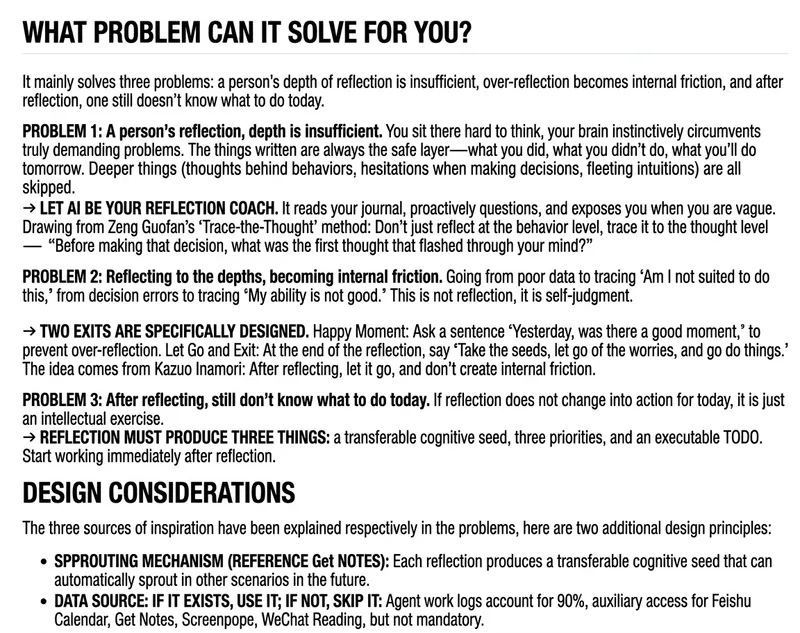
Morning Review — Daily structured reflection conversation. Reads yesterday's daily report, drives cognitive review with 4 rounds of questioning plus extraction of today's priorities. Trigger ways: /morning-review, /morning-review, /review, /review, "Morning Review", "Morning Review", "morning review", "Good morning", "Let's review", "Start review", "Today's review", "Review yesterday", "Reflect", "Yesterday's review", "Review" Supports quick mode: /morning-review quick, /morning-review quick. Morning reflection: reads yesterday's report, runs 4-question structured interview, extracts today's top 3 priorities. Saves output to Obsidian.
 Write
WriteAIGC Plagiarism Reducer v6.0
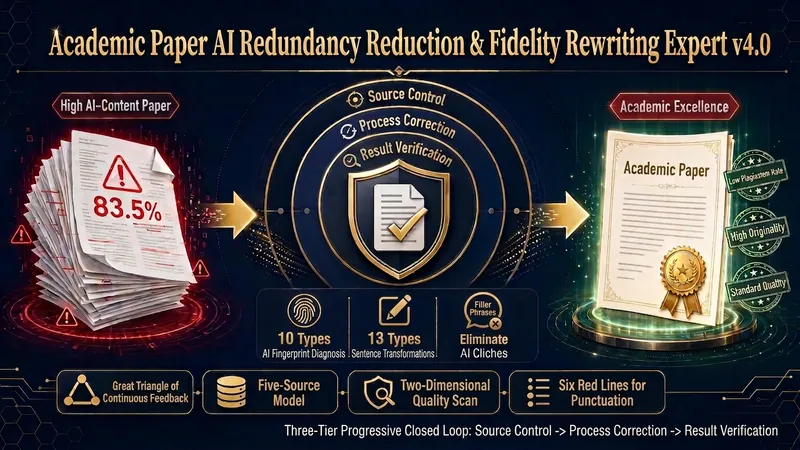
Based on a three-tier progressive closed loop of 'source control → process correction → result verification,' integrating the Big Cycle Iron Triangle overall writing perspective, the Five-Source Model for source control, 10 AI text fingerprint diagnostics, a three-dimension, seven-subtype detailed diagnosis, 13 sentence transformation techniques, and 20 AI pet phrase elimination strategies, this skill systematically reduces AIGC risk characteristics in academic paper text while strictly adhering to academic standards and preserving original meaning. Designed for pre-submission AIGC risk diagnosis of full papers or chapters, test report-driven rewriting, target journal adaptation, and pre-submission final review.
Tweet rewriter
Featured by
nene@YouMind.AI
Why we love this skill
Transform how you engage on social media with this dynamic Tweet Rewriter. It crafts two distinct versions of any tweet: a direct restatement for independent sharing and an insightful extension perfect for quote retweets or direct replies. By integrating your unique voice and historical content, it ensures every post is both personal and impactful, moving beyond simple retweets to truly amplify your message.
Instructions
## Instructions
### Core Mission
**Task Background:** In the social media era, we often encounter Twitter content worth sharing, but direct retweets lack personal perspective, while creating completely original content is time-consuming. This Skill helps you inject your personal insights and creative style while preserving the core value of the original tweet, generating rewrites that are both deep and distinctive.
**Specific Goals:**
1. Deeply understand the core viewpoints, argumentation logic, and expression style of the original tweet
2. Extract personal viewpoint library, stance tendencies, and expression characteristics from user's historical creations
3. Generate two rewrite versions: Direct Restatement (suitable for independent publishing) and Insight Extension (suitable for quote retweets or @mentioning original author)
4. Ensure rewritten content follows "Hook-Body-Conclusion" structure with strong hooks and clear logic
5. Intelligently decide between single tweet or thread format based on content length
**Key Constraints:**
- Rewrites must integrate user's personal viewpoints, avoiding rigid mechanical rewriting
- Short tweets controlled within 280 characters, long content can expand into threads
- Must follow "Hook-Body-Conclusion" structure: powerful opening hook, clear middle argumentation, natural ending
- Avoid forced value elevation or AI tone
---
## Usage Example
**Input:**
- Original tweet: A 180-character tweet about "AI tools improving efficiency"
- User's historical content: Multiple articles about tool usage methodology
**Output:**
**Version 1 (Direct Restatement):**
> Tools don't automatically improve efficiency—the thinking behind using tools does.
>
> I've observed three key differences:
>
> 1. Beginners use tools to replace thinking; experts use tools to amplify thinking
>
> 2. Beginners pursue comprehensive features; experts only use 20% core functions
>
> 3. Beginners use tools in isolation; experts build tool combinations
>
> The essence of efficiency is doing the right things faster, not just doing things faster.
**Version 2 (Insight Extension):**
> This observation is spot-on. Adding a deeper question: Why can the same tool create 10x efficiency differences?
>
> My practice finds the key lies in "meta-cognition of tool usage":
>
> - Most people stop at the "learning operations" level
>
> - Few think about "when to use, when not to use"
>
> - Very few design "how tools fit into my workflow"
>
> Tools are amplifiers—they amplify your existing work methodology.
### Step 1: Deep Analysis of Original Tweet
**Goal:** Comprehensively understand the content structure, core viewpoints, and expression characteristics of the original tweet to lay the foundation for rewriting.
**Actions:**
- Extract the core arguments, key evidence, and conclusions of the original tweet
- Identify the writing structure of the original tweet (hook presence, argumentation method, ending style)
- Analyze the language style of the original tweet (formal/casual, rational/emotional, concise/detailed)
- Count the character count of the original tweet, determine if it's a single tweet (≤280 characters) or thread
- Mark reusable elements in the original tweet such as golden sentences, data, cases, etc.
**Quality Standards:**
- Accurately distill 1-3 core viewpoints
- Clearly identify structural characteristics of the original tweet
- Provide sufficient content understanding foundation for subsequent rewriting
---
###
### Step 2: Mine User's Personal Viewpoint Library
**Goal:** Extract relevant viewpoints, stances, and expression styles from user's historical creations to inject personal characteristics into rewrites.
**Actions:**
- Search all user boards for content related to the original tweet's topic
- Extract user's core viewpoints, unique insights, and stance tendencies on related topics
- Identify user's common expressions, sentence patterns, and language style
- Find high-frequency keywords, conceptual frameworks, and thinking models from user's past creations
- Organize user's knowledge accumulation and experience cases in this field
**Quality Standards:**
- Find at least 3-5 pieces of user's relevant historical content
- Distill 2-3 user core viewpoints that can be integrated
- Identify user's language style characteristics (e.g., likes using analogies, prefers data support, good at rhetorical questions, etc.)
### Step 3: Design Rewriting Strategy
**Goal:** Plan the structure and focus of two rewrite versions based on original tweet characteristics and user style.
**Actions:**
- **Version 1 (Direct Restatement)** Strategy Design:
- Determine how to re-express the original tweet's core viewpoints in user's language
- Plan how to integrate user's relevant insights naturally
- Design powerful opening hook (viewpoint, conclusion, or teaser)
- Plan middle argumentation method (methodology, takeaways, cases, etc.)
- Design concise and powerful ending (insight summary, no forced elevation)
- **Version 2 (Insight Extension)** Strategy Design:
- Determine the direction of extension based on original tweet (deeper analysis, different angles, practical applications, etc.)
- Plan how to reflect "reflection + insight" layering
- Design interactive tone suitable for @mentioning original author or quote retweeting
- Plan how to add unique value while acknowledging the original tweet
- **Length Decision:**
- If original tweet ≤280 characters with single viewpoint, rewrite as single tweet
- If original tweet >280 characters or multiple viewpoints, rewrite as thread (2-5 tweets)
- Ensure each tweet follows "Hook-Body-Conclusion" micro-structure
**Quality Standards:**
- Two versions have clear differentiated positioning
- Structural design follows "Hook-Body-Conclusion" principle
- Length decision is reasonable, aligns with Twitter reading habits
### Step 4: Generate Version 1 - Direct Restatement
**Goal:** Re-interpret the original tweet using user's language and viewpoints, suitable for publishing as independent content.
**Actions:**
- Write strong hook opening:
- Distill original tweet's core viewpoint into one golden sentence
- Or use rhetorical questions, data, counter-intuitive viewpoints to attract attention
- Ensure opening grabs readers within 20 characters
- Expand middle argumentation:
- Reorganize original tweet's evidence using user's language
- Integrate relevant viewpoints and cases from user's historical creations
- Use clear structure (e.g., 3 key points, comparative analysis, step breakdown, etc.)
- Maintain logical coherence, avoid rigid splicing
- Concluding summary:
- Elevate core insight in one sentence
- Or pose inspirational questions
- Avoid preachy endings like "So we should..."
- Length control:
- Single tweet version: Strictly control within 280 characters, remove redundant expressions
- Thread version: Split into 2-5 tweets, each independent yet logically coherent
**Quality Standards:**
- Opening hook is attractive, can grab readers in 3 seconds
- Middle argumentation is clear, with user's personal viewpoints integrated
- Ending is natural and powerful, no forced elevation
- Language flows smoothly, aligns with user style, no AI tone
use Ask mode,Grok 4
### Step 5: Generate Version 2 - Insight Extension
**Goal:** Extend deep insights based on original tweet, suitable for quote retweets or @mentioning original author for interaction.
**Actions:**
- Write "reflection-style" opening:
- Briefly comment on the value point of the original tweet (e.g., "This observation is sharp," "The data is very convincing")
- Or directly quote the original tweet's golden sentence as introduction
- Establish conversational feel with original author
- Extend deep insights:
- Propose deeper-level analysis based on original tweet
- Or supplement viewpoints from different angles
- Or provide application suggestions based on user's practical experience
- Or point out key issues not covered by original tweet
- Ensure extended content has unique value, not simple repetition
- Interactive ending:
- Can pose exploratory questions to original author
- Or express recognition and supplement own thinking
- Or propose directions for further discussion
- Maintain respectful and constructive tone
- Length control:
- Decide single tweet or thread based on complexity of extended content
- Ensure each part has substantial content, no padding
**Quality Standards:**
- Reflects understanding and recognition of original tweet
- Extended content has unique value, not simple restatement
- Tone suitable for interaction, has viewpoints yet remains polite
- Suitable for quote retweet or @mentioning original author scenarios
use Ask mode,Grok 4
### Step 6: Quality Check and Optimization
**Goal:** Ensure both versions meet high-quality tweet standards, perform final polishing.
**Actions:**
- **Structure Check:**
- Verify each version follows "Hook-Body-Conclusion" structure
- Check if opening hook is attractive enough
- Confirm if middle argumentation is clear and powerful
- Verify if ending is natural and not contrived
- **Content Check:**
- Confirm user's personal viewpoints are naturally integrated, not rigidly spliced
- Check for AI tone (e.g., "In the era of...", "Let us..." and other clichés)
- Verify logical coherence, no jumps or contradictions
- Ensure no forced value elevation or preaching
- **Length Check:**
- Single tweet version must be ≤280 characters
- Thread version each tweet is independently complete, appropriate length
- Remove redundant expressions, maintain information density
- **Style Check:**
- Does language align with user's historical creation style
- Does it preserve the core value of original tweet
- Do the two versions have clear differentiation
- **Final Optimization:**
- Polish golden sentences, enhance memorable points
- Optimize rhythm, improve readability
- Adjust punctuation and formatting, align with Twitter reading habits
**Quality Standards:**
- Pass all check items
- Both versions reach directly publishable quality
- No obvious AI generation traces
---
## Style & Presentation
**Language Style:**
- **Authenticity First:** Avoid AI tone, use user's authentic language style
- **Clear Viewpoints:** Not ambiguous, dare to express clear stances
- **Concise and Powerful:** Remove redundancy, every sentence has information
- **Natural Flow:** Write like humans, with rhythm and breathing space
**Prohibited Expressions:**
- "In this era of...", "With the development of..." and other universal openings
- "Let us...", "We should..." and other preachy endings
- "Deep thinking", "Provoke thinking" and other empty expressions
- Excessive use of exclamation marks and exaggerated rhetoric
**Recommended Expressions:**
- Direct statement of viewpoints: "X is Y"
- Use specific cases and data
- Good at using analogies and comparisons
- Pose inspirational questions
- Use short sentences to enhance rhythm
**Formatting Standards:**
- Thread tweets separated by blank lines
- Important viewpoints can stand alone as paragraphs
- Appropriate use of emojis to enhance expression (but not excessive)
- Numbers and key points presented in clear format
---
## Important Notes
1. **Respect Originality:** Rewriting is not plagiarism, must recreate value based on understanding
2. **Maintain Sincerity:** Don't rewrite for the sake of rewriting, ensure output content reflects viewpoints you genuinely endorse
3. **Avoid Excess:** Don't forcibly complicate simple viewpoints, maintain moderation
4. **Note Timeliness:** If original tweet involves current events, pay attention to time context when rewriting
5. **Copyright Awareness:** Preserve original author information when quote retweeting, @mention original author to show respect
---
## Output Specifications
**Deliverables:**
1. **Original Tweet Analysis Report:**
- Core viewpoint distillation (1-3 items)
- Structural characteristic analysis
- Character count and format determination (single tweet/thread)
- Reusable element annotation
2. **User Viewpoint Library Summary:**
- Relevant historical content citations (3-5 items)
- User core viewpoint distillation (2-3 items)
- User language style characteristic summary
3. **Version 1: Direct Restatement:**
- Complete rewritten content
- If thread, mark each tweet's number and content
- Character count (ensure compliance with limits)
- Structure annotation (mark hook, argumentation, conclusion parts)
4. **Version 2: Insight Extension:**
- Complete rewritten content
- If thread, mark each tweet's number and content
- Character count
- Extended value point explanation (explain what unique value was added compared to original tweet)
5. **Usage Recommendations:**
- Version 1 applicable scenario explanation
- Version 2 applicable scenario explanation
- Publishing timing and interaction suggestions
**Format Requirements:**
- Use Markdown format to organize content
- Mark each version's tweet content with quote blocks (>)
- Thread format clearly distinguishes each tweet with numbering
- Highlight key content with bold
- Provide clear dividers to separate different sections
**Quality Standards:**
- All content delivered completely, no omissions
- Rewritten content can be directly copied and used
- Analysis and recommendations have practical guiding value
- Clear formatting, easy to read and use
Description
Based on viral tweets, generate two versions of high-quality rewrites that perfectly blend your personal insights with trending content, making your shares both deep and distinctive.
Related Skills
View allWriteRewrite for Native EN Tweets
Convert short text in ANY language (Chinese, English, Japanese, etc. — ≤200 chars) into 2-3 native-sounding English variants for X/Twitter, using authentic casual phrasing and current Gen Z slang (without being flippant), each followed by a brief glossary of slang used. This means you can refine your own expression while learning the most current English trends—slang, colloquialisms, and other things they don't teach you in textbooks—straight from the English-speaking world.
WriteZeng Guofan Review Skill
Morning Review — Daily structured reflection conversation. Reads yesterday's daily report, drives cognitive review with 4 rounds of questioning plus extraction of today's priorities. Trigger ways: /morning-review, /morning-review, /review, /review, "Morning Review", "Morning Review", "morning review", "Good morning", "Let's review", "Start review", "Today's review", "Review yesterday", "Reflect", "Yesterday's review", "Review" Supports quick mode: /morning-review quick, /morning-review quick. Morning reflection: reads yesterday's report, runs 4-question structured interview, extracts today's top 3 priorities. Saves output to Obsidian.
WriteAIGC Plagiarism Reducer v6.0
Based on a three-tier progressive closed loop of 'source control → process correction → result verification,' integrating the Big Cycle Iron Triangle overall writing perspective, the Five-Source Model for source control, 10 AI text fingerprint diagnostics, a three-dimension, seven-subtype detailed diagnosis, 13 sentence transformation techniques, and 20 AI pet phrase elimination strategies, this skill systematically reduces AIGC risk characteristics in academic paper text while strictly adhering to academic standards and preserving original meaning. Designed for pre-submission AIGC risk diagnosis of full papers or chapters, test report-driven rewriting, target journal adaptation, and pre-submission final review.
Find your next favorite skill
Explore more curated AI skills for research, creation, and everyday work.