Disassembling the script of a viral video
Featured by
nene@YouMind.AI
Why we love this skill
Want to create viral YouTube videos? This skill uses an industrialized process of "collecting, deconstructing, and reconstructing" to deeply analyze the topics, structure, and expression of top-performing YouTube videos, helping you accurately benchmark against successful examples. It provides you with a detailed "Style Analysis and Writing Suggestions" and ultimately generates a highly authentic English script, ensuring your content has the potential to become a hit from the very beginning.
Instructions
#### describe
We reject blind creation. Through an industrialized process of "collecting, dismantling, and reconstructing," we precisely target top-performing videos on YouTube. We deeply analyze their topic selection, narrative structure, and authentic expression, first generating strategic suggestions, and then producing a highly "original" English script to ensure that the content has the potential to become a hit from the outset.
#### Core Task
For your video's theme (e.g., How To Get Your Attention Back), search and filter for the three most popular videos on YouTube. The goal is to extract all subtitle scripts, analyze their style, content structure, and logical progression, produce a style analysis and writing suggestions document, and ultimately write a native English-style video script based on this document.
Before starting, confirm the video theme with the user.
#### Execution Steps
**Step 1: Mining & Extraction of Trending Topics**
- **Objective:** Identify high-traffic areas and acquire raw data.
- **Action**:
- **Smart Search**: Search for trending videos on YouTube related to your topic (sorted by views/interaction rate).
- **Filter Lock**: Select 3 of the most representative viral videos (excluding irrelevant or low-quality content).
- **Script Extraction**: Extract all the complete subtitles (Transcript/Captions) from these videos and save them as analysis material.
**Step 2: In-depth analysis and style analysis**
**Objective:** To crack the "traffic code" behind viral hits.
- **Action**:
- **Expression Analysis**: Analyze competitors' language style (humorous, serious, fast-paced), native expressions, and rhetorical devices.
- **Structural Deconstruction**: Analyzing the narrative rhythm of the video (Hook setup, introduction, development, climax, and logical flow).
- **Techniques of Expression**: Identify its unique camera language or interactive methods.
**Step 3: Strategy Output**
- **Goal:** Establish a "winning strategy" before you even begin writing.
- **Output**:
- **Style Analysis and Writing Suggestions**: A detailed analytical document. It includes: a summary of the success factors of competitors, suggestions for narrative structures suitable for this topic, and suggestions for tone and word choice to emulate in writing. If citations are used, please provide the original video link and corresponding timestamp.
Please have the user confirm the output after completion. Only proceed with the final script creation after user confirmation.
**Step 4: Scripting**
- **Goal**: To create by standing on the shoulders of giants.
- **Action**:
- **Strategy-based writing:** Strictly follow the recommendations in Step 3 when creating your work.
- **Native Polishing**: Ensure the script language is highly authentic (Native Speaker Level), avoid "Chinglish," and incorporate the best expression techniques.
- **Final Output**: Generate a complete YouTube shooting script that includes "screen suggestions + voice-over".
Description
Think like a producer of viral videos. By collecting, deconstructing, and reconstructing data, deeply analyze the logic behind YouTube's viral hits, generate native-feeling English scripts, and ensure your videos inherently possess the genes for viral success.
Related Skills
View all Write
WriteRewrite for Native EN Tweets
Convert short text in ANY language (Chinese, English, Japanese, etc. — ≤200 chars) into 2-3 native-sounding English variants for X/Twitter, using authentic casual phrasing and current Gen Z slang (without being flippant), each followed by a brief glossary of slang used. This means you can refine your own expression while learning the most current English trends—slang, colloquialisms, and other things they don't teach you in textbooks—straight from the English-speaking world.
 Write
WriteZeng Guofan Review Skill
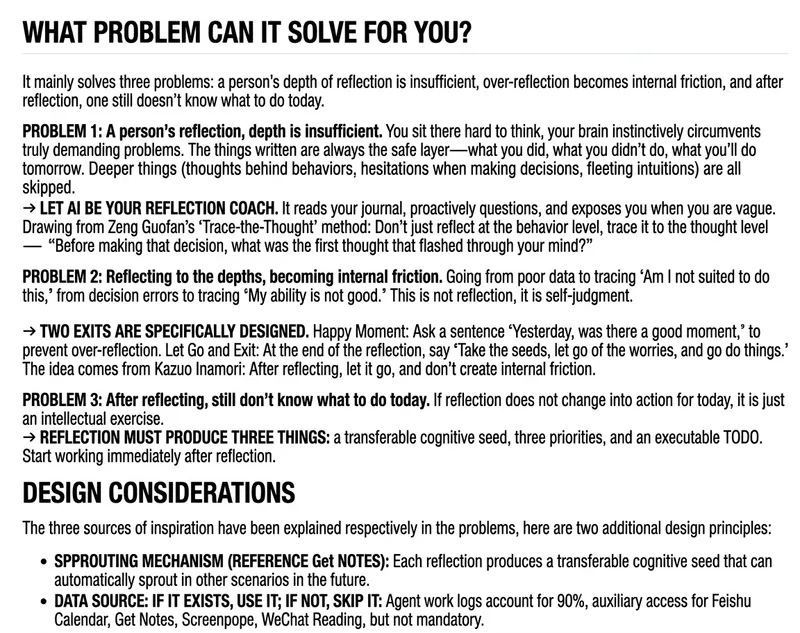
Morning Review — Daily structured reflection conversation. Reads yesterday's daily report, drives cognitive review with 4 rounds of questioning plus extraction of today's priorities. Trigger ways: /morning-review, /morning-review, /review, /review, "Morning Review", "Morning Review", "morning review", "Good morning", "Let's review", "Start review", "Today's review", "Review yesterday", "Reflect", "Yesterday's review", "Review" Supports quick mode: /morning-review quick, /morning-review quick. Morning reflection: reads yesterday's report, runs 4-question structured interview, extracts today's top 3 priorities. Saves output to Obsidian.
 Write
WriteAIGC Plagiarism Reducer v6.0
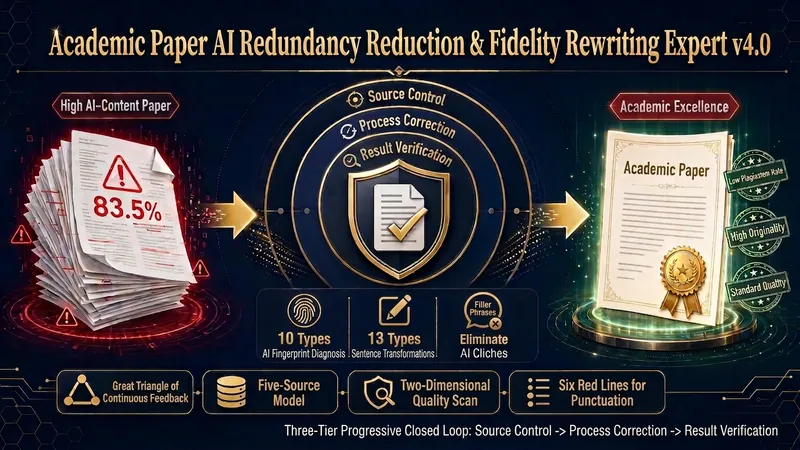
Based on a three-tier progressive closed loop of 'source control → process correction → result verification,' integrating the Big Cycle Iron Triangle overall writing perspective, the Five-Source Model for source control, 10 AI text fingerprint diagnostics, a three-dimension, seven-subtype detailed diagnosis, 13 sentence transformation techniques, and 20 AI pet phrase elimination strategies, this skill systematically reduces AIGC risk characteristics in academic paper text while strictly adhering to academic standards and preserving original meaning. Designed for pre-submission AIGC risk diagnosis of full papers or chapters, test report-driven rewriting, target journal adaptation, and pre-submission final review.
Disassembling the script of a viral video
Featured by
nene@YouMind.AI
Why we love this skill
Want to create viral YouTube videos? This skill uses an industrialized process of "collecting, deconstructing, and reconstructing" to deeply analyze the topics, structure, and expression of top-performing YouTube videos, helping you accurately benchmark against successful examples. It provides you with a detailed "Style Analysis and Writing Suggestions" and ultimately generates a highly authentic English script, ensuring your content has the potential to become a hit from the very beginning.
Instructions
#### describe
We reject blind creation. Through an industrialized process of "collecting, dismantling, and reconstructing," we precisely target top-performing videos on YouTube. We deeply analyze their topic selection, narrative structure, and authentic expression, first generating strategic suggestions, and then producing a highly "original" English script to ensure that the content has the potential to become a hit from the outset.
#### Core Task
For your video's theme (e.g., How To Get Your Attention Back), search and filter for the three most popular videos on YouTube. The goal is to extract all subtitle scripts, analyze their style, content structure, and logical progression, produce a style analysis and writing suggestions document, and ultimately write a native English-style video script based on this document.
Before starting, confirm the video theme with the user.
#### Execution Steps
**Step 1: Mining & Extraction of Trending Topics**
- **Objective:** Identify high-traffic areas and acquire raw data.
- **Action**:
- **Smart Search**: Search for trending videos on YouTube related to your topic (sorted by views/interaction rate).
- **Filter Lock**: Select 3 of the most representative viral videos (excluding irrelevant or low-quality content).
- **Script Extraction**: Extract all the complete subtitles (Transcript/Captions) from these videos and save them as analysis material.
**Step 2: In-depth analysis and style analysis**
**Objective:** To crack the "traffic code" behind viral hits.
- **Action**:
- **Expression Analysis**: Analyze competitors' language style (humorous, serious, fast-paced), native expressions, and rhetorical devices.
- **Structural Deconstruction**: Analyzing the narrative rhythm of the video (Hook setup, introduction, development, climax, and logical flow).
- **Techniques of Expression**: Identify its unique camera language or interactive methods.
**Step 3: Strategy Output**
- **Goal:** Establish a "winning strategy" before you even begin writing.
- **Output**:
- **Style Analysis and Writing Suggestions**: A detailed analytical document. It includes: a summary of the success factors of competitors, suggestions for narrative structures suitable for this topic, and suggestions for tone and word choice to emulate in writing. If citations are used, please provide the original video link and corresponding timestamp.
Please have the user confirm the output after completion. Only proceed with the final script creation after user confirmation.
**Step 4: Scripting**
- **Goal**: To create by standing on the shoulders of giants.
- **Action**:
- **Strategy-based writing:** Strictly follow the recommendations in Step 3 when creating your work.
- **Native Polishing**: Ensure the script language is highly authentic (Native Speaker Level), avoid "Chinglish," and incorporate the best expression techniques.
- **Final Output**: Generate a complete YouTube shooting script that includes "screen suggestions + voice-over".
Description
Think like a producer of viral videos. By collecting, deconstructing, and reconstructing data, deeply analyze the logic behind YouTube's viral hits, generate native-feeling English scripts, and ensure your videos inherently possess the genes for viral success.
Related Skills
View allWriteRewrite for Native EN Tweets
Convert short text in ANY language (Chinese, English, Japanese, etc. — ≤200 chars) into 2-3 native-sounding English variants for X/Twitter, using authentic casual phrasing and current Gen Z slang (without being flippant), each followed by a brief glossary of slang used. This means you can refine your own expression while learning the most current English trends—slang, colloquialisms, and other things they don't teach you in textbooks—straight from the English-speaking world.
WriteZeng Guofan Review Skill
Morning Review — Daily structured reflection conversation. Reads yesterday's daily report, drives cognitive review with 4 rounds of questioning plus extraction of today's priorities. Trigger ways: /morning-review, /morning-review, /review, /review, "Morning Review", "Morning Review", "morning review", "Good morning", "Let's review", "Start review", "Today's review", "Review yesterday", "Reflect", "Yesterday's review", "Review" Supports quick mode: /morning-review quick, /morning-review quick. Morning reflection: reads yesterday's report, runs 4-question structured interview, extracts today's top 3 priorities. Saves output to Obsidian.
WriteAIGC Plagiarism Reducer v6.0
Based on a three-tier progressive closed loop of 'source control → process correction → result verification,' integrating the Big Cycle Iron Triangle overall writing perspective, the Five-Source Model for source control, 10 AI text fingerprint diagnostics, a three-dimension, seven-subtype detailed diagnosis, 13 sentence transformation techniques, and 20 AI pet phrase elimination strategies, this skill systematically reduces AIGC risk characteristics in academic paper text while strictly adhering to academic standards and preserving original meaning. Designed for pre-submission AIGC risk diagnosis of full papers or chapters, test report-driven rewriting, target journal adaptation, and pre-submission final review.
Find your next favorite skill
Explore more curated AI skills for research, creation, and everyday work.