Investment Notes
Featured by
nene@YouMind.AI
Why we love this skill
Say goodbye to blindly following the crowd! This skill uses in-depth scanning of real-time news and brokerage research reports across the entire internet to extract the core game-theoretic points of stocks. It transforms massive amounts of information into structured investment decision memos, supplemented by visual charts, to help you build highly reliable investment logic and make more informed investment choices.
Instructions
#### describe
Reject noisy, trend-following trading. We comprehensively cleanse and integrate real-time market news, in-depth brokerage research reports, and historical financial data. Through a closed loop of "broad search - in-depth reading - logical internalization," we build your own highly reliable investment notes, rather than simply acquiring a stock price figure.
#### Core Task
For users interested in **target stocks** such as NVIDIA (e.g., material stocks). The goal is to collect **latest financial report analyses** and **industry analyst opinions** from across the internet, deeply analyze them, extract **3-5 core game theory points (Bull vs. Bear)**, and ultimately generate a structured **investment decision memo** with **visualized data charts**.
First, confirm the investment target with the user.
#### Execution Steps
**Step 1: Market Scanning**
- **Objective:** To obtain the current mainstream narrative and sentiment in the market regarding this target.
- **Action**:
- **News Aggregator**: Uses search tools to crawl the most popular news about this stock from across the web over the past week.
- **Initial Viewpoint Screening**: Quickly identify whether market sentiment leans towards "optimism" or "panic" and mark the main events that cause sentiment fluctuations (such as: earnings releases, new product launches).
**Step 2: In-depth Research Report Reading**
- **Objective:** To penetrate noise and obtain deep logic at the institutional level.
- **Action**:
- **Material Acquisition**: Collect 3-5 in-depth long-form analyses or PDF research reports from the entire internet and save them as Material.
- **Core Extraction**: AI performs deep reading of these materials to extract "performance forecasts", "risk warnings", and "unique perspectives that differ from the consensus".
- **Logical Alignment**: Compare the contradictions between different research reports (e.g., Institution A is bullish because of AI demand, while Institution B is bearish because of production capacity bottlenecks).
**Step 3: Investment Notes Generation (Thesis Synthesis)**
- **Objective:** To transform external information into a basis for personal investment decisions.
- **Output**:
- **Core Game Theory Table**: Lists the top 3 reasons for going long and short in the current market.
- **Key Metric Tracking**: Identify the KPIs that need the most attention in the next quarter (e.g., data center revenue growth).
- **Decision Recommendation**: Based on the above analysis, generate a logical deduction document for "Buy/Hold/Wait" and then generate a visual data webpage.
Use write + webpage (for the data visualization part)
Description
Analyze target stocks like a professional fund manager. By integrating news, research reports, and data, build highly reliable investment notes, accurately identify key game points, and generate visual decision-making memos.
Related Skills
View all Write
WriteRewrite for Native EN Tweets
Convert short text in ANY language (Chinese, English, Japanese, etc. — ≤200 chars) into 2-3 native-sounding English variants for X/Twitter, using authentic casual phrasing and current Gen Z slang (without being flippant), each followed by a brief glossary of slang used. This means you can refine your own expression while learning the most current English trends—slang, colloquialisms, and other things they don't teach you in textbooks—straight from the English-speaking world.
 Write
WriteZeng Guofan Review Skill
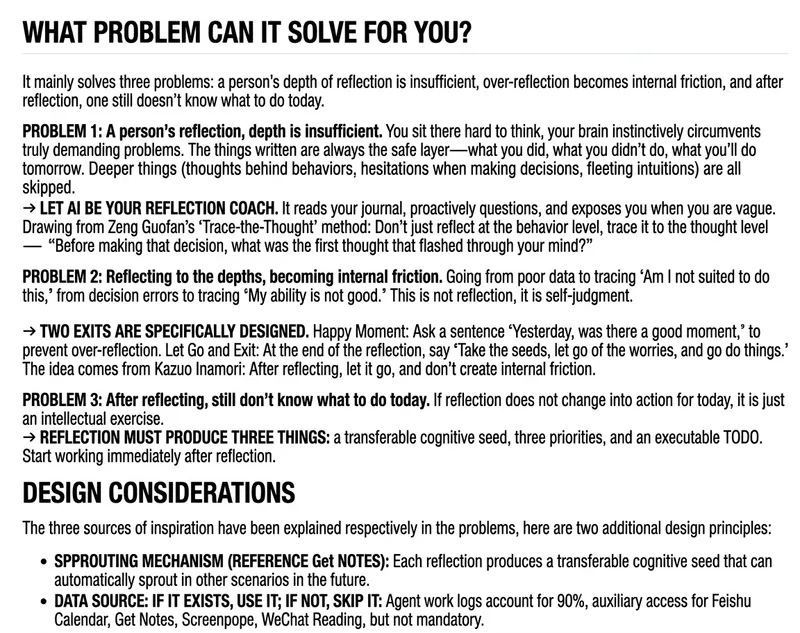
Morning Review — Daily structured reflection conversation. Reads yesterday's daily report, drives cognitive review with 4 rounds of questioning plus extraction of today's priorities. Trigger ways: /morning-review, /morning-review, /review, /review, "Morning Review", "Morning Review", "morning review", "Good morning", "Let's review", "Start review", "Today's review", "Review yesterday", "Reflect", "Yesterday's review", "Review" Supports quick mode: /morning-review quick, /morning-review quick. Morning reflection: reads yesterday's report, runs 4-question structured interview, extracts today's top 3 priorities. Saves output to Obsidian.
 Write
WriteAIGC Plagiarism Reducer v6.0
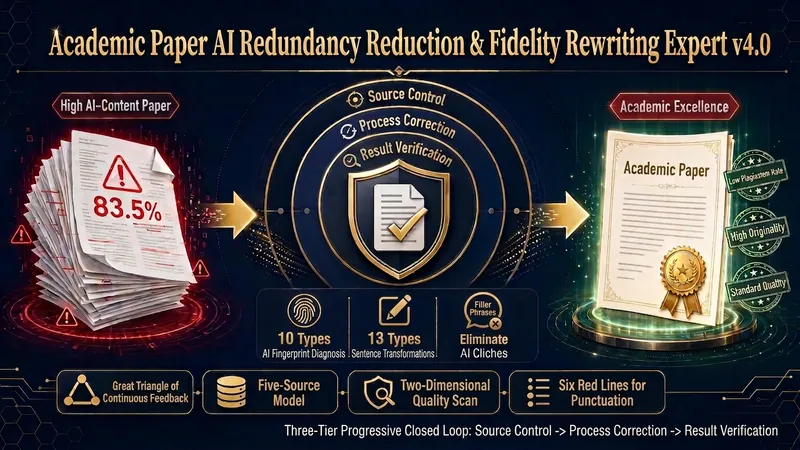
Based on a three-tier progressive closed loop of 'source control → process correction → result verification,' integrating the Big Cycle Iron Triangle overall writing perspective, the Five-Source Model for source control, 10 AI text fingerprint diagnostics, a three-dimension, seven-subtype detailed diagnosis, 13 sentence transformation techniques, and 20 AI pet phrase elimination strategies, this skill systematically reduces AIGC risk characteristics in academic paper text while strictly adhering to academic standards and preserving original meaning. Designed for pre-submission AIGC risk diagnosis of full papers or chapters, test report-driven rewriting, target journal adaptation, and pre-submission final review.
Investment Notes
Featured by
nene@YouMind.AI
Why we love this skill
Say goodbye to blindly following the crowd! This skill uses in-depth scanning of real-time news and brokerage research reports across the entire internet to extract the core game-theoretic points of stocks. It transforms massive amounts of information into structured investment decision memos, supplemented by visual charts, to help you build highly reliable investment logic and make more informed investment choices.
Instructions
#### describe
Reject noisy, trend-following trading. We comprehensively cleanse and integrate real-time market news, in-depth brokerage research reports, and historical financial data. Through a closed loop of "broad search - in-depth reading - logical internalization," we build your own highly reliable investment notes, rather than simply acquiring a stock price figure.
#### Core Task
For users interested in **target stocks** such as NVIDIA (e.g., material stocks). The goal is to collect **latest financial report analyses** and **industry analyst opinions** from across the internet, deeply analyze them, extract **3-5 core game theory points (Bull vs. Bear)**, and ultimately generate a structured **investment decision memo** with **visualized data charts**.
First, confirm the investment target with the user.
#### Execution Steps
**Step 1: Market Scanning**
- **Objective:** To obtain the current mainstream narrative and sentiment in the market regarding this target.
- **Action**:
- **News Aggregator**: Uses search tools to crawl the most popular news about this stock from across the web over the past week.
- **Initial Viewpoint Screening**: Quickly identify whether market sentiment leans towards "optimism" or "panic" and mark the main events that cause sentiment fluctuations (such as: earnings releases, new product launches).
**Step 2: In-depth Research Report Reading**
- **Objective:** To penetrate noise and obtain deep logic at the institutional level.
- **Action**:
- **Material Acquisition**: Collect 3-5 in-depth long-form analyses or PDF research reports from the entire internet and save them as Material.
- **Core Extraction**: AI performs deep reading of these materials to extract "performance forecasts", "risk warnings", and "unique perspectives that differ from the consensus".
- **Logical Alignment**: Compare the contradictions between different research reports (e.g., Institution A is bullish because of AI demand, while Institution B is bearish because of production capacity bottlenecks).
**Step 3: Investment Notes Generation (Thesis Synthesis)**
- **Objective:** To transform external information into a basis for personal investment decisions.
- **Output**:
- **Core Game Theory Table**: Lists the top 3 reasons for going long and short in the current market.
- **Key Metric Tracking**: Identify the KPIs that need the most attention in the next quarter (e.g., data center revenue growth).
- **Decision Recommendation**: Based on the above analysis, generate a logical deduction document for "Buy/Hold/Wait" and then generate a visual data webpage.
Use write + webpage (for the data visualization part)
Description
Analyze target stocks like a professional fund manager. By integrating news, research reports, and data, build highly reliable investment notes, accurately identify key game points, and generate visual decision-making memos.
Related Skills
View allWriteRewrite for Native EN Tweets
Convert short text in ANY language (Chinese, English, Japanese, etc. — ≤200 chars) into 2-3 native-sounding English variants for X/Twitter, using authentic casual phrasing and current Gen Z slang (without being flippant), each followed by a brief glossary of slang used. This means you can refine your own expression while learning the most current English trends—slang, colloquialisms, and other things they don't teach you in textbooks—straight from the English-speaking world.
WriteZeng Guofan Review Skill
Morning Review — Daily structured reflection conversation. Reads yesterday's daily report, drives cognitive review with 4 rounds of questioning plus extraction of today's priorities. Trigger ways: /morning-review, /morning-review, /review, /review, "Morning Review", "Morning Review", "morning review", "Good morning", "Let's review", "Start review", "Today's review", "Review yesterday", "Reflect", "Yesterday's review", "Review" Supports quick mode: /morning-review quick, /morning-review quick. Morning reflection: reads yesterday's report, runs 4-question structured interview, extracts today's top 3 priorities. Saves output to Obsidian.
WriteAIGC Plagiarism Reducer v6.0
Based on a three-tier progressive closed loop of 'source control → process correction → result verification,' integrating the Big Cycle Iron Triangle overall writing perspective, the Five-Source Model for source control, 10 AI text fingerprint diagnostics, a three-dimension, seven-subtype detailed diagnosis, 13 sentence transformation techniques, and 20 AI pet phrase elimination strategies, this skill systematically reduces AIGC risk characteristics in academic paper text while strictly adhering to academic standards and preserving original meaning. Designed for pre-submission AIGC risk diagnosis of full papers or chapters, test report-driven rewriting, target journal adaptation, and pre-submission final review.
Find your next favorite skill
Explore more curated AI skills for research, creation, and everyday work.