YouTube Expert Knowledge Base
Featured by
nene@YouMind.AI
Why we love this skill
This skill can systematically transform fragmented video content from top YouTube creators into in-depth research papers. It not only extracts core thought models but also generates 15-page presentations in a unique "Brutalist" style, helping you efficiently build expert knowledge bases and achieve a leap from audiovisual to knowledge assets.
Instructions
#### describe
By deeply exploring the core philosophies of top YouTube creators, we transform video content into in-depth research papers and ultimately generate highly stylized presentations, realizing the transformation from fragmented audiovisual content to systematic knowledge assets.
#### Core Task
For the topic of **$material**, scan YouTube to find the **5 most viewed long videos** on **$material**. Objective: Extract core mental models, generate 5 in-depth articles, and ultimately produce a **15-page** Brutalist-style presentation.
#### Execution Steps
Before starting the process, ask the user which expert's knowledge base they want to build. Only proceed after the user responds.
**Step 1: Mining**
- **Objective:** Target high-value content that has been validated by the market.
- **Action**:
- **Scan & Sort**: Automatically scans YouTube channels and sorts them by "Most Popular".
- **Filtering**: Capture the top 5 long-form videos and automatically remove short videos.
- **Save Materials**: Automatically capture and save these 5 video episodes to the Materials folder of the current Board.
**Step 2: Refining**
**Objective:** To transform audiovisual language into structured, in-depth reading materials.
- **Action**:
- **Transcription and Rewriting**: This involves more than just summarizing and abstracting; it involves extracting the core "mental models".
- **Structured Output**: Transcribe and refine the content of the 5 video episodes into a single well-structured deep-dive research paper.
Before generating the PowerPoint presentation, ask the user, "Would you like me to generate a slideshow to showcase the key ideas of this expert, based on the research and analysis results?" If the user disagrees, the task ends there. If the user agrees, then continue generating the slideshow.
**Step 3: Generate the Brutalist Slides (Building)**
- **Goal**: To transform research findings into a visually impactful, manifesto-style PowerPoint presentation.
- **Prompt**: "Generate a manifesto 15-pages slides based on these 5 articles."
- **Design Style:** Brutalism
- **Palette Color Scheme**: Gray, Black, Off-white.
- **Typography**: Utilitarian and Rigid typefaces, presenting a machine-like industrial feel.
- **Vibe:** Serious, Uncompromising, Architectural.
- **Visual Presentation:** Slides should not appear soft, but rather like a heavy concrete slab engraved with Dan Koe's famous quotes. Use photographs of Dan Koe as visual material when necessary.
- **Brutalism**
- **Scenario**: Analyze Dan Koe's top 5 YouTube videos and synthesize findings into a 15 slide PPT. Include core mental models, structural frameworks, philosophical axioms, and direct quotes etched into the design.
- **Requirement**: Extract and standardize core attributes such as key concepts, actionable steps, and contrarian insights. Present content using raw text blocks and heavy grids, and display quotes as massive, manifesto-style declarations. Auto-crop Dan Koe's portraits and architectural textures to fit consistent layouts.
- **Design style**: Neo-Brutalism—utilitarian & rigid typography (Machine-like, Industrial), raw background textures (Gray, Black, Off-white), exposed grid lines, and asymmetry. No decorative graphics, no softness, no gradients. The presentation should feel serious, uncompromising, architectural, and heavy like concrete slabs, prioritizing impact, rawness, and authority.
Description
Batch convert YouTube videos from experts into in-depth articles, then generate Brutalist-style presentation slides. From fragmented audio-visual content to systematic knowledge assets, achieve the ultimate transformation of knowledge and visuals with one click.
Related Skills
View all Write
WriteRewrite for Native EN Tweets
Convert short text in ANY language (Chinese, English, Japanese, etc. — ≤200 chars) into 2-3 native-sounding English variants for X/Twitter, using authentic casual phrasing and current Gen Z slang (without being flippant), each followed by a brief glossary of slang used. This means you can refine your own expression while learning the most current English trends—slang, colloquialisms, and other things they don't teach you in textbooks—straight from the English-speaking world.
 Write
WriteZeng Guofan Review Skill
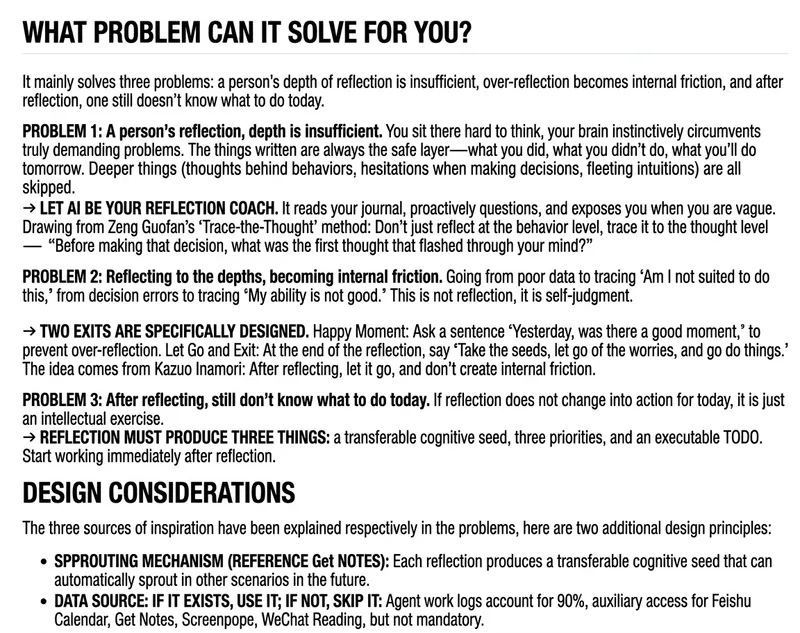
Morning Review — Daily structured reflection conversation. Reads yesterday's daily report, drives cognitive review with 4 rounds of questioning plus extraction of today's priorities. Trigger ways: /morning-review, /morning-review, /review, /review, "Morning Review", "Morning Review", "morning review", "Good morning", "Let's review", "Start review", "Today's review", "Review yesterday", "Reflect", "Yesterday's review", "Review" Supports quick mode: /morning-review quick, /morning-review quick. Morning reflection: reads yesterday's report, runs 4-question structured interview, extracts today's top 3 priorities. Saves output to Obsidian.
 Write
WriteAIGC Plagiarism Reducer v6.0
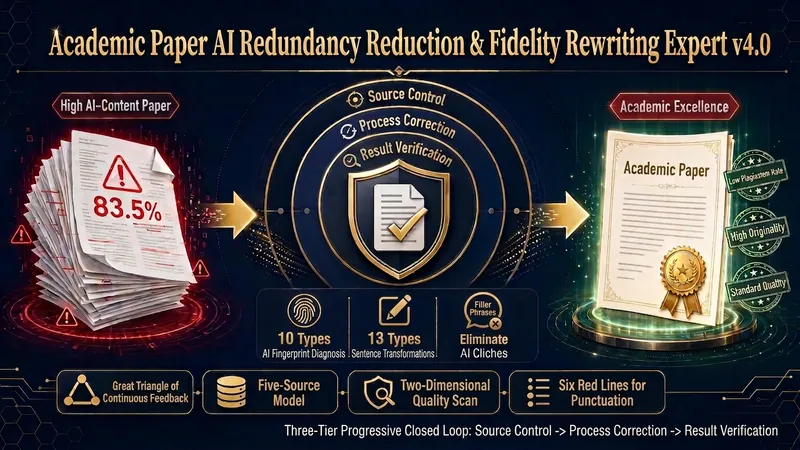
Based on a three-tier progressive closed loop of 'source control → process correction → result verification,' integrating the Big Cycle Iron Triangle overall writing perspective, the Five-Source Model for source control, 10 AI text fingerprint diagnostics, a three-dimension, seven-subtype detailed diagnosis, 13 sentence transformation techniques, and 20 AI pet phrase elimination strategies, this skill systematically reduces AIGC risk characteristics in academic paper text while strictly adhering to academic standards and preserving original meaning. Designed for pre-submission AIGC risk diagnosis of full papers or chapters, test report-driven rewriting, target journal adaptation, and pre-submission final review.
YouTube Expert Knowledge Base
Featured by
nene@YouMind.AI
Why we love this skill
This skill can systematically transform fragmented video content from top YouTube creators into in-depth research papers. It not only extracts core thought models but also generates 15-page presentations in a unique "Brutalist" style, helping you efficiently build expert knowledge bases and achieve a leap from audiovisual to knowledge assets.
Instructions
#### describe
By deeply exploring the core philosophies of top YouTube creators, we transform video content into in-depth research papers and ultimately generate highly stylized presentations, realizing the transformation from fragmented audiovisual content to systematic knowledge assets.
#### Core Task
For the topic of **$material**, scan YouTube to find the **5 most viewed long videos** on **$material**. Objective: Extract core mental models, generate 5 in-depth articles, and ultimately produce a **15-page** Brutalist-style presentation.
#### Execution Steps
Before starting the process, ask the user which expert's knowledge base they want to build. Only proceed after the user responds.
**Step 1: Mining**
- **Objective:** Target high-value content that has been validated by the market.
- **Action**:
- **Scan & Sort**: Automatically scans YouTube channels and sorts them by "Most Popular".
- **Filtering**: Capture the top 5 long-form videos and automatically remove short videos.
- **Save Materials**: Automatically capture and save these 5 video episodes to the Materials folder of the current Board.
**Step 2: Refining**
**Objective:** To transform audiovisual language into structured, in-depth reading materials.
- **Action**:
- **Transcription and Rewriting**: This involves more than just summarizing and abstracting; it involves extracting the core "mental models".
- **Structured Output**: Transcribe and refine the content of the 5 video episodes into a single well-structured deep-dive research paper.
Before generating the PowerPoint presentation, ask the user, "Would you like me to generate a slideshow to showcase the key ideas of this expert, based on the research and analysis results?" If the user disagrees, the task ends there. If the user agrees, then continue generating the slideshow.
**Step 3: Generate the Brutalist Slides (Building)**
- **Goal**: To transform research findings into a visually impactful, manifesto-style PowerPoint presentation.
- **Prompt**: "Generate a manifesto 15-pages slides based on these 5 articles."
- **Design Style:** Brutalism
- **Palette Color Scheme**: Gray, Black, Off-white.
- **Typography**: Utilitarian and Rigid typefaces, presenting a machine-like industrial feel.
- **Vibe:** Serious, Uncompromising, Architectural.
- **Visual Presentation:** Slides should not appear soft, but rather like a heavy concrete slab engraved with Dan Koe's famous quotes. Use photographs of Dan Koe as visual material when necessary.
- **Brutalism**
- **Scenario**: Analyze Dan Koe's top 5 YouTube videos and synthesize findings into a 15 slide PPT. Include core mental models, structural frameworks, philosophical axioms, and direct quotes etched into the design.
- **Requirement**: Extract and standardize core attributes such as key concepts, actionable steps, and contrarian insights. Present content using raw text blocks and heavy grids, and display quotes as massive, manifesto-style declarations. Auto-crop Dan Koe's portraits and architectural textures to fit consistent layouts.
- **Design style**: Neo-Brutalism—utilitarian & rigid typography (Machine-like, Industrial), raw background textures (Gray, Black, Off-white), exposed grid lines, and asymmetry. No decorative graphics, no softness, no gradients. The presentation should feel serious, uncompromising, architectural, and heavy like concrete slabs, prioritizing impact, rawness, and authority.
Description
Batch convert YouTube videos from experts into in-depth articles, then generate Brutalist-style presentation slides. From fragmented audio-visual content to systematic knowledge assets, achieve the ultimate transformation of knowledge and visuals with one click.
Related Skills
View allWriteRewrite for Native EN Tweets
Convert short text in ANY language (Chinese, English, Japanese, etc. — ≤200 chars) into 2-3 native-sounding English variants for X/Twitter, using authentic casual phrasing and current Gen Z slang (without being flippant), each followed by a brief glossary of slang used. This means you can refine your own expression while learning the most current English trends—slang, colloquialisms, and other things they don't teach you in textbooks—straight from the English-speaking world.
WriteZeng Guofan Review Skill
Morning Review — Daily structured reflection conversation. Reads yesterday's daily report, drives cognitive review with 4 rounds of questioning plus extraction of today's priorities. Trigger ways: /morning-review, /morning-review, /review, /review, "Morning Review", "Morning Review", "morning review", "Good morning", "Let's review", "Start review", "Today's review", "Review yesterday", "Reflect", "Yesterday's review", "Review" Supports quick mode: /morning-review quick, /morning-review quick. Morning reflection: reads yesterday's report, runs 4-question structured interview, extracts today's top 3 priorities. Saves output to Obsidian.
WriteAIGC Plagiarism Reducer v6.0
Based on a three-tier progressive closed loop of 'source control → process correction → result verification,' integrating the Big Cycle Iron Triangle overall writing perspective, the Five-Source Model for source control, 10 AI text fingerprint diagnostics, a three-dimension, seven-subtype detailed diagnosis, 13 sentence transformation techniques, and 20 AI pet phrase elimination strategies, this skill systematically reduces AIGC risk characteristics in academic paper text while strictly adhering to academic standards and preserving original meaning. Designed for pre-submission AIGC risk diagnosis of full papers or chapters, test report-driven rewriting, target journal adaptation, and pre-submission final review.
Find your next favorite skill
Explore more curated AI skills for research, creation, and everyday work.