Learn with Feynman
Featured by
nene@YouMind.AI
Why we love this skill
Unlock deeper understanding with this powerful learning companion. "Learn with Feynman" distills complex articles into concise overviews, breaks down core arguments with examples, and offers profound insights. It's an indispensable tool for students and lifelong learners seeking to master new subjects and elevate their comprehension.
Instructions
1. One-Sentence Overview
• Summarize the main idea of the article in ≤40 words.
2. Key Structure Breakdown
• Divide the full logic into 3–6 Core Nodes (arguments, discoveries, steps, etc.).
• For each core node: first give a summary of what it’s doing; then give a key reason/evidence, which must include examples from the article.
3. Deeper Insights
• Combine the selected content with extended thinking, and propose 2–3 deep insights with supporting evidence.
description
Analyze any article like a seasoned researcher. Instantly grasp core arguments, supporting evidence, and profound insights. Cut through information overload and extract true value, fast.
Related Skills
View all
Daily Check-in Coach (Morning & Evening Versions)
Based on "The Five Management Principles of Highly Effective People," this daily twice-daily check-in system involves setting plans and assessing performance in the morning, and then reviewing and comparing execution in the evening. Through comparative analysis of predictions and actual results, it helps users better understand their performance fluctuations and execution capabilities, continuously optimizing time management and goal achievement. Suitable for users who need to improve self-discipline and execution.

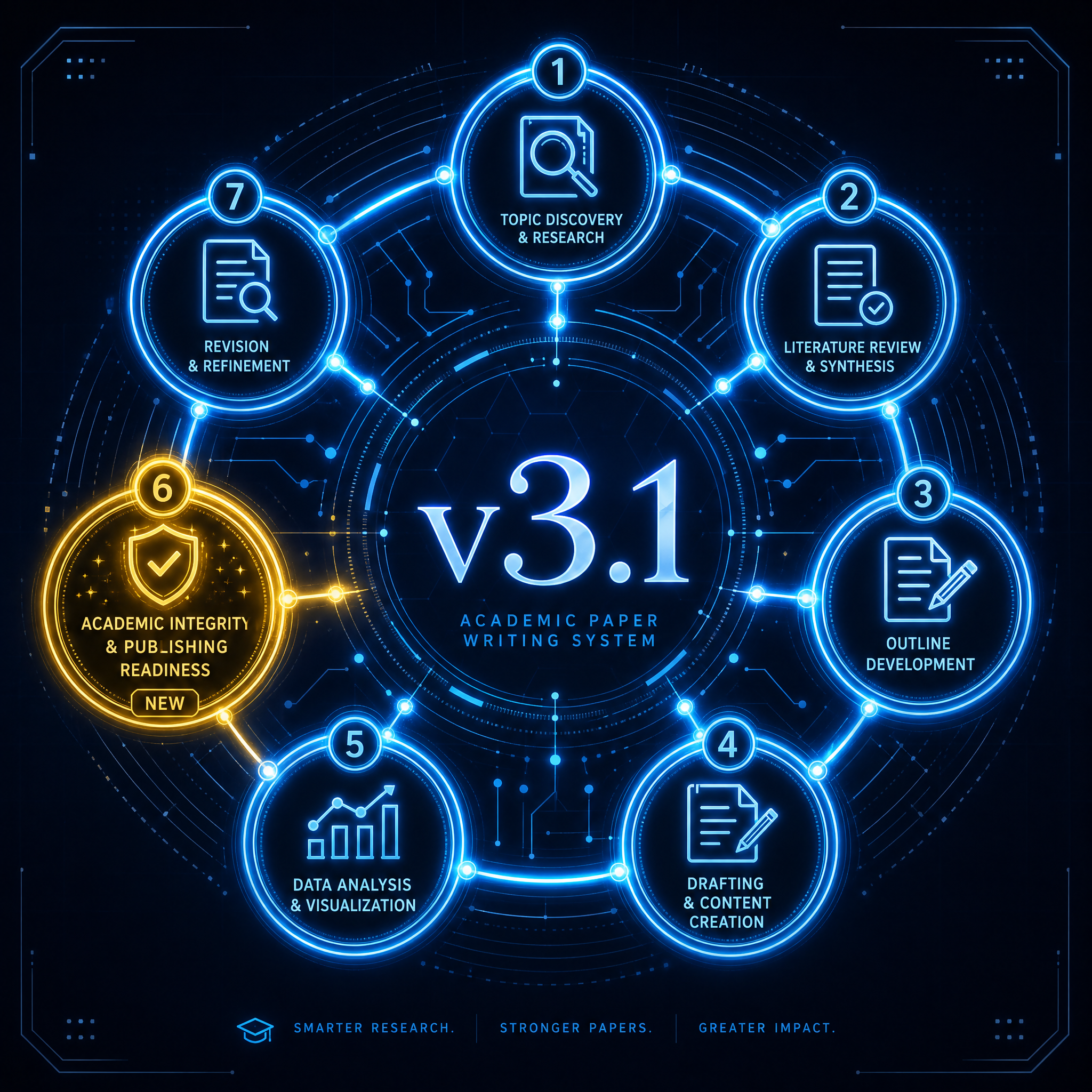
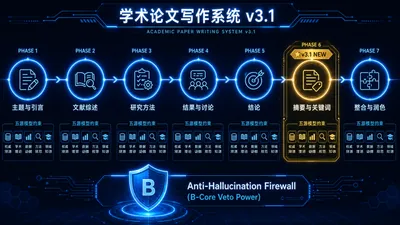
Academic Paper Writing System v3.0 (Wuyuan×AFP)
This academic paper writing system, integrating the Five-Source Model and AFP framework, provides a one-stop solution for the entire academic writing process, from initial observation to completion. ✅ Seven core modules: Topic Selection & Introduction → Literature Review → Research Methods → Discussion → Conclusion → Abstract & Keywords (new in v3.1) → Full Text Integration. Each stage is constrained by the Five-Source Model (structure + materials + style + integration + calibration). ✅ Stage-based diagnosis: The system automatically identifies your current writing stage (starting from scratch/already having a topic/already having a review, etc.) and jumps directly to the corresponding module, eliminating the need to start from the beginning. ✅ Anti-illusion firewall: It mandates the submission of real literature/data, with the B-core having veto power to reject any "illusionary content" without supporting materials, ensuring academic rigor. ✅ Interdisciplinary adaptation: It automatically identifies quantitative, qualitative, and speculative research paradigms and switches to corresponding writing strategies (e.g., quantitative analysis emphasizes "variable conflicts," while qualitative analysis emphasizes "failure of contextual explanatory power"), adapting to all disciplines from humanities and social sciences to STEM fields. After opening, simply tell the system "Which stage am I at?" + "My subject area" to start. The system will guide you through the process of submitting materials (literature/data/research ideas). Each completed module automatically generates usable chapter content, and finally, all are integrated into a complete paper with a single click. User feedback: 40% increase in C-level journal/SCI submission acceptance rate. v3.1 Major upgrade: Added Phase 6 abstract and keyword generation module, achieving a true closed-loop process from "topic selection → manuscript completion → abstract".

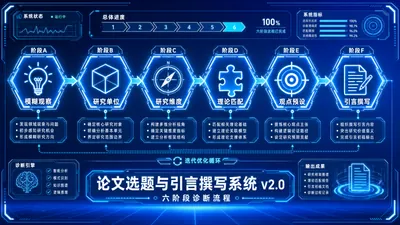
Thesis Topic Selection and Introduction Writing System v3.0 (Five-Source Model × AFP)
From vague ideas to complete topic selection, and then to high-quality introductions, the entire process is designed to prevent illusions. ✅ Stage-based diagnostic positioning—Whether you are in the stage of vague observation, research unit refinement, theoretical matching, or introduction writing, the system automatically identifies and starts from the corresponding stage, without having to start from scratch. ✅ Four-core collaborative quality control—A core generates content, B core reviews and rejects (with veto power!), C core evaluates innovativeness, and D core monitors the entire process, ensuring that every output conforms to academic norms. ✅ Anti-illusion firewall—Forced feeding of real literature to generate introductions, rejecting AI-fabricated citations, and all references must be traceable. ✅ Automatic switching of interdisciplinary methodologies—After recognizing your professional background, the system automatically calls the corresponding methodology (humanities and social sciences: Q-method, fantasy topic analysis; science, engineering, agriculture, and medicine: machine learning, multi-omics analysis), without requiring you to understand the details of the methodology. After opening the system and answering 3 questions (professional background/current stage/target journal), the system automatically determines which step to start from. Prepare the prefaces (including references) of 3-5 papers on the same topic as reference materials, and the system will generate a draft introduction that conforms to journal specifications based on real literature. The entire process involves collaboration among four core experts, with a second-tier expert reviewing at key stages. Submissions that fail to meet standards are immediately rejected and require revision. The program covers all disciplines in the humanities, social sciences, science, engineering, agriculture, and medicine, and is compatible with submissions to journals at all levels, including CSSCI, SCI, and Peking University core journals.
Learn with Feynman
Featured by
nene@YouMind.AI
Why we love this skill
Unlock deeper understanding with this powerful learning companion. "Learn with Feynman" distills complex articles into concise overviews, breaks down core arguments with examples, and offers profound insights. It's an indispensable tool for students and lifelong learners seeking to master new subjects and elevate their comprehension.
Instructions
1. One-Sentence Overview
• Summarize the main idea of the article in ≤40 words.
2. Key Structure Breakdown
• Divide the full logic into 3–6 Core Nodes (arguments, discoveries, steps, etc.).
• For each core node: first give a summary of what it’s doing; then give a key reason/evidence, which must include examples from the article.
3. Deeper Insights
• Combine the selected content with extended thinking, and propose 2–3 deep insights with supporting evidence.
description
Analyze any article like a seasoned researcher. Instantly grasp core arguments, supporting evidence, and profound insights. Cut through information overload and extract true value, fast.
Related Skills
View allDaily Check-in Coach (Morning & Evening Versions)
Based on "The Five Management Principles of Highly Effective People," this daily twice-daily check-in system involves setting plans and assessing performance in the morning, and then reviewing and comparing execution in the evening. Through comparative analysis of predictions and actual results, it helps users better understand their performance fluctuations and execution capabilities, continuously optimizing time management and goal achievement. Suitable for users who need to improve self-discipline and execution.
Academic Paper Writing System v3.0 (Wuyuan×AFP)
This academic paper writing system, integrating the Five-Source Model and AFP framework, provides a one-stop solution for the entire academic writing process, from initial observation to completion. ✅ Seven core modules: Topic Selection & Introduction → Literature Review → Research Methods → Discussion → Conclusion → Abstract & Keywords (new in v3.1) → Full Text Integration. Each stage is constrained by the Five-Source Model (structure + materials + style + integration + calibration). ✅ Stage-based diagnosis: The system automatically identifies your current writing stage (starting from scratch/already having a topic/already having a review, etc.) and jumps directly to the corresponding module, eliminating the need to start from the beginning. ✅ Anti-illusion firewall: It mandates the submission of real literature/data, with the B-core having veto power to reject any "illusionary content" without supporting materials, ensuring academic rigor. ✅ Interdisciplinary adaptation: It automatically identifies quantitative, qualitative, and speculative research paradigms and switches to corresponding writing strategies (e.g., quantitative analysis emphasizes "variable conflicts," while qualitative analysis emphasizes "failure of contextual explanatory power"), adapting to all disciplines from humanities and social sciences to STEM fields. After opening, simply tell the system "Which stage am I at?" + "My subject area" to start. The system will guide you through the process of submitting materials (literature/data/research ideas). Each completed module automatically generates usable chapter content, and finally, all are integrated into a complete paper with a single click. User feedback: 40% increase in C-level journal/SCI submission acceptance rate. v3.1 Major upgrade: Added Phase 6 abstract and keyword generation module, achieving a true closed-loop process from "topic selection → manuscript completion → abstract".
Thesis Topic Selection and Introduction Writing System v3.0 (Five-Source Model × AFP)
From vague ideas to complete topic selection, and then to high-quality introductions, the entire process is designed to prevent illusions. ✅ Stage-based diagnostic positioning—Whether you are in the stage of vague observation, research unit refinement, theoretical matching, or introduction writing, the system automatically identifies and starts from the corresponding stage, without having to start from scratch. ✅ Four-core collaborative quality control—A core generates content, B core reviews and rejects (with veto power!), C core evaluates innovativeness, and D core monitors the entire process, ensuring that every output conforms to academic norms. ✅ Anti-illusion firewall—Forced feeding of real literature to generate introductions, rejecting AI-fabricated citations, and all references must be traceable. ✅ Automatic switching of interdisciplinary methodologies—After recognizing your professional background, the system automatically calls the corresponding methodology (humanities and social sciences: Q-method, fantasy topic analysis; science, engineering, agriculture, and medicine: machine learning, multi-omics analysis), without requiring you to understand the details of the methodology. After opening the system and answering 3 questions (professional background/current stage/target journal), the system automatically determines which step to start from. Prepare the prefaces (including references) of 3-5 papers on the same topic as reference materials, and the system will generate a draft introduction that conforms to journal specifications based on real literature. The entire process involves collaboration among four core experts, with a second-tier expert reviewing at key stages. Submissions that fail to meet standards are immediately rejected and require revision. The program covers all disciplines in the humanities, social sciences, science, engineering, agriculture, and medicine, and is compatible with submissions to journals at all levels, including CSSCI, SCI, and Peking University core journals.
Find your next favorite skill
Explore more curated AI skills for research, creation, and everyday work.